Some personal reflections
Neil ColemanOct 30, 2026President Lula and the courageous people of Brazil achieved a historic election victory on 25 October 2026, in the face of a massive campaign by Trump, the US tech giants, and the Brazilian far right to oust him. Following this astounding victory, there has been renewed interest in the notion of a Lula Moment for South Africa, an idea that was first raised by the South African labour movement in 2012 to describe a bold strategic shift away from a politics of subordination, and towards an assertive people and state-led development project. I trace the evolution of this idea, drawing on my experience in the labour movement over the relevant period.
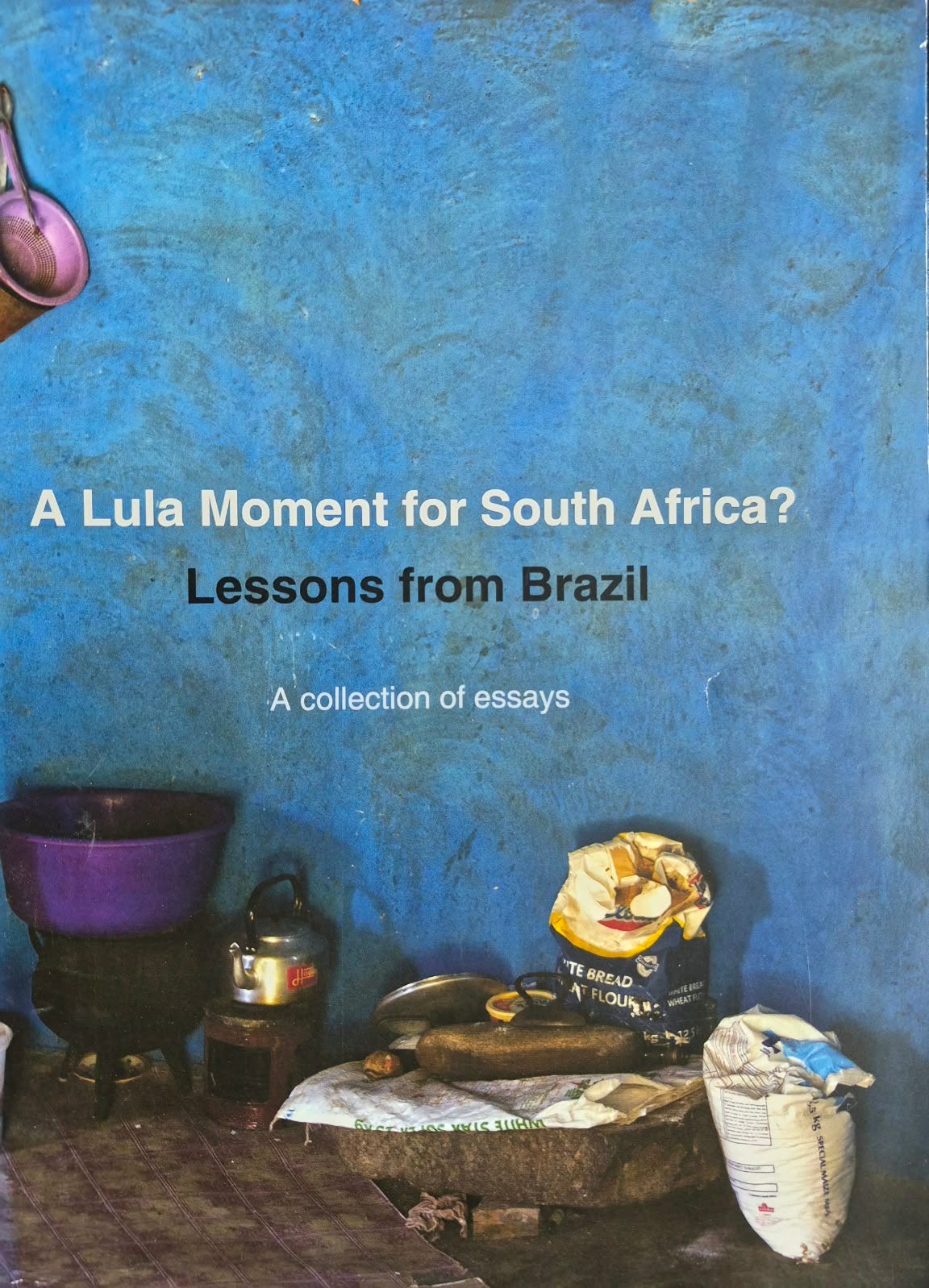
A book of essays was published on this subject, and is available below for download.
Thanks for reading! Subscribe for free to receive new posts and support my work.
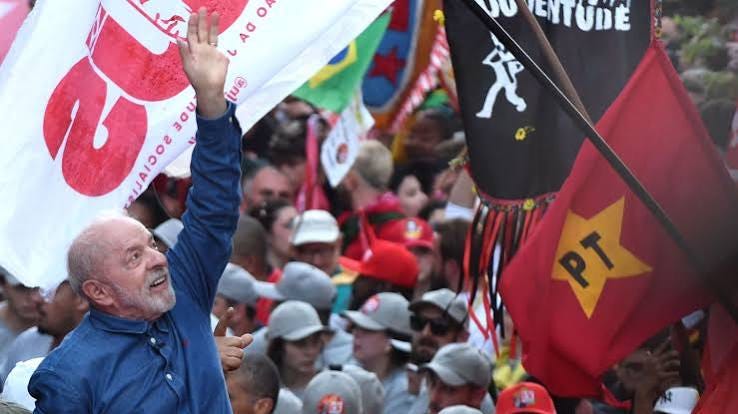
Where does the idea of a Lula Moment come from?
The origins of the Lula Moment lie in a critical period for the South African labour movement as well as the general political life of the country. The moment held significant possibilities but also great dangers: prospects for a strategic shift of our politics towards a developmental national project; and dangers that the democratic project would implode under the weight of corruption, and different forms of state capture1, simultaneously taking the labour movement down with it.
In 2007 there was a seismic shakeup in the liberation movement. The ANC experienced it’s political earthquake, the 2007 Polokwane moment, when ANC President Thabo Mbeki was replaced by Jacob Zuma.
This was not just a leadership change. It also involved an intense policy contestation over the direction of the movement and the country. The resolutions of the ANC Polokwane Conference promised a new direction in economic and social policy, following ten years of conservative economic policy domination. The replacement of the Reconstruction and Development Programme (RDP) by the neoliberal GEAR framework in 1996 (arguably the first phase of state capture which proposed to cut the public sector, deregulate the labour market, slash state spending, and privatise) led to a period of contestation in the ANC and the Alliance over the direction of economic policy.
The 2007 Polokwane Conference saw the adoption of relatively progressive policy positions on areas such as the need for an interventionist state-led industrial policy, and the need for a shift to developmental fiscal and monetary policies. The largest South African trade union federation COSATU, in an alliance with the ANC, actively engaged in promoting these policy shifts. Apparent success in securing this policy victory led to the hope that these resolutions would be reflected in a strategic policy shift at the level of government.
The Zuma wrong turn
However this hope was misplaced, and rested on two fundamental errors.
Firstly, optimism about a new policy direction failed to adequately reflect on prior history where Alliance agreements were rejected or not taken forward at the level of government; and further failed to recognise that the ANC had been unable or unprepared to impose its will on core economic policy questions, in the face of a powerful nexus of economic institutions in government, centred in the Treasury and the SA Reserve Bank.
Secondly, the disastrous decision to support Jacob Zuma’s presidency in the ANC and government failed to recognise his moral character, or his lack of interest in taking forward a progressive project. The extent of this challenge only became apparent in later years, particularly after 2009 when Zuma occupied the Presidency, since he had deliberately (misre)presented himself as a friend of the workers, to cultivate the support of COSATU, distancing himself from the elitist stance of Mbeki2.
These errors in judgement soon became apparent.
Zuma took office in 2009. It was not long before the COSATU leadership realised that he had no intention of taking forward the Polokwane positions, and was instead embarking on a very different project aimed at capturing state institutions to benefit himself and his collaborators.
By September 2010 COSATU leadership had reached the conclusion that the previous neoliberal direction of economic policy, far from being reversed, was being continued and deepened, and that a new period of state capture was threatening to engulf the state and society.
This assessment led to myself and then General Secretary of COSATU Zwelinzima Vavi drafting a discussion paper in September 2010 for the COSATU Executive, and the broader Alliance, entitled “The Alliance at a Crossroads- the battle against a predatory elite and political paralysis”.
The paper prophetically warned of the danger of emerging state capture involving: “the systemic creation of a network of patronage and corruption…over time no-one will be able to do business with the state, without going through corrupt gatekeepers, who don’t merely demand bribes, but systematically leverage their power to control large chunks of the economy. Once this becomes the norm, we will have become a predator state.”3
This paper was to cause huge political ructions for three reasons.
Firstly, it essentially accused the ANC and government of betraying the Polokwane mandate. Secondly, long before others in society began to ring the alarm bells, it warned of massive corruption and state capture. Thirdly, it proposed to mobilise progressive formations in a civil society conference to confront this dual challenge.
The ANC’s response was nothing short of fury.
Gwede Mantashe, then Secretary General, issued a statement in November 2010 on behalf of the ANC NWC arguing that COSATU, particularly its General Secretary, was advocating ‘regime change’, along the lines of the MDC in Zimbabwe, hinting that there were dark forces behind this agenda.
This was a preface to a campaign by some leaders in the ANC and Zuma sycophants in the broader alliance to engineer a split in COSATU and campaign for the expulsion of the COSATU General Secretary, and NUMSA4.
The NDP: doubling down on the neoliberal economic agenda
In the meantime, conservative forces in the state, centred in National Treasury continued to drive a neoliberal economic agenda, in direct opposition to the ANC’s mandate.
After its appointment in 2010, the National Planning Commission (NPC) worked on the development of a National Plan (the NDP), under the leadership of Minister in the Presidency Trevor Manuel, which was supposed to move South Africa onto a new development trajectory5.
The economic power brokers in the state were not prepared to allow the core economic questions to be determined by this independent commission. National Treasury took control of drafting the Economic Chapter of the plan, much to the unhappiness of some members of the commission. Treasury produced a chapter that was rejected and heavily critiqued by COSATU when it was published in 2012. COSATU’s critique was supported by significant parts of the Alliance.
While important and innovative ideas were developed by the Commission in certain areas such as social development, environment, and the public service, a plan without an economic plank that enables and gives life to its other elements is clearly not a plan at all. Or as has been said in a different context its about the economy stupid!
This led to a decision in the September 2013 Alliance Summit that the economic Chapter should be redrafted. Despite this decision being publicly announced by the then Chair of the NPC, Cyril Ramaphosa6, this commitment was not honoured by government.
But back to the emergence of the Lula Moment.
In 2011 the political report to the COSATU Central Committee laid down the gauntlet. It identified two major contradictions characterising the relationship between the labour movement on the one side, and the ANC and the state on the other:
“The continued implementation of neo-liberal macroeconomic policies in key aspects of government, driven by a Treasury and a Reserve Bank, which remains aligned to the interests of financial capital, despite the introduction of the NGP and IPAP7. These policies continue to frustrate progress in implementing the developmental agenda agreed at Polokwane;
A leadership in government, state institutions, and the ruling party, with important exceptions, which remains either compromised by business interests, ideologically aligned to business, or isolated from the working class agenda. This is combined with the growing problem of the use of access to state resources, for accumulation, with the resultant growth in nepotism, patronage and corruption.”
The report continued: “This toxic combination has led to resistance in significant sections of the ANC and state, to implement the mandate of the membership and electorate.”
But importantly, the report noted that despite this “heightened contestation in the state and society, has opened important doors, and for the first time, space has emerged to contest these policy directions in the state, with significant pro-working class elements beginning to establish themselves in government.”
It was in the context of this heightened political contestation in 2011 that I was mandated by COSATU to take stock of the International situation and Implications for the left project, to examine what lessons could be drawn from how trade unions, progressive political parties, and social movements were navigating the current moment in other parts of the world.8
An important element of this discussion focused on developments in Latin America, and Brazil in particular, which was experiencing a powerful resurgence of progressive governments and social movements.
These countries, like South Africa, were confronting the destructive effects of neoliberal economic policies on their societies, and having to navigate developmental strategies in the face of the power of financial sector domination, deindustrialisation and rising inequality.
What could South Africa learn from the Brazilian and Latin American experience?
On reflection, we found that the answer was we could learn a considerable amount. Brazil held particular interest because of significant similarities to South Africa- among others, it is a middle income country, with high levels of inequality and poverty, a large relatively well organised working class, a history of repression, and an experience of racist oppression. The Brazilian labour movement also had close ties to a political party in government, the Workers Party or PT, and was led by a former trade unionist and metal worker9.
Of interest too was the fact that the Brazilian PT, unlike the ANC which had over 65% electoral support at that stage, only had around 25% representation in Congress (although this low level of representation was balanced to an extent by the fact that Brazils presidential system gave the President considerable powers) thus raising the question of how they managed to navigate an agenda of progressive change.
The COSATU Discussion Paper revealed an important and fascinating story about Brazil that was to inspire the South African labour movement.
The fighting spirit of President Lula
The first term of President Lula’s government (2002-2006), was tainted both by the adoption of neo-liberal economic policies, as well as by a problem of corruption in the PT and in government. Together with his allies in the party, state, and the broader movement, Lula acted decisively to turn this around in his second term (2006-2010), moving to address these problems in policy and leadership, both in government and the party. Government and Party leadership was changed.
Important policy shifts were engineered, marking a shift to bold developmental state interventions, regaining the support of worker and peasant organisations. These strategic shifts led to a huge increase in support from the masses. By the end of his second term (2010), surveys put his support at over 80%, making him the most popular leader in the world.
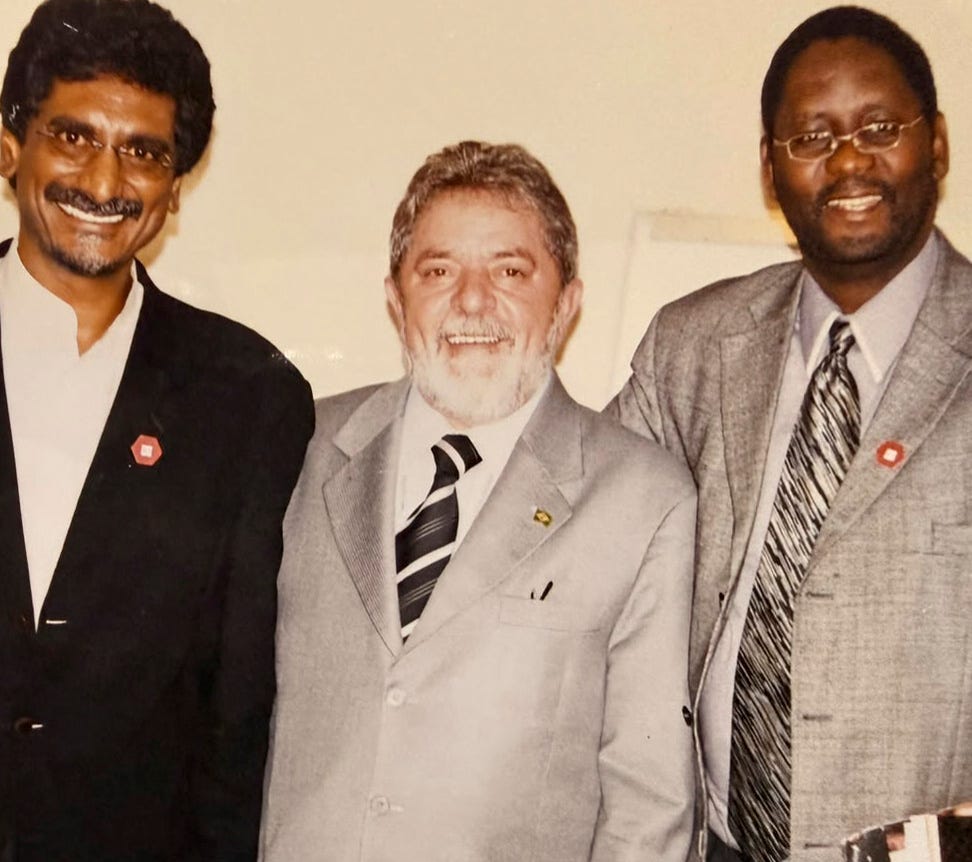
This was the Lula Moment!
Having studied this experience, the COSATU General Secretary and myself coined and advanced the idea of a ‘Lula Moment for South Africa’ centred around the idea of advancing a strategic shift in the face of policies and politics that weren’t working. While there was some debate, this idea was warmly embraced by the COSATU leadership at the time.
In addition to deep unhappiness with the direction of the ANC under Zuma’s leadership this notion also engaged with discussions that were happening at this time around the need for a ‘second (economic) transition’ and the idea of radical socio-economic transformation, being heavily debated in the Alliance.
But what was the content of these strategic shifts in Brazil? Was it purely at the level of rhetoric, as was the case in South Africa, or did it involve serious material change?
Professor Alfredo Saad-Filho, a left critic of Lula’s government, summarised the nature of Lula’s interventions as follows:
“He recomposed his top team, decimated by the scandals. Heterodox economists and nationalist diplomats aligned with the PT were appointed to head the Ministry of Finance, the Secretariat of Strategic Affairs and the National Bank for Economic and Social Development (BNDES), the largest development bank in the world… they have been able to implement activist and distributive fiscal and financial policies, and to moderate the Central Bank’s orthodoxy.…
The administration pushed up the minimum wage gradually and consistently, and embarked on a reasonably ambitious ‘programme of growth acceleration’ focusing on investments in infrastructure, transport and energy. In the higher education sector, 14 new federal universities were created, staffed by thousands of new academics, to cater for 210,000 new students.
The government’s social programmes were also expanded, especially ‘bolsa família’ (an income support programme for poor households). The buoyant economy created 14 million new formal sector jobs... the social benefits paid in the poorest regions supported local production, rather than fuelling purchases of imported durable goods. The strengthening of the domestic market, the expansion of production and careful banking regulation helped to shelter the Brazilian economy from the ravages of the global crisis: GDP is poised to grow by 7.5% in 2010.
The minimum wage rose by 67 per cent between 2003 and 2010 … the Gini coefficient fell from 0.57 in 1995 to 0.52 in 2008, and salaries rose from 58% of GDP in 2004 to 62% in 2009… Lula’s government has also played an important role in the political stabilisation of Latin America and, in particular, supporting the left-wing administrations …None of these outcomes is revolutionary, but they are real enough. For these reasons …Lula’s popularity among the poor, and in the poorest regions, is overwhelming. ..”10
Zwelinzima Vavi’s political report to the 2012 COSATU Congress, reflecting on this Brazilian experience, called for South Africa’s own Lula moment, arguing that we could draw inspiration from Lula’s strategic boldness in his second term, and that '“with the necessary political will, and strong and capable leadership, a turnaround can be achieved, from an apparently desperate situation. It therefore contains important lessons for SA. We need to analyse how the progressive movement achieved this under President Lula’s leadership, and whether, we can learn from that experience….
He argued that we need to consider “interventions which could be pursued in South Africa, during this second phase of the transition, which could help us to create our own Lula Moment. This strategic path is not an option, but a necessity for the working class, if we are to play our role as the leading motive force, putting the NDR on track, and keeping it there.”
Lessons from Brazil
The Congress Political Report, drawing on the discussion document on the international situation, identified eight lessons from this experience, each of which contained a pointed message for the South African movement:
“ 1. Decisive political leadership enabled the Brazilian leadership to navigate out of an emerging crisis, and use the need for change to chart a new path. They were not blackmailed by pressure from the conservative establishment, or problems in their own ranks, to abandon their programme of social transformation. Instead they became more focused and decisive.
2. They put key people into strategic positions (Treasury, Industrial Development Bank- the BNDES etc) to drive the policy shifts they wanted to implement.
3. They were not afraid to take on the markets where necessary, for example through implementing taxes on capital flows, or introducing more effective regulation of worker rights.
4. The Brazilians were very practical in their approach, and avoided getting stuck at the level of political rhetoric. They focused on interventions which were high-impact and transformative in improving the material realities of the majority of people, particularly in relation to key challenges of poverty and inequality. They launched simple high-profile campaigns which would have a concrete impact, and everybody could relate to, such as the ‘zero hunger’ campaign.
5. They asserted a central role for the state in the economy in terms of driving and financing development. They reversed privatisation, drove a state-led industrial strategy, with the involvement of key state corporations in strategic sectors, and provided affordable finance on a massive scale to promote industrial development, through the state bank.
6. They defied conventional economic prescriptions, and instead advanced economic strategies which put redistribution of incomes and stimulating demand at the centre of their approach, especially through raising wage levels and social protection. This was deliberately linked to an industrial policy which promoted local procurement and production, and which fed off growing demand. Increased consumption was based on rising incomes, rather than credit. This national economic strategy was linked to a broader economic development strategy in the region which was aimed at asserting an independent development path.
7. They set out to deliberately formalise the labour market, and demonstrated that increased worker rights, combating of atypical and unregulated work, rising wages and improved conditions of employment, are consistent with large-scale job creation. They took on employer lobbies who were opposed to such changes, but also put in place incentives for employers to comply, as well as acting firmly against those who violated legal protections.
8. Strategic focus meant that they put in place the measures required to build state capacity to drive these changes, e.g. through strengthening their labour inspectorates, and massively increasing training in tertiary institutions to ensure sufficient qualified people were available to staff key state institutions.”11
Note: while the above analysis broadly captures the character and strategic intent of Lula’s second term, a proper analysis is needed of the reasons for the inability of the PT to build on and consolidate these gains in the period from 2011. It is not possible to attempt this analysis here, but the footnote below12 highlights some of the elements that need to be considered.
The Lula Moment in Mangaung
Consider each one of the above eight ‘lessons’ in turn, and the message to the South African leadership was unmistakeable!
COSATU distributed a booklet titled Seize the moment! calling for a Lula Moment for South Africa in the run-up to the 2012 ANC Congress in Mangaung, and outlined in detail how such a strategic shift could be advanced proposing“interventions which could be pursued in South Africa, during this second phase of the transition, which could help us to create our own Lula Moment”13.
The ANC didn’t take kindly to this advice. It is therefore no surprise that the ANC Secretary General, stated in a huff that South Africa didn’t need a Lula Moment14 because the situation in Brazil wasn’t relevant to our situation. This couldn’t have been further from the truth!
The struggle to transform the apartheid wage structure
As Strategies Coordinator in the COSATU Secretariat I was tasked, in consultation with key policy experts, to identify key areas where the labour movement could make strategic gains, and to address the critique by Prof Eddie Webster that the labour movement “was very good at opening doors, but not so good at walking through them”.
One of the areas we identified as a strategic priority was intervening to transform the South African wage structure, and to address working poverty. This meant transforming the system of wage regulation and negotiations to address the scourge of poverty wages, strengthen collective bargaining, and significantly reduce inequalities in the wage structure. Further to combine this with a system of social protection that provided income support to low income households.
The experience in Brazil was of particularl interest, because of their strong policy of establishing and improving a national minimum wage, combined with collective bargaining, and an extensive social protection system15. Advances on these fronts were an important element of Lula’s second term.
Engagement with the Brazilian experience led to tabling of a document in May 2012 at the COSATU Central Executive Committee (CEC) proposing the need to campaign for a legislated national minimum wage, to provide a national wage floor to complement and raise the sectoral minimum wages and collective bargaining minima then in place, and to implement compulsary centralised bargaining, together with the introduction of a comprehensive social protection floor.
This position was adopted by the CEC, and subsequently published as an ILO paper titled Towards new collective bargaining wage and social protection strategies, subtitled Learning from the Brazilian experience.
It is now history that COSATU’s campaign for a national minimum wage bore fruit, initially being incorporated as a commitment in the ANC’s 2014 elections manifesto, which then led to protracted negotiations from 2015-2017, the passing of the national minimum wage Act in 2018, and the introduction of the first national minimum wage in 201916. Progress on other aspects of the COSATU package outlined in the paper were only partially successful17.
President Lula’s visit to South Africa
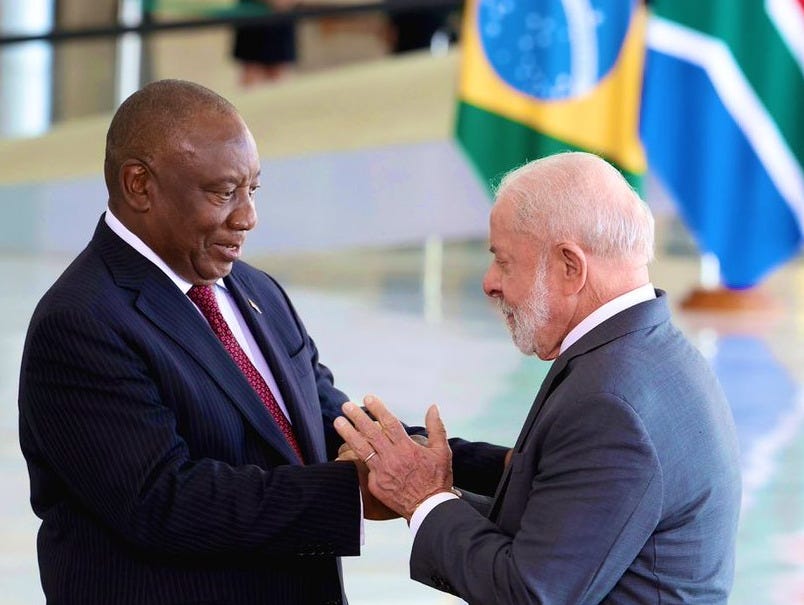
President Lula visited South Africa in 2012 and addressed the COSATU Executive. Among other important remarks, he related that he banned all talk in his cabinet of ‘consumption (versus investment) spending’. He said that the phrase seemed to suggest that spending on low income households (in the forms of grants, public services, etc.) was wasteful when compared to hard investment.
His view was that spending on the poor is never wasted. They tend to spend what they receive, thus stimulating the local economy. He made this point powerfully stating “when we started putting money in the pockets of workers and the poor, through improved wages and grants, they spent that income, and the giant wheels of the Brazilian economy started turning!”
Indeed, this policy of stimulating the economy through raised income was extremely successful and contributed significantly to a period of improved growth and high employment levels.It also took Brazil off the international hunger map.
The Brazilian argument that increased social protection and improved wages have high economic multipliers has been backed up by rigorous research in Brazilian universities, and has helped to inform the policy perspectives of progressive forces in South Africa advocating for UBI, and the need for a new wage policy, who have found strong evidence that improved income particularly of low income households has high economic multipliers18.
Criticisms of the Lula Moment idea
The Lula Moment discourse, aimed at shifting the political and policy trajectory in South Africa, despite its power as a narrative, clearly failed to achieve its objectives. However, this had very little to do with the content of the Lula Moment idea, and everything to do with the trajectory of politics in South Africa (the consolidation of the twin evils of state capture and neoliberalism), and the weakening of the labour movement.
Unfortunately many of the left critics of the Lula Moment idea at the time failed to engage with the substance of what was proposed. Instead they raised a series of straw men, which had little to do with the issues being debated.
Core criticisms of the Lula Moment included the idea that this was in effect promoting the idea of a Zuma Moment, in which Zuma would miraculously change course, abandon corruption, and embrace a project of transformation. What this critique clearly fails to appreciate is that by 2012, when the concept was advanced, COSATU was the most public and vocal critic of the Zuma project, and was mobilising intensively to pressurise the ANC to shift direction. This involved major conflict and policy contestation.
The focus of this strategy was more on pushing for a shift in the policy positions of the ANC and government, than on individual leaders, given that COSATU had previously been bitten by the Zuma experience of putting its faith in a leader. While it could be argued that this was itself a strategic shortcoming, however none of the contenders for the ANC leadership were embracing a project of radical transformation that COSATU was trying to advance.
Another criticism of the Lula Moment idea suggested that COSATU was focusing on the idea of a messianic individual producing change ‘overnight’, when transformation in Brazil had been a long process. This criticism fails to appreciate that, the Lula Moment represented a turning point in which the Brazilian progressive project could have gone in two very different directions. Lula and the PT had the option of either capitulating to hostile forces, or asserting the need for a bold stance to advance transformation under difficult conditions. A decisive political moment of this nature is not unique to Brazil, but faces many movements globally.
The courageous posture taken by Lula and the Brazilian leadership in the face of the 2026 first round elections defeat to boldly advance the progressive project offers clear parallels with the decision twenty years earlier not to submit to pressure from conservative forces to abandon their mass base.
The final criticism argued that because the PT is a workers movement while the ANC is a multiclass movement, the Brazilian movement had the capacity to advance change, ‘unlike the ANC’. But this is to misunderstand the nature of the dynamics at play. The PT far from being a massive workers movement in control of the state, as some seem to believe, was and is a party made up of different forces, that only controls a small part of the Brazilian Congress (just over 20% compared to the ANC’s 65% at that time) and in alliance with a range of parties from different class forces in Brazil, including those represented in the centre and centre right. Equally, the Brazilian labour movement, though significant, had faced multiple challenges that undermined its power.
Conversely, while it is true that the ANC is a multiclass movement, the role of organised workers in the Alliance, particularly in the period under discussion (2010-2012), was significant. Although not without its own challenges, the militancy and organisation of COSATU at that time, both in mobilising mass protests on critical issues affecting workers, and leading civil society coalitions, was a key factor in elevating political contestation in the Alliance and within the ANC itself, and putting the need for radical transformation on the agenda.
The ability of the labour movement to wield this power however was drastically weakened with the COSATU split.
Lastly, the fact that the ANC and the PT are not, or were not, the same type of movement in all respects, doesn’t mean that we had nothing to learn from the Brazilian experience. Indeed, the nature of the recent contestation in the 2026 Brazilian elections still holds major lessons for South African progressives.
What can we learn from Brazil’s 2026 elections?
The drama that unfolded in Brazil in the three weeks from the 4th of October, when President Lula was defeated in the first round (my analysis of this is bookmarked below)19, to the second round in 25 October, when he made a historic comeback, is of relevance not only to South Africa, but to progressives globally.
It tells us a lot about the current international situation, and the obstacles that need to be confronted by progressives; as well as the strategies used by the Brazilian movement to turn the situation around. While it is not possible to spell this picture out in any detail here, we briefly sketch some of its key features.
Firstly the rise of the far right in Brazil and elsewhere is a function of a project, centred in the US to reconfigure the global political economy, in the context of a crisis of neoliberalism and social democracy, as well as the multilateral order. Latin America, via the Donroe Doctrine is a primary target of this strategy, together with a less obvious but no less important focus on weakening China.
Secondly, the growing discontent of working class and popular forces being channeled into far right and proto fascist movements is a function of the failure of centre left and social democratic governments to challenge neoliberalism, militarism and the power of the financial markets20. This has led to a deterioration in peoples living standards, hostility to government elites and vulnerability to right populist platforms, harnessing resentment and hate against various scapegoats (migrants, black people, gays etc.). This is linked to a sense of growing insecurity and lack of safety.
Thirdly, the impact of neoliberalism and new technologies on labour markets has been to fragment and atomise the working class, with the rise of atypical and platform work, leading to the emergence of a ‘lumpen entrepeneur’ class with illusions of individual pathways to success, undermining the collective power and identity of workers.
Finally, the growing power of social media, coupled to a right wing political project supported by the tech platforms controlling and directing the algorithms, has created a fascist ecosphere which offers a powerful platform for the far righ, but is very difficult for progressive voices to penetrate.
How did the progressive movement respond?
The Brazilian progressive movement under President Lula’s leadership was both hammered by the impact of these four strands, especially in the first part of the elections campaign; but also adopted strategies to effectively tackle each aspect. However this was only done late in the campaign in important respects, or even after the first round defeat.
Briefly the Lula campaign fought back by:
Mobilising the population against US intervention, and in support of national sovereignty
Acknowledging and addressing the economic plight of working people by introducing or announcing concrete measures to materially improve their situation, including introducing the 5 day week, retiring debt of low income households, banning online betting, and improving minimum wages and social transfers.
On digital platform and gig economy workers, introducing a mandatory minimum hourly wage; providing strict working-hour limits; acting against classifying employees as independent contractors; making tech giants responsible for contributing to social security to cover platform workers; and extending rules regarding health, safety, and long-term retirement security to the app-based workforce.
On safety and crime, undertaking to shift ultimate responsibility and oversight from the states - mostly controlled by the far right, paradoxically many of whom were in league with gangs and militias- to the Federal government.
Exposing and acting against the corruption and moral bankruptness of the far right opposition.
Using creative social media campaigns, aimed at different constituencies particularly the youth, and bypassing or challenging the social media algorithms, using platforms such as WhatsApp (‘Lula’s army’), which the tech giants couldn’t control. Further, announcing the decision to regulate the big tech apps, and establish Brazil’s own social media ecosystem.
Most importantly they mobilised millions of workers, youth, women indigenous communities and rural people onto the streets, in every area of the country, into a popular movement that both sent a clear message to the far right (who may be tempted to launch a coup again) as well as the US, making it clear that Brazil is not Venezuela.
The question facing the movement was: do you fight back or do you capitulate in the face of poweful forces trying to instal a far right regime? The answer under President Lula’s leadership was clear- we double down.
Where to from here?
But the bold shift towards the end of the elections campaign can only be the beginning. The question is whether the power of the mass mobilisation can be harnessed to drive a radical shift that moves beyond the cautious, tentative agenda that threatened to derail Lula in the third term.
The financial press (The Economist, the Financial Times etc.) are already threatening economic disaster unless Lula cuts back on his spending plans. The ‘markets’ are loudly protesting at his victory with a sell-off on the stock exchange and devaluation of the Real. While Lula obviously needs to manage this pressure, will he capitulate to it?
A Second Lula Moment?
Early signs are that he won’t, and that we may be heading into a Second Lula Moment in his fourth term. His Minister in the Presidency Guilherme Boulos responded to these calls by the financial media saying “Anyone defending that Lula should make a fiscal adjustment by cutting spending on social policies hasn't understood a thing about what this election was. The Big Scissors (Bolsonaro) was defeated at the ballot box and by popular mobilization… (he) lost and fled to the US. Brazil's economic agenda will be the one that won the elections, not the one that lost!”21
Will the measures Lula introduced at the end of the campaign be the start of a period of radical reforms, that transform the Brazilian economy, and demonstrate that a progressive project built on the collective power of the Brazilian people can deliver real change, and is strong enought to counter the power of the right in and outside Congress, and the destabilisation tactics of the USA?
The signs are promising with the far right having lost both the initiative and their leader, and with Trump about to be dealt a massive defeat in the mid-term elections. But the challenges remain daunting, with the far right dominating much of Latin America, and Brazil having to confront major social issues at home.
But if anyone can rise to the moment, Lula can.
And can the South African movements learn these lessons from Brazil?
Only time will tell
The bookA Lula Moment for South Africa, published in 2014 is available for download below
 Lula Book Final 11 Jan3.52MB ∙ PDF fileDownloadDownload1
State capture takes various forms, including predatory forms of corruption feeding off state institutions, but also capture of the economic policies of the state.
2Mbeki was a strong advocate of economic policies oriented towards capital, and was extremely hostile to any elements in the ANC and the Alliance who advanced a different agenda. By 2002 he was openly advocating a split in the Alliance, in particular proposing that COSATU and the SACP should leave the Alliance. In a bilateral with the ANC in February 2002 COSATU presented a discussion paper which starkly contrasted the different visions of economic transformation proposed by Mbeki and those advocating a developmental state. The paper was called Theory of the Transition. Note: the paper is available in the UNISA electronic archive, alternatively DM me for the paper.
3I don’t take credit for these particular insights- the analysis of the nature of this emerging danger was developed by Zwelinzima Vav,i the COSATU General Secretary at that time.
4This campaign was pursued after the 2012 COSATU Congress, and led to the expulsion of NUMSA in 2014, the expulsion of COSATU General Secretary Zwelinzima Vavi in 2015, the resignation of a number of affiliates from the Federation, and the establishment of a new Federation SAFTU in 2017. As we write this article, the labour movement is in major flux. COSATU having just completed an important Congress which could signify a change in direction; and with a democratic rebellion in NUMSA, South Africa’s largest trade union, and SAFTU affiliate. This could portend a reconfiguration of the labour movement, and hopefully its emergence as a stronger and more united force.
5A side note is that this process was led by then Minister in the Presidency Trevor Manuel whose economic conservatism was legend. A new Ministry had been inaugurated in 2009, supposedly to ensure developmental coordination of the economic ministries in government- the Economic Development Department (EDD)- but it soon became clear that Treasury would retain its supremacy over economic policy, and the EDD was ultimately disbanded. I saw this process from inside government as in 2009 I was appointed as Special Advisor to the Minister of Economic Development (returning to COSATU in 2020).
6Ramaphosa, the then Deputy President, was supportive of this decision, but was heavily criticised by business when he announced it.
7The New Growth Path was drafted by the EDD and published in 2010, and attempted to make a break with the economic approach being taken by Treasury. The IPAP or Industrial Policy Action Plan constituted an intervention aimed at ramping up an interventionist industrial policy to create employment on a large scale and diversify the economy, but was severely hampered by lack of resourcing, and the stifling of industrial policy impacts by inappropriate macroeconomic policies, including a monetary policy characterised by high interest rates, and a contractionary fiscal policy that failed to promote meaningful investment.
8The paper “The Current international situation: Implications for the left project” is unfortunately not accessible on the web. People wanting to access it can DM me.
9This is not to suggest that Brazil and South Africa are similar in all respects. Clearly there are major differences, among others in different histories, the relative size of economies and populations, and political culture.
10COSATU discussion paper Ibid. The interview extract is taken from http://www.lab.org.uk/index.php/news/57-focus/688-brazil-
11On reflection, although broadly accurate, this assessment may have been overly upbeat in analysing Lula’s achievements in the second term. It nevertheless provided a useful framework for what a South African Lula Moment could involve
12A full account of developments from the end of 2010 (when Lula’s 2nd term expired) would need to analyse various objective and subjective factors that undermined the sustainability of Lula’s project. The failure to diversify the economy, continued over reliance on commodity exports boosted by the commodities boom, developments in the global economy following the global financial crisis, the rise in atypical work, and the weakening of the labour movement, the inability to deal with the growing security challenges, Lula’s arrest in 2018 before the elections, as well as the shift in style under Dilma’s presidency, and her apparent inability to mobilise the mass base, in the way that Lula did. The 2016 coup against Dilma, the failure to mobilise around a compelling alternative leader, and the implosion of the progressive project laid the basis for the ascension to power of Bolsonaro senior in 2018, with disastrous results for the country.
13Seize the moment!A message to all COSATU members and the people of South Africa. The booklet is not available online. Please DM me if you would like to read it.
14He stated that "you can't put the 'Lula Moment' in a suitcase and bring it here from Brazil!"
15For a more detailed analysis of Brazil’s policies on these questions see the article by Coleman in the Lula Moment collection below
16A detailed assessment of the impact of the National Minimum Wage is forthcoming and will be posted on this site.
17The demand for wall to wall legislated centralised bargaining was tabled in Nedlac parallel to the national minimum wage negotiations, but was not successful. However the labour movement was able to defend the existing system of centralised bargaining against repeated attacks. The campaign for universal social protection had taken a step forward in the 1998 Jobs Summit, when Labour tabled a demand for a Basic Income Grant, and this was endorsed by the Taylor Commission in 2002. However real progress on this campaign was only made after the 2020 Covid crisis, with the introduction of an adult support grant, and establishment of widespread support for the introduction of a permanent system of basic income. In addition aspects of the national minimum wage agreement were not taken forward, in particular commitments to implement measures to reduce wage inequality. This will be discussed in a forthcoming article.
18The IEJ study on economic multipliers of social protection in South Africa has produced important results confirming these impacts, and will be published shortly.
19 Neil Coleman@NeilColemanSA📢BRAZIL'S ELECTIONS: KEY TAKEAWAYS
In shock results, progressive President Lula yesterday came second to far-right candidate Flavio Bolsonaro. Neither gained an outright majority, & the Presidential contest will now go to a second round on 25 October.
What does this mean for…

 Resistencia Nacional @ResistenciaNac_Lula habla luego de la primera vuelta:
🗣️"Hubieron 29 millones de personas que no fueron a votar, vamos a hacer un llamado y que Los Bolsonaristas se preparen PORQUE LOS VAMOS A DERROTAR"
Un señor este tipo 👏👏👏4:58 PM · Oct 5, 2026 · 19.6K Views2 Replies · 21 Reposts · 27 Likes20
This is the subject of a forthcoming paper on fascism and the crisis of neoliberalism and social democracy.
21 Guilherme Boulos@GuilhermeBoulosQuem está defendendo que Lula faça ajuste fiscal, cortando gastos em políticas sociais, não entendeu nada do que foi essa eleição. O Tesouraço foi derrotado nas urnas e pela mobilização popular. O candidato da Faria Lima perdeu e fugiu para os EUA. A agenda econômica do Brasil…1:55 PM · Oct 29, 2026 · 1.07M Views2.22K Replies · 4.87K Reposts · 27.4K Likes
Comments
No comments yet.