Neoliberal ideas, such as those of Ayn Rand and Milton Friedman, have often argued that unemployment is an inevitable and desirable outcome of a market that functions best without government intervention. But in practice, societies that prioritize full employment and equality have been shown to enjoy greater well-being, better public health, and stronger economies. Historian Oskar Brandt looks back at the history of unemployment ahead of tomorrow’s important election.
Kulturen|Oskar Brandt, journalist och historikerNo, unemployment is not about individual laziness. Unemployment has always been the result of broader economic and political decisions. From the 19th century to the present day, the struggle over working conditions, social changes, and misguided economic ideas has shaped employment.
The 19th Century: Workers’ Struggle for Survival
In the 19th century, working life in Sweden was harsh and unregulated—or rather, it was regulated in favor of employers. Industrialization rapidly transformed the country, but despite a great need for labor, many people were left out of the new economy. Those who could not keep up with technological advances or who were injured on the job had no protection. These people were marginalized and had to fend for themselves as best they could—often as vagrants.
It is always difficult to summarize a historical period succinctly. For example, there was no unemployment insurance, sick pay, or social assistance as we know them today. During this period, the new concept of the “labor market” emerged. This was part of the rise of the “new economy” beginning in the middle of the century. Guild restrictions disappeared in the 1840s, and freedom of trade gained ground in the 1860s. At the same time, the Servant Act was still in effect. In practice, this amounted to a “ban” on unemployment. Those who were “made redundant” due to the rationalization of agriculture (the land reform movements) could, in principle, not remain “unemployed” but were placed in workhouses or assigned to other forms of forced labor in the military, or were forced to emigrate. A few became what we would call “vagrants,” or, as they were more commonly referred to at the time, “landstrykare” or “lösdrivare.” These individuals could be arrested under the legislation of the 1880s. Mass unemployment, as we understand it, is a phenomenon linked to the era of industrial capitalism and free enterprise, where the “free wage laborer” could “choose” whether or not to sell his labor. It was not until 1926 that Sweden abolished the wage labor statute, but by then it no longer held any significant importance. Similarly, vagrancy legislation did not formally disappear until the 1960s.
The years of crop failure from 1867 to 1869 hit Sweden hard with extreme cold and drought, especially in Norrland. Despite this, our country set an export record for grain to Great Britain. Food was available, but it wasn’t distributed to those who were starving, because that would have made the working class lazy. The government provided aid in the form of loans. Consequently, the money went to the rich, since the poor lacked creditworthiness.
Relief efforts and famine drove down the price of labor. The children of workers who had starved to death—but above all those of impoverished crofters and others who could not support their families—were auctioned off by the community.
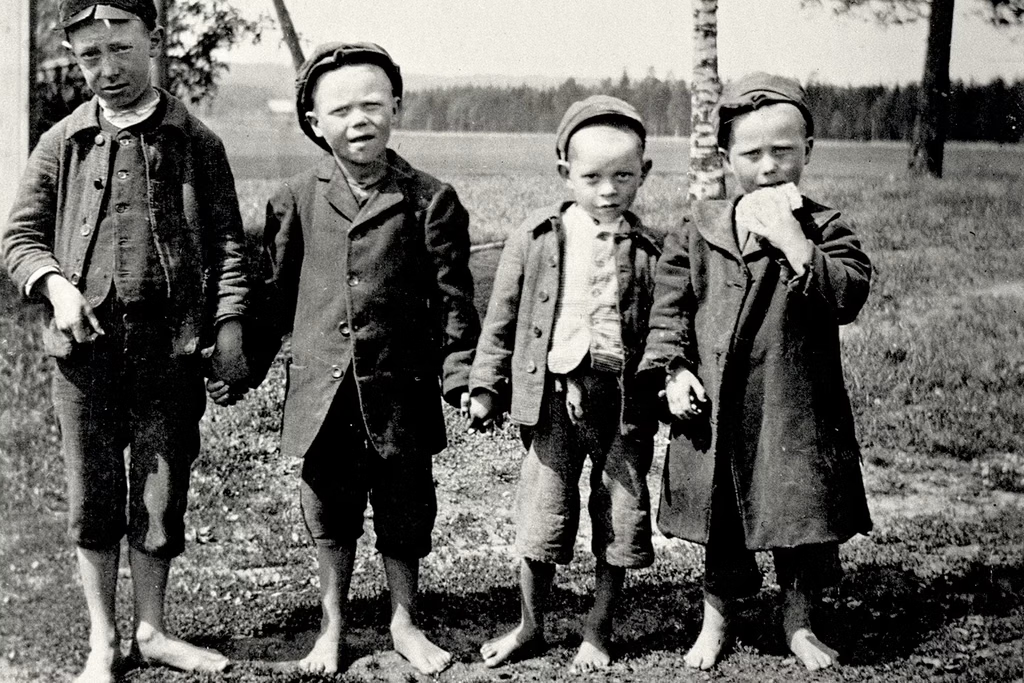
This led to famine and the forced sale of the poor’s property. Emigration to America gained momentum. Social injustices contributed to the emergence of the labor union movement in Sweden.
In 1879, sawmill workers went on strike because their employers had cut their wages—which were already barely enough to live on—in order to address the sawmills’ economic downturn. The military suppressed the strike with threats of violence. Law enforcement arrested 36 people and evicted many others. Strikers were imprisoned under the Statute on Defenselessness.
It was not until 1920 that farm owners—as the last remaining employers—lost the right to physically punish their employees.
The above shows that, despite strict measures and virtually no safety net, even before the welfare state existed, there were people who could not support themselves through wage labor or self-employment.
The Old Farming Society: Rich Farmers and Poor Workers
In pre-industrial Sweden, large segments of the population were tied to the lands of the nobility or the Church as crofters, tenants on an estate, servants, or farmhands. Although serfdom was formally abolished in the Middle Ages, this did not mean freedom for the many farmworkers. The noble lords retained essentially the same power over the freed workers as they had previously held over the serfs. Those who worked the land were tightly bound to the landowner and were subject to strict rules. Wealthy farmers and nobles owned the land, while poor farm laborers barely survived on their small crofts or tenant farms.
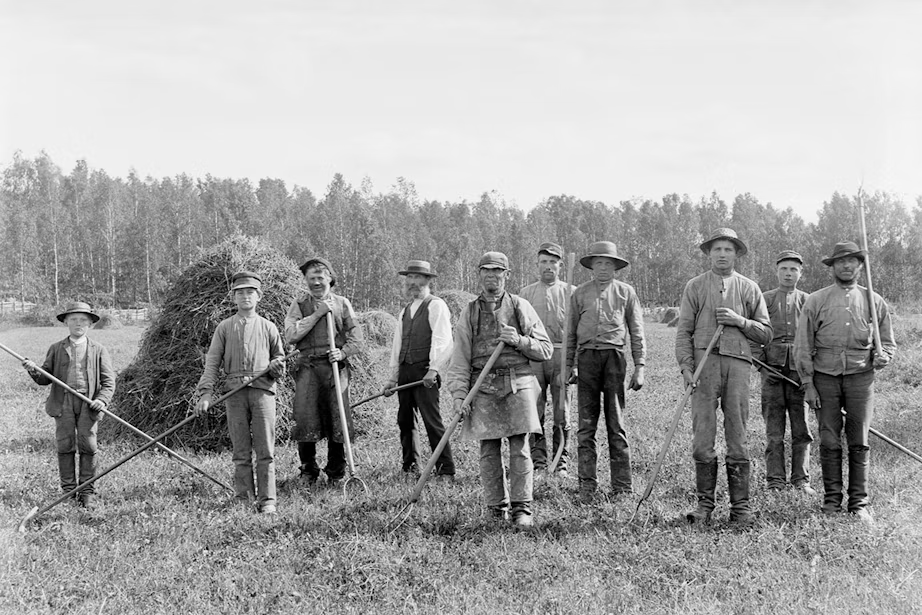
During times of crop failure, such as in the 16th century, many starving people were forced to steal in order to survive. The punishments were severe, and those who were caught were often executed by hanging. The bodies of people who had been hanged for stealing food could line the roadsides. The crop failure did not just make the farmers poorer. It also widened the gap between the wealthy landowners and the poor laborers. Thus, in the past, brutal measures were necessary to control the labor force during economic downturns, when ordinary people had no protection against poverty.
In the 18th century, free peasants attempted to go on strike in large parts of Sweden, but especially in the southern regions. Key estates included Sperlingsholm and Vapnö. The peasants refused to perform so many days of unpaid labor for the landowners and opposed the way the estate lords, under the guise of the law, mistreated the free peasants. These strikes were illegal, and leaders such as Per Nilsson and Lars Hansson were sentenced to death. Many were sentenced to loss of honor, fines, flogging, or hard labor. The landowners ruthlessly crushed the strikes. The leaders who dared to protest were beheaded by the authorities. For centuries, Sweden’s nobility clung to its power over agriculture and the free peasants. It wasn’t until the late 1800s that real changes began to take shape.
The Interwar Period: The Path Toward Social Security and Full Employment
During the interwar period, it became clear that unemployment was not a matter of a willingness to work, but rather of global economic crises. The Great Depression of the 1930s also affected Sweden, but it was nevertheless during this time that the country took its first steps toward a modern welfare state. In the early 1930s, unemployment in Sweden was extremely high—reaching 25% during the worst years of the Depression. The government then implemented the so-called AK system (emergency relief jobs organized by the Unemployment Commission). These were temporary and strictly regulated jobs for the unemployed. AK jobs offered low wages and poor working conditions. Many saw this as a way to discipline the unemployed, rather than to solve the problem.
The labor movement fought hard against the system and succeeded in having it abolished. Instead, the government invested in genuine public works projects with wages based on collective bargaining agreements. More social reforms followed, such as improved unemployment insurance and increased housing construction.
However, other factors also contributed to the drop in unemployment to around 10% in the late 1930s. One key reason was that Sweden abandoned the gold standard in 1931. One advantage of the government’s ability to create money was that it could then maximize production. This led to a strong economic recovery and deflation.
However, in 1946, Sweden limited our ability to create money when we joined the Bretton Woods international monetary system. The system required that our exchange rate be pegged to the dollar. This limited the Swedish government’s ability to create money without causing inflation. As a result, we became dependent on ever-higher taxes, which fueled widespread discontent.
Another key factor behind Sweden’s economic boom of the 1930s was the European arms race. When Germany and other countries began arming for war in the mid-1930s, demand for Swedish raw materials such as steel and wood increased. Together, the export boom and government-funded public works projects helped Sweden emerge from the depression.
This policy changed Sweden’s future. Until around 1900, we were a country with widespread poverty. People emigrated on a large scale in search of a better life. Sweden began to slowly recover from the 1930s onward. The Social Democrats, left-wing parties, and liberals carried out this transformation. But it was the popular movements—trade unionists, feminists, temperance advocates, and members of free churches—that, ever since the industrialization of the 19th century, set in motion and drove Sweden’s journey toward equality. Nineteenth-century industrialization likely required a basic education for workers, and laid a modest foundation of knowledge for the burgeoning social movements.
Active efforts by the national and local governments in the 20th century expanded health care, schools, and housing. At the same time, society created social safety nets that provided people with financial support in the event of unemployment or illness. This laid the foundation for the Swedish welfare model.
The 1950s and 1960s: From Poverty to the Top of the World
After World War II, Sweden continued to prioritize welfare and full employment. This led to rapid economic growth. During the 1950s and 1960s, Sweden became one of the world’s most productive countries. Public investment in infrastructure and industry, combined with a strong labor market, enabled us to build a modern welfare state with a high standard of living. Social security, free education, and good working conditions allowed Sweden to attract and develop a skilled workforce.
The Swedish model struck a strong balance between workers’ rights and the needs of businesses. This made us one of the world’s most competitive countries. The Swedish economy served as a model for others who wanted to combine growth with social justice.
But we must not forget that in 1945, the world lay in ruins, while Sweden’s business sector and society remained intact. The Swedish export industry was able to produce for a virtually insatiable global market until the turn of the 1960s and 1970s. At that point, global competition took on an entirely different character.
The 1970s: The Oil Crisis, Disinformation, and the Rise of Neoliberalism
In the 1970s, the oil crisis hit the world. It led to both high unemployment and high inflation—a phenomenon known as stagflation. Some welfare economists had not considered this a possibility. Neoliberal thinkers such as Milton Friedman capitalized on this and misleadingly claimed that government intervention and Keynesian policies could not solve the problems. Instead, they advocated austerity measures and concepts such as the NAIRU (Non-Accelerating Inflation Rate of Unemployment). The idea was that a certain level of unemployment was necessary to keep inflation in check. They argued that this would improve the economy by driving down wages and reducing the influence of labor unions.
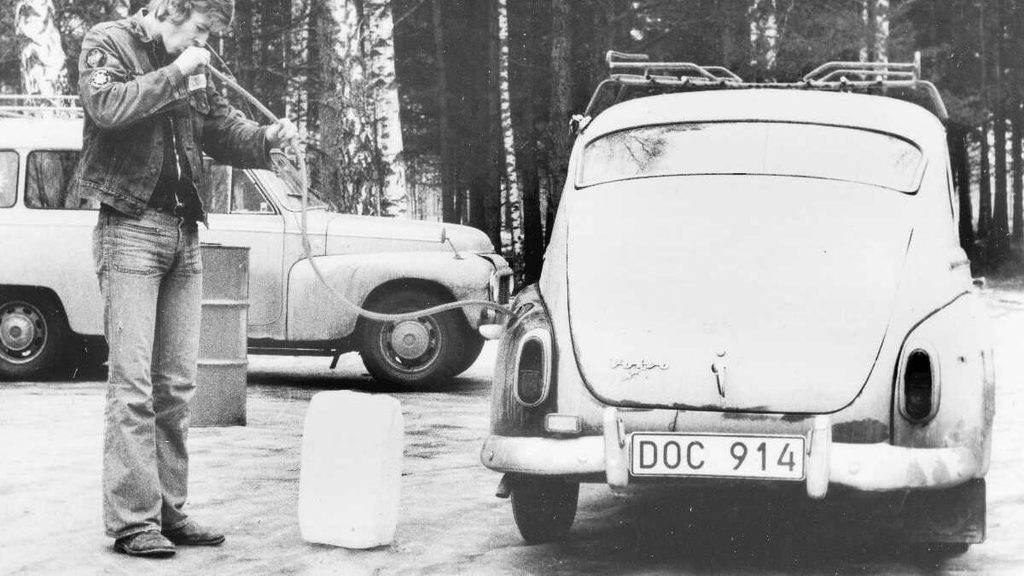
Ayn Rand, another influential neoliberal philosopher, went even further. She believed that the rich’s capacity for greed and their ability to drive innovation through self-interest were what drove societal progress. Rand viewed inequality as a natural consequence of individuals’ varying levels of achievement. The strongest should govern the market. But as Richard Wilkinson and Kate Pickett show in *The Spirit Level*, large economic disparities lead to negative effects such as social unrest and mental health issues. These consequences harm society as a whole—including the wealthy.
The 1990s: The Financial Crisis and Chronic Unemployment
The financial crisis of the early 1990s hit Sweden hard. The crisis had its roots in the deregulation of the 1980s. This had led to increased private lending and a real estate bubble. When the Riksbank raised interest rates to defend the fixed exchange rate, the real estate market collapsed. This triggered a banking crisis and mass unemployment. As researchers such as Niklas Altermark, Max Jerneck, and Elisabeth Lindberg have shown, Sweden’s national debt was not the main problem. Global interest rate hikes and earlier financial deregulation were the culprits behind the crisis.
To address the crisis, both the Social Democrats and the conservative parties implemented extensive budget consolidation measures and cuts to social services. Unemployment nevertheless remained high. Politicians continued to argue that a certain level of unemployment was necessary to keep inflation in check. They allowed labor immigration from the EU to drive down workers’ wages. Politicians encouraged disaffected members of the working class to pursue higher education. But the labor market could not offer skilled jobs to everyone who completed their studies. This led to a surplus of highly educated workers in the early 2000s.
As dissatisfaction grew among those who saw their opportunities disappear, Fredrik Reinfeldt and the Moderate Party were able to run in the 2006 election on promises to cut unemployment benefits and limit sick pay and disability benefits. According to them, this would make the labor market more flexible and reduce unemployment. But in practice, these reforms drove down wages without solving the unemployment problem. Instead, productivity growth declined, as people had less purchasing power and more were forced to accept precarious jobs—if they could find any at all. Reduced overall purchasing power leads to fewer job opportunities.
The 2000s: From the Top to Decline
Despite the budget cuts of the 1990s, Sweden still had a strong economy. In 2006, shortly before Fredrik Reinfeldt took office as prime minister, Sweden was ranked as one of the world’s three most competitive economies. But this news did not come out until after the election. Instead, the election campaigns focused on the idea that Sweden was in crisis and that the unemployed did not want to work. This created the impression that Sweden’s challenges stemmed from laziness and a lack of motivation among workers, rather than from structural economic problems.
Reinfeldt’s government introduced tax cuts for high-income earners, everyone with a job, and those with capital. Cuts to social security benefits and the deregulation of labor laws were intended to make it easier to find work. But in practice, many people had to settle for low-paying and precarious jobs—if they could even find work at all. Productivity growth continued to decline. The result was a tighter labor market or unemployment for many.
The 2020s: Sweden Is Losing Ground in Europe
During the Tidö administration’s tenure, Sweden’s economic situation has deteriorated further. In 2023, we were on track to become one of the worst-performing economies in Europe. Thousands of companies are going bankrupt. The job market has become even more uncertain. Even those who have invested in education are having a hard time finding stable jobs. At the same time, the Riksdag has decided to reduce unemployment benefits for the long-term unemployed starting in October 2025, to 5,621 after taxes per month. This risks reducing overall purchasing power and productivity. When people have less money to spend, demand for goods and services decreases. This leads to fewer jobs—even in low-wage sectors.
Although social movements were once a powerful force for change, shifting views on how jobs are created have greatly weakened grassroots movements today. The passivization of these movements laid the groundwork for implementing the neoliberal systemic shift. But even though social movements are weak, they still strike fear into the current Tidö government. The government has directed its attacks against folk high schools and educational associations—institutions that were once at the heart of the popular education movement. These attacks show that the old social movements still have the potential to bring about change, even though their power is weakened today.
In the 19th century, the marginalized were left to become vagrants. Today, due to the neoliberal aversion to job training programs and adult education, we face a major job-matching shortage. Foreign workers often take on the toughest jobs. While this may help some Swedish workers, it also contributes to increased competition. Foreign workers are subjected to violence by their employers. In 2023, an unusually high number—62 people—died in work-related accidents. The normal number is 30–50 people per year. Approximately 700 people die annually from work-related stress. Work-related illnesses lead to 3,000 premature deaths each year. Investigators can link many suicides to workplace bullying (Swedish Work Environment Authority). Statistics from the Swedish Social Insurance Agency show that in December 2022, over 42,000 people were on sick leave for at least two weeks due to stress, compared to just over 9,000 in the early 2010s. Austerity policies have not led to increased productivity.
Challenging Neoliberal Economic Theory
Neoliberal ideas, such as those of Ayn Rand and Milton Friedman, have often argued that unemployment is an inevitable and desirable outcome of a market that functions best without government intervention. But in practice, societies that prioritize full employment and equality have been shown to enjoy greater well-being, better public health, and stronger economies.
Of course, Sweden isn’t back in the 19th century. But history shows how the government has time and again used social welfare to control the workforce.
For much of the 19th century, laws regarding vagrancy and compulsory labor were in effect. Able-bodied people who lacked an acceptable means of support could be forced into service. In 1885, the government replaced parts of this system with the Vagrancy Act, which made it possible to take action against people who were unemployed or considered to be living a vagrant lifestyle. The authorities could sentence them to forced labor. The law was not repealed until the 1960s.
In the 1930s, the government instead relied on the Unemployment Commission’s emergency relief jobs, known as “AK jobs.” The unemployed were required to work under conditions and for wages that were below those of the regular labor market. The labor movement opposed the system and demanded genuine public works jobs with wages in accordance with collective bargaining agreements.
The current system uses more lenient methods, but the economic mechanism is familiar. Starting in October 2025, unemployment benefits will be phased out the longer a person remains unemployed. The activity allowance may eventually drop to about 5,621 kronor after taxes per month. Municipalities can require up to 40 hours of activity per week from those receiving income support. These activities can take place at regular workplaces without the person being considered an employee. In Lund, social services have also stated that applicants may be required to apply for about 100 jobs per month.
Illness has also become more costly financially. Starting in July 2026, anyone who submits incorrect information to the Swedish Social Insurance Agency or fails to report a change may be required to repay the benefits and pay a penalty fee. The fee is 25 percent of the incorrect payment and at least 2,368 kronor in 2026. It may be imposed even if the person made the mistake unintentionally. However, if the Swedish Social Insurance Agency itself caused the error, the agency will not impose the fee.
As early as the summer of 2025, the government raised the high-cost ceiling for prescription drugs from 2,900 to 3,800 kronor. Patients must also pay a larger portion of their prescription drug costs before discounts take effect. The government estimated that patients’ costs would increase by just over 2 billion kronor in 2026. The government gains nothing from reduced spending, as it writes off all tax revenue it receives. On the other hand, more expensive medications encourage the poor to borrow from banks, thereby enriching those banks when the poor purchase their medications.
Taken together, these cuts are altering the balance of power in the labor market. Those who risk receiving very low unemployment benefits, having their income support cut off, facing sanctions, or paying higher costs for medication have less ability to turn down low wages, poor working conditions, or precarious terms of employment. The social safety net therefore also affects those who still have a job.
The recovery began when the government started implementing stimulus measures
After several years of weak demand, high unemployment, and an economic downturn, the economy began to recover in 2025–2026, just as the government itself changed course.
The National Institute of Economic Research cites rising real wages and expansionary economic policy as key drivers of the recovery. The government increased its budget deficit, cut taxes, and raised spending. The government cut the VAT on food in half, from 12 to 6 percent, and invested billions in more affordable public transportation. Such measures strengthen households’ purchasing power and, consequently, business demand.
At the same time, Sweden eventually achieved very low inflation. But we were late to the combination of low inflation and a stronger economy. Under Biden, the U.S. had already brought inflation down from 9.1 percent in the summer of 2022 to 3.0 percent in the summer of 2023, while unemployment remained low and real wages began to rise. At the same time, the Biden administration made major investments in infrastructure, semiconductors, and green energy.
That does not prove that expansionary fiscal policy alone lowers inflation. Energy and transportation prices fell, supply chains improved, and the Federal Reserve raised interest rates. But the United States shows that inflation can fall without the government first creating mass unemployment and severely weakening the position of workers.
Sweden’s recovery highlights the same problem with the austerity narrative. The economy did not pick up because the unemployed became poorer. It picked up when real wages rose, interest rates fell, and the government boosted demand. The National Institute of Economic Research forecasts GDP growth of about 2.4 percent in 2026, even though Sweden has not yet fully emerged from the recession.
Furthermore, an earlier green investment policy would have made Sweden less vulnerable to oil price shocks. More electric vehicles and better rail and public transit systems would have reduced households’ need for gasoline and diesel even before the conflict over Iran and the Strait of Hormuz drove up oil prices. Lowering the price of gasoline after the fact alleviates the problem. Reducing dependence on oil tackles the root cause.
After the election, the pressure may increase even further
The Moderate Party wants to go further in the next legislative term. The party expects significant savings through a stricter approach to work and has specifically singled out unemployment benefits and activity support. The Moderate Party’s proposal includes, among other things, a faster phase-out of benefits and other changes that the party expects will save several billion kronor.
At the same time, Timbro and Oikos, a think tank with ties to the Sweden Democrats, have presented “Tidö 2.0.” While it is not the joint election platform of the Tidö parties, it shows the direction in which influential segments of the right wing want to steer policy after the election.
Tidö 2.0 wants to nationalize the unemployment insurance fund and replace the current system with a basic government-provided safety net. The proposal does not specify an exact future benefit level, so it is not yet clear whether this would automatically result in lower unemployment benefits. However, nationalization would sever an important historical link between the labor unions and unemployment insurance and could thus weaken the unions’ organizational power.
The program also aims to introduce low-wage “mini-jobs” with weaker employment protections, eliminate the transition study grant, and abolish the Labor Court. Labor disputes would then be transferred to regular courts, and the social partners would lose their special role.
At the same time, the SD says the party does not want to agree to further cuts to unemployment benefits. This must be taken seriously. However, the party also promised ahead of the 2022 election to protect unemployment benefits and later accepted the phase-out starting in 2025. What actually happens will therefore be decided in upcoming government negotiations.
At the same time, the government is rapidly expanding the correctional system and plans to have approximately 29,000 pretrial detention and prison beds by 2034. The stated purpose of the Time Act is harsher penalties and more incarcerations. But the United States shows that a heavily expanded penal system may, over time, come to encompass far more than just the most serious violent criminals. Therefore, there is reason to ask which crimes and which social groups will ultimately fill a Swedish prison capacity that has nearly tripled. Could the aim be to discipline vulnerable segments of the workforce?
Economic history thus returns to the same fundamental question: Unemployment does not rise because benefits are too high. It rises when the economy creates too few jobs.
At the same time, bankruptcies are on the rise again in the retail sector: in August 2026, they were 33 percent higher than the previous year, even though the overall number of bankruptcies declined. Household demand remains weak—and this illustrates why cuts to unemployment benefits could make things worse for businesses.
If 100 people are competing for 10 jobs, stricter requirements and lower pay will not create an eleventh job. However, these policies do make the 100 people more desperate to secure one of the 10 jobs. This strengthens the employer’s bargaining position and affects wages and working conditions far beyond the group of unemployed people.
A government that issues its own currency does not need to wait for private investors to create every job. When people, knowledge, materials, and production capacity are available, the government can invest in housing, railways, energy, climate, education, and welfare. The real constraints are labor, resources, and inflation—not a shortage of Swedish kronor.
Sweden’s economic development in 2025–2026 illustrates exactly this. First, demand fell and unemployment rose. Then, the government increased its budget deficit and boosted household purchasing power. The economy began to recover as inflation fell.
Should public policy create enough jobs—or make unemployment so dire and precarious that people are forced to compete more fiercely for the jobs that already exist?
Ahead of the 2026 election, the three red-green parties are promising a more active labor market policy, but their levels of ambition differ significantly. The Social Democrats are once again setting full employment as their long-term goal and want to tackle unemployment through investments, more vocational and labor market training programs, a stronger Public Employment Service, and more pathways to work. The Social Democrats also want to ease the steep phase-out of unemployment benefits, but have so far chosen not to promise a higher final level for the activity allowance for the long-term unemployed.

The Left Party takes the strongest stance on social safety nets. The party wants to pursue economic policies aimed at full employment, increase public investment, and strengthen active labor market policies. Unemployment insurance should provide 80 percent of earnings throughout the entire benefit period, and the Left Party also wants to increase benefits for those receiving activity support. The party also advocates for a general reduction in working hours with no loss of pay.
The Green Party wants to create more jobs through investments in areas such as railways, renewable energy, energy efficiency, social welfare, and green industry. The party wants to strengthen the Swedish Public Employment Service, education, and pathways to employment, as well as improve unemployment insurance. The Green Party is also advocating for a general reduction in working hours and, in the long term, aims to move toward a four-day workweek.
Top Image: Unemployment line during the Great Depression of the 1930s
Comments
No comments yet.