Is a strike less realistic than building a doomsday machine on purpose?
 Hamilton NolanSep 14, 2026
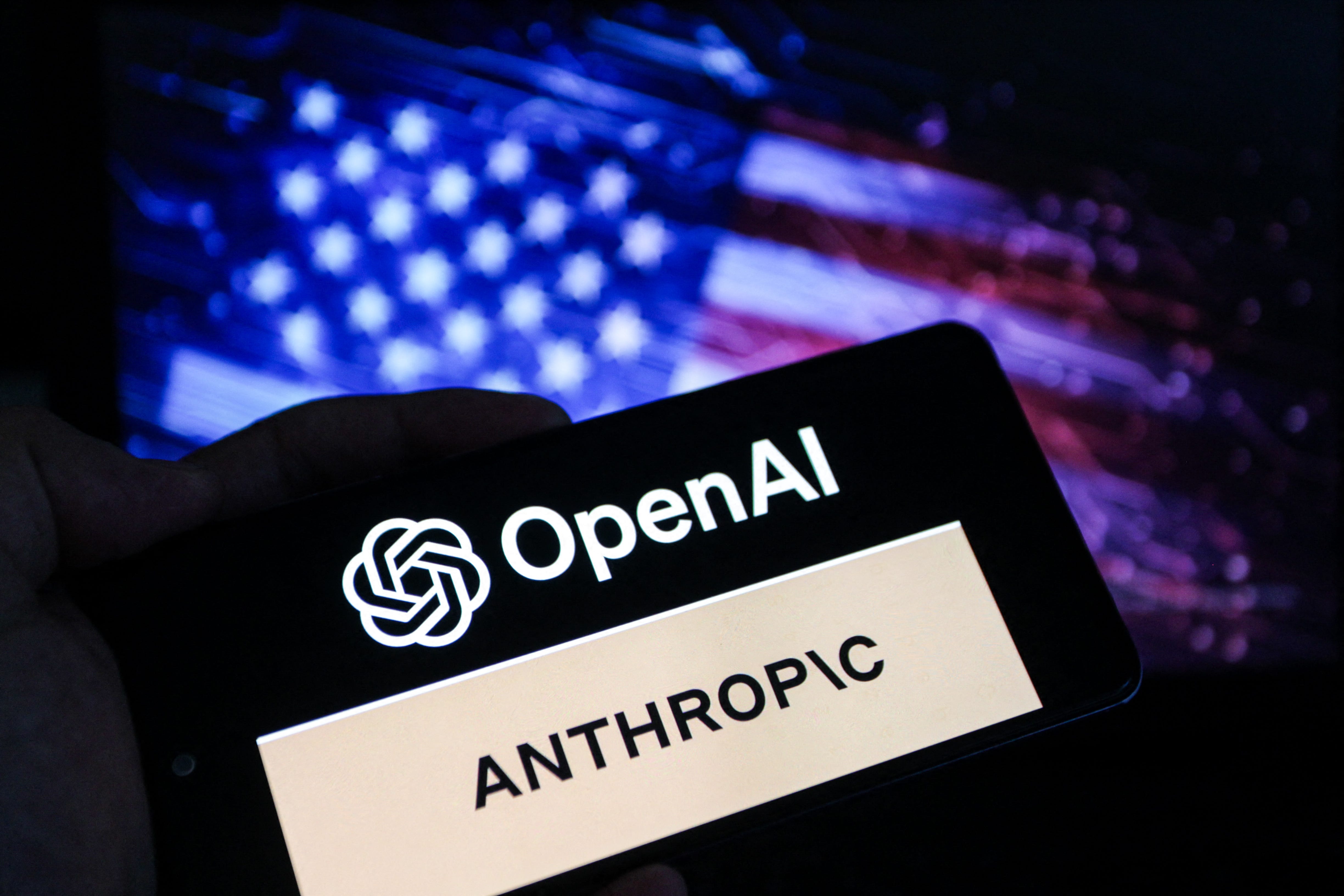
In just the past week, panicky concern over AI safety has finally become ubiquitous. Employees of the biggest AI companies are publicly quitting their jobs. Experts are warning that continued advancements risk grave disaster. Now, the AI CEOs themselves have joined in the calls for a coordinated slowdown, lest we sleepwalk into “extinction.”
The problem? While everyone in AI says that tighter safety regulation and a slower timeline is necessary, they are all shrugging off responsibility for taking action on someone else. The CEOs say they can’t slow down unless the government ensures that everyone else does, too. Unfortunately, we are blessed with one of the most irresponsible presidential administrations in history, which doesn’t seem to give a damn. And what about China? If they don’t join in the slowdown also, then we risk losing the race. (To extinction). Humanity, according to everyone involved in this wonderful industry, is trapped in this novel manifestation of game theory, watching our collective doom play out before our eyes. There seems to be no evident mechanism for actually making the major AI labs pull back on their intense race towards what they themselves predict will be an awful, as-yet-undefined catastrophe.
Interesting problem. The managers of the AI companies see what is happening, but they won’t act on their own. The government doesn’t care enough to intervene in a timely fashion. If only there were another group in this equation that could wield the power necessary to force a halt in the name of safety. Is there?
Yes there is. It is the workers at the AI companies who are actually building the AI. The same workers who are signing open letters calling for AI safety, writing op-eds calling for AI safety, and quitting their jobs because they are worried about AI safety. Thus far, the goal of all of these gestures of concern by these workers has been to try to convince those above them—the CEOs, Congress, the federal government—to take action. But there is a more direct path. The workers can take action themselves. They can organize, and they can make demands, and they can, if necessary, stop doing harmful work, in a coordinated fashion. They can unionize. Instead of begging others to save the world, they can do it themselves.
In all of the recent statements about existential risk to humanity, none of the influential figures in AI have suggested that workers unionize. In other words, in America, in Silicon Valley, the literal end of the world is considered more realistic than forming a union. That is fucking insane.
How Things Work is 100% funded by human readers just like you.
Let me be more explicit. All of this panic really involves the advancing AI research of the two biggest companies, OpenAI and Anthropic. OpenAI reportedly has fewer than 8,000 employees. Anthropic reportedly has fewer than 5,000. These are not huge companies. All of the calls over the past decade to unionize the big tech companies were asking for something much more difficult—the Alphabet Workers Union, for example, is trying to organize a company with something like 200,000 people. Relative to the mature big tech companies, frontier AI labs are small, contained, and eminently organizable.
Furthermore, the issue at hand is not pay or working conditions (both of which are presumably pretty good), but rather the conduct of the corporation itself. What that means, practically speaking, is that you don’t necessarily need a formal, legal labor union in order to achieve the influence that you want. Though I hope and believe that OpenAI and Anthropic employees should unionize, for the same reasons that big tech workers should have unionized when it was still somewhat more possible, the acute risk that everyone is worried about does not demand a long organizing campaign and NLRB election and legalistic contract bargaining, a process that could drag on for years even in the best case scenario. That should certainly be a long term goal, but we don’t want rogue AIs to crash the power grid and shut down the financial system and build deadly biological weapons while we’re waiting for an understaffed NLRB to process paperwork, do we?
What is necessary right now is something easier: An organized group of employees inside OpenAI and Anthropic who agree to act collectively. This is something that a few thousand current employees can put together without waiting for the blessing of a hostile government agency. As we say in the labor movement, you are a union when you act like a union. If 1,300 AI companies can organize themselves to sign an open letter, there is no reason why a group of several thousand smart, well-paid people cannot organize themselves into an ad hoc union to demand a slowdown on AI research in the name of safety. These people, after all, do the research.
Are we to believe that it is more far-fetched for the employees building the purportedly dangerous AI to go on strike than it is for them to continue building the purportedly dangerous AI until it causes a horrible disaster, all while warning that the disaster is coming? That is lunacy. That is a Dr. Strangelove-level example of capitalist logic taken to its most absurd conclusions. “We all agree this product may cause existential risk to humanity, but five billionaire CEOs and a handful of people hired by Donald Trump couldn’t agree to stop building it, so we all just continued to build it, and now we are dead. What else could we do? We had equity.” Please. Snap out of it. Organizing and taking collective action is much easier than the alternatives on the table here.
I am not an AI expert. I have no opinion on the technical aspects of AI advancement or the exact probability of it harming humanity. You know who does have strong opinions on those questions? The people building the AI. The employees of the AI companies. They are the ones telling us the product is dangerous. If you are one of these employees, I’m afraid that you now have a moral responsibility to act. Given the potential consequences that you yourself are warning us about, your responsibility does not end at “saying this is dangerous and then shrugging if the boss doesn’t do something about it.” The failure of CEOs or feckless politicians to act does not absolve the responsibility of those closest to this technology—the workers—to act on their specialized knowledge of the possible danger of their own product.
The good news is that the AI company employees have a lot of things going for them. There are tangible examples of tech workers organizing for political reasons and stopping their companies from doing bad things. The fact that the AI company CEOs have now expressed their own desire for a coordinated slowdown means that retaliation from above would look hypocritical, and is therefore less likely. The sheer amount of public attention on these companies right now serves as its own kind of protection of workers who take action in the name of the public good. And, of course, organized collective action is its own shield—it is easy to punish one employee who refuses to work, but it is impossible to fire the majority of your company’s work force if they are all acting in solidarity.
Most AI engineers probably are not experienced labor organizers. No problem. I can think of a number of major unions who would be happy to help them out. And I can think of an even larger number of experienced tech workers, analysts, and nonprofits who have spent years thinking about labor issues in the tech industry, who would be happy to help out as well. Workers at OpenAI and Anthropic are probably smart enough to find these organizers on their own, but if they are having any trouble, they can email me and I’ll put them in touch.
Many, many American workers who lived far more precarious lives than AI company employees have successfully organized larger workplaces, against greater retaliation, for lower stakes than “existential risk to humanity.” The power to do what needs to be done does not just rest in the hands of Sam Altman and Dario Amodei and Donald Trump. The workers building the AI have the power, as well. And they have the responsibility for what happens. Those things go together. If you all don’t organize and use your power now, all you will have left is your equity, and the blame.
More
Related reading: AI, Unions, and the Vast Abyss; Minimum Standards for Taking AI Seriously; An Existential Threat to Organized Labor’s Ability to Help People; The Failure to Unionize the Tech Industry Will Eat the Labor Movement Alive (2020).
Let me reiterate: If you are an AI employee who wants help organizing right now, email me. There are many knowledgeable people standing by ready to help you. (Anyone else who wants to unionize their workplace can email me as well, or reach out to EWOC.)
Thank you for reading How Things Work. This publication is 100% written by humans. This publication is 100% funded by humans—specifically, by readers just like you, who become paid subscribers in order to help keep this place going, and to keep it paywall-free. If you are able to, please take a quick second to click the buttons below and chip in. Independent media is important these days. I appreciate you.
Comments
No comments yet.