In 2010, I was still an administrative manager at an electronics factory, overseeing nearly 500 security guards. In my spare time, I developed a passion for photography and frequently contributed articles to *Shili News* and *Chang’an Group Bulletin*.I happened to hear that the Xinjin Handbag Factory was organizing a group wedding, and I wanted to document the event. That’s how I eventually met Tuohedali, who was the head of the Ahqi County, Xinjiang, collective labor dispatch office based in Dongguan. When I called him, Tuohedali was delighted and said in somewhat accented Mandarin, “Welcome, my friend.”
In September 2010, carrying a copy of the *Chang’an* newspaper featuring my own photograph, I rode my bicycle to the Yukai Industrial Park in Wusha Community, Chang’an Town. From a distance, I saw a sign reading “Aheqi County, Xinjiang Representative Office in Dongguan” hanging on the building next to the basketball court.
Aheqi County is located in western Xinjiang, in the northern part of the Pamir Mountains and at the southern foot of the Tianshan Mountains, bordering Kyrgyzstan. The county has a total population of over 30,000, predominantly of Kyrgyz ethnicity. Tohadali is one of the few college graduates in Aheqi and serves as an instructor at the local police station. The county government decided to organize young and able-bodied herders to work away from home through a collective labor dispatch program, and he was selected to serve as the accompanying official.In 2009, he led nearly 200 Kyrgyz youth from Aheqi by bus to Aksu, where they transferred to a train bound for Lanzhou, then took another train to Guangzhou, and finally chartered a bus to Chang’an Town in Dongguan. The journey took five days and four nights, and the group was ultimately placed as a unit at the Xinjin Handbag Factory.According to him, more than 2,000 Kyrgyz youth were working in Guangdong Province; three factories in Chang’an Town alone had hired nearly 600 of them, and Aheqi County had dispatched several officials to oversee operations on-site.
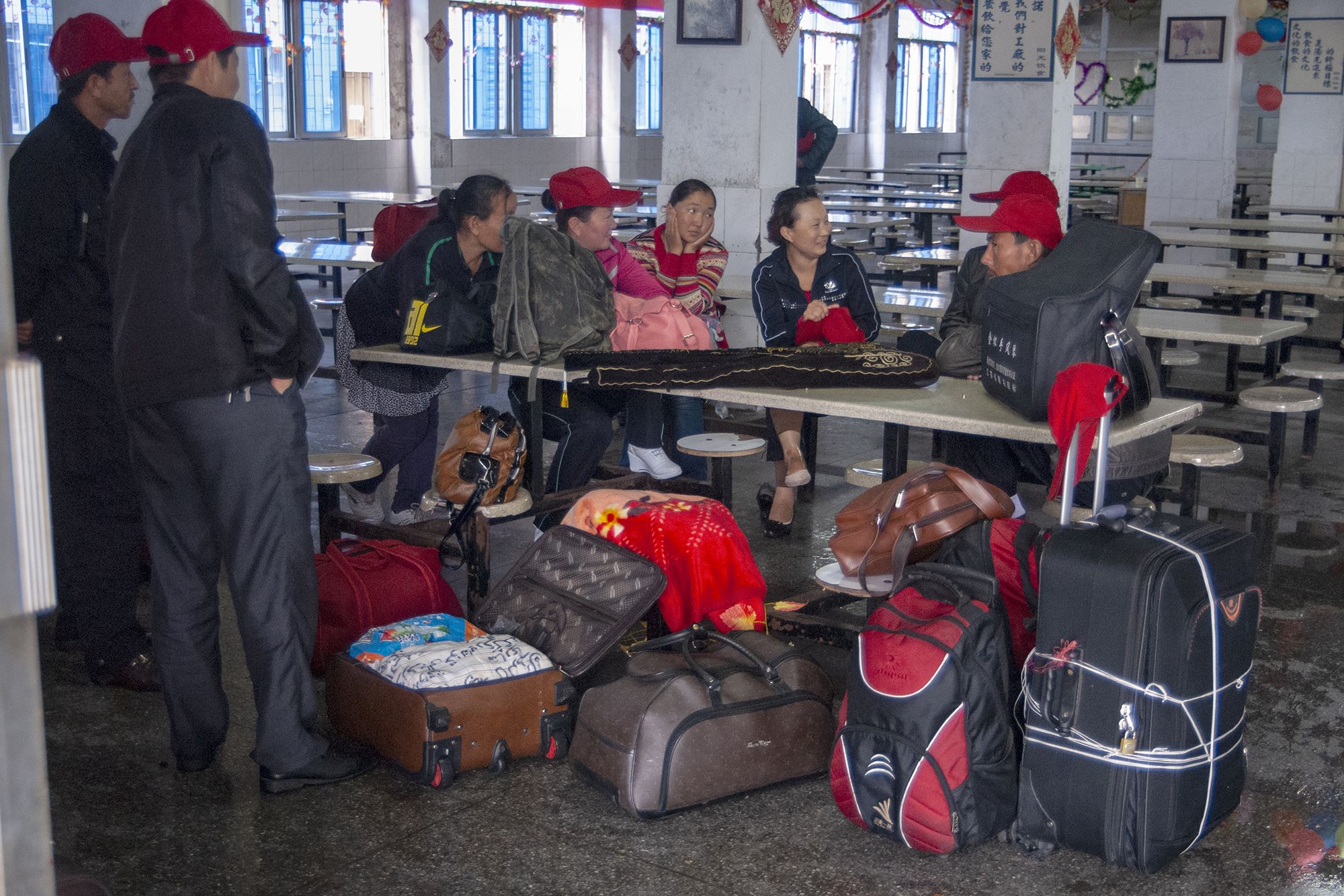
Accompanied by Tuohedali, I entered the workshop at Xinjin Handbag Factory. Prior to this, factory management had often refused photography requests, citing reasons such as product confidentiality, client requirements, and the need to prevent technology leaks, so opportunities to enter the workshop and take photos were extremely rare. I therefore seized this rare opportunity and didn’t leave the workshop—reluctantly—until I had drained two batteries and filled three memory cards.Looking back, my biggest regret is that I didn’t fully understand the handbag manufacturing process at the time. I let my excitement get the better of me while shooting—I took a lot of photos, but they weren’t good enough.
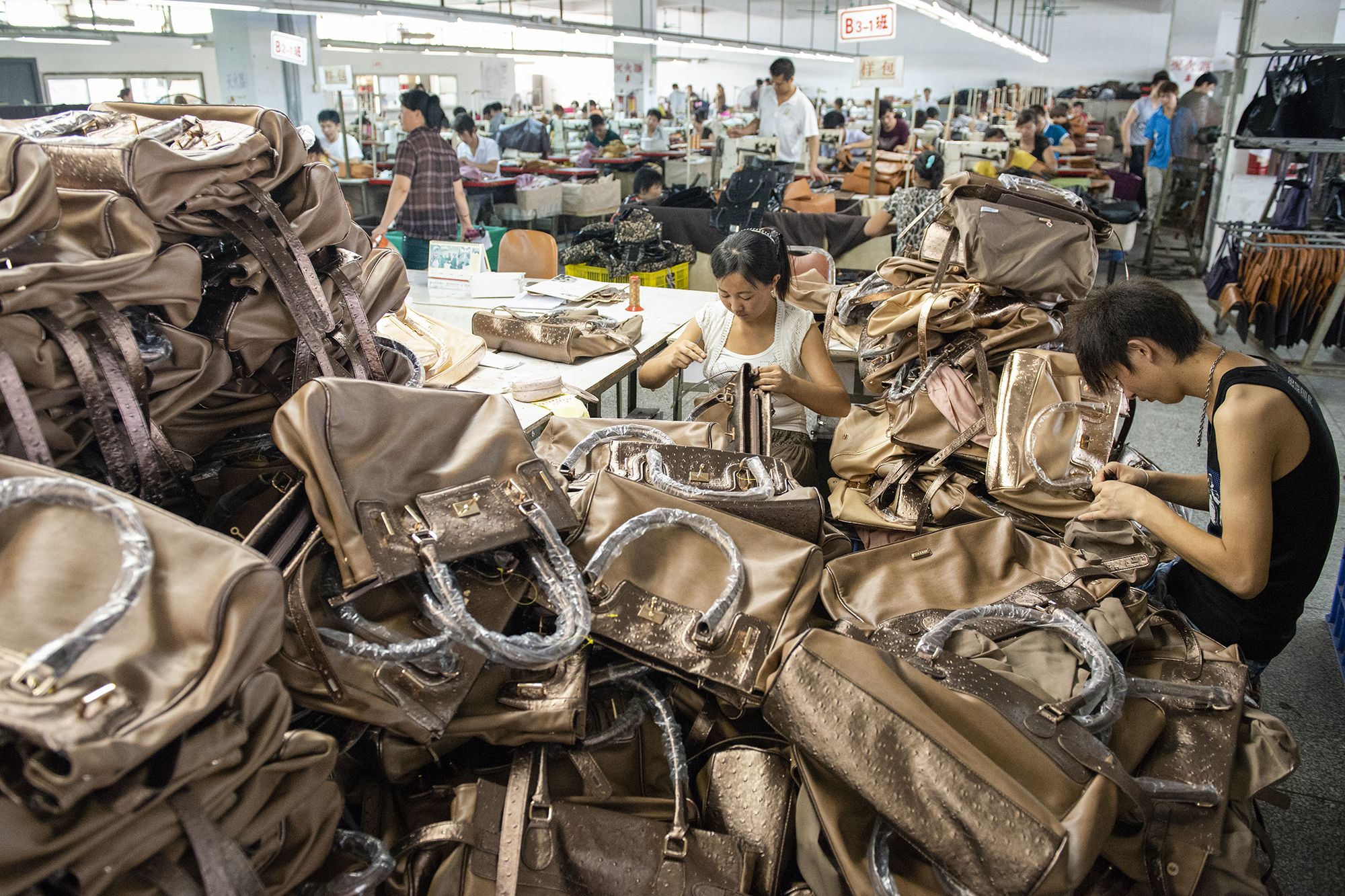
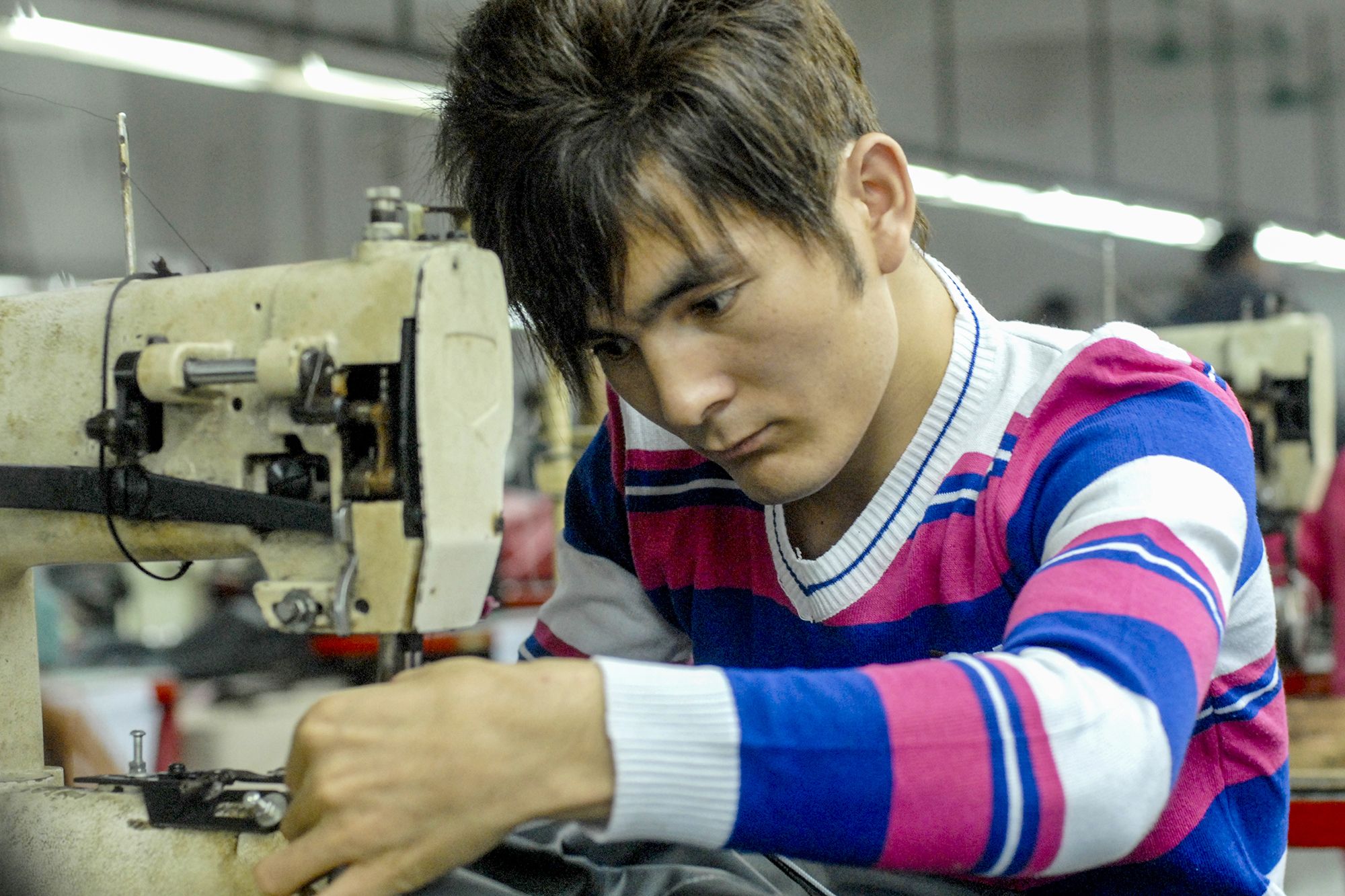
After that, whenever I had even a little free time, I’d head over to the Xinjin Handbag Factory, making sure not to miss a single step of the process—sewing, edge coating, hemming, assembly, finishing, quality inspection, punching, and packaging. I went from the first floor to the third floor, and I even went into the workshop set up on the rooftop.Qingtuer, Tursunguli, Sherbai, Aixia, Ashkar, Tolanhan, Duixianlali, Kangjibek… I’ve photographed every single worker multiple times. What left the deepest impression on me was that every time I went to the workshop, the tall and burly Qingtuer would always say to me in his slightly accented Mandarin, “Come on, take a picture of me.”
Sometimes, when Tohadali was too busy, he’d have other team leaders take me to the workshop. I followed the Kyrgyz youths after their shift to the cafeteria and dormitories to take photos. On one occasion, another team leader asked if I wanted to go to the Qiaoda Electronics Factory, saying there were also many Kyrgyz youths there—and of course, I was more than happy to go.
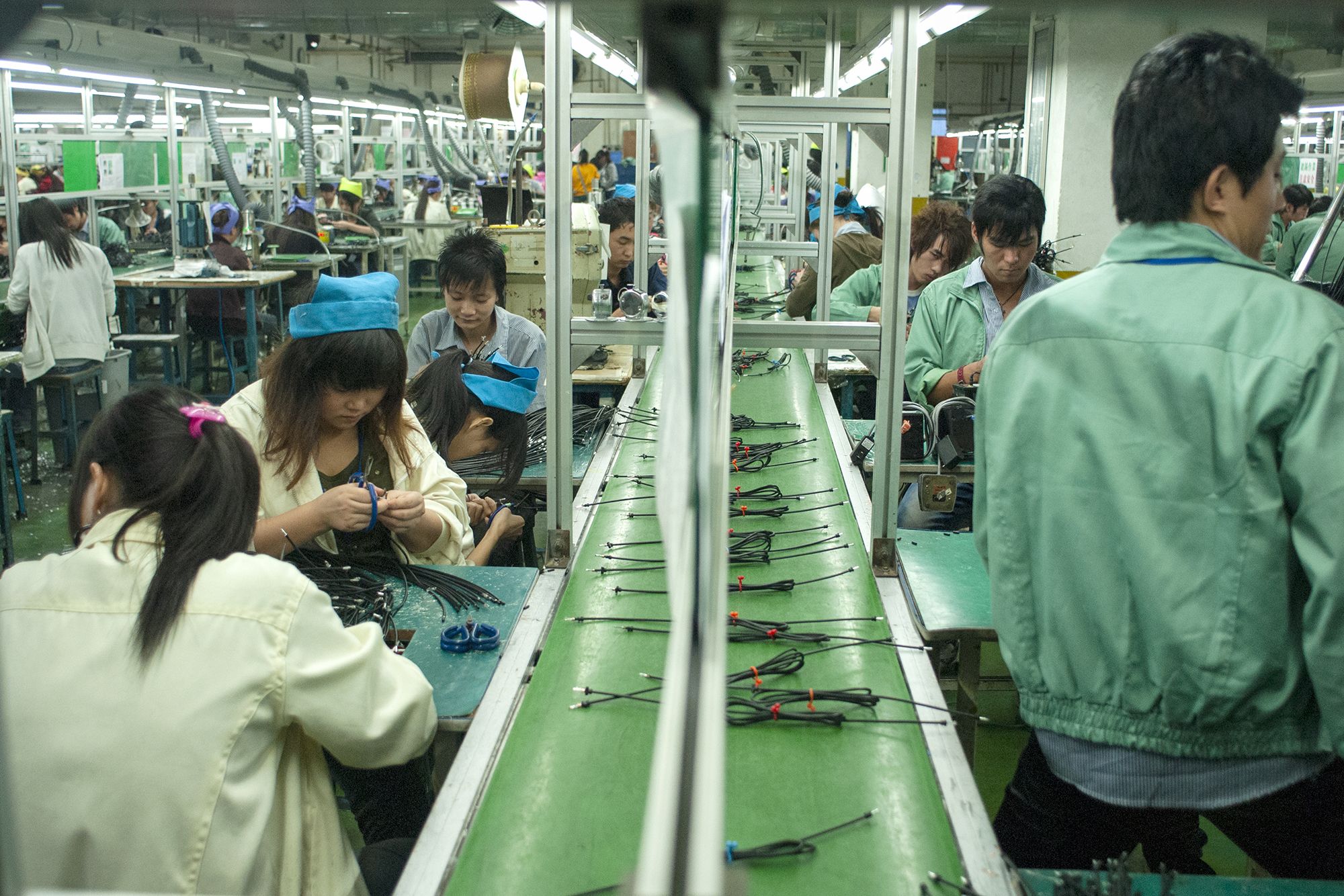
The first time I entered the Qiaoda Electronics Factory, I had just started filming two assembly lines when a man stopped me. He said he was the factory director and that I hadn’t obtained permission to film inside the workshop; he threatened to call the police. The Kyrgyz official who had escorted me into the workshop—whose Mandarin wasn’t very good—patted his chest and said, “He’s our friend.” The factory director argued with him: “You can’t bring outsiders into the factory without permission.”
Fortunately, I always carry newspapers featuring my work in my camera bag. I pulled one out to show the plant manager and told him I was a correspondent for the *Chang’an Group Newsletter* and that the photos would be published afterward. The plant manager finally gave his tacit approval.
On October 13, 2011, the third collective wedding for young migrant workers in Guangdong Province was held in Chang’an Town, where nine Kyrgyz couples tied the knot. To prepare for the wedding, a cow and nine sheep were slaughtered the day before.On October 13, the factory closed for the day. An imam officiated the wedding ceremony. After the couples exchanged vows, they shared a bowl of naan and drank salt water together, and the groom’s family presented the bride with a gold necklace, earrings, and a ring.More than 400 Kyrgyz youths held a traditional wedding celebration for the newlyweds according to their hometown customs: they recited and sang the “Manas” epic, presented wedding pastries, distributed sweets, and enjoyed hand-mixed rice. That evening, a Western-style wedding was held at the Ushajia Carnival Yuecheng Hotel, complete with all the traditional elements: opening champagne, cutting the cake, and sharing a toast.
In Aheqi, influenced by traditional customs, a wedding for a couple typically costs between 30,000 and 50,000 yuan; however, if the couple participates in a group wedding held in Dongguan, the cost per couple is less than 5,000 yuan. The county government covers all round-trip travel expenses for the couples’ parents and even arranges a trip to Zhuhai for them.
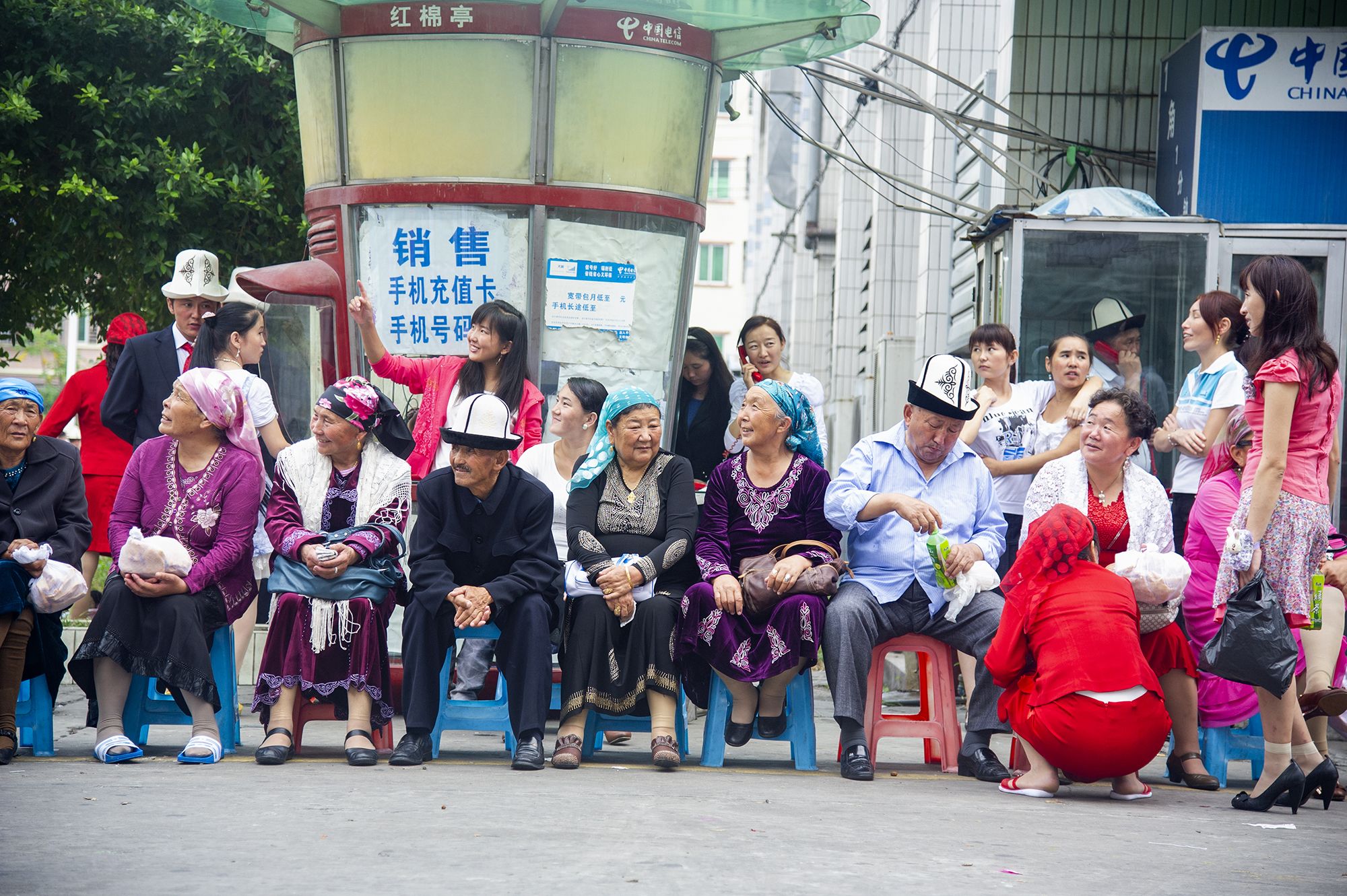
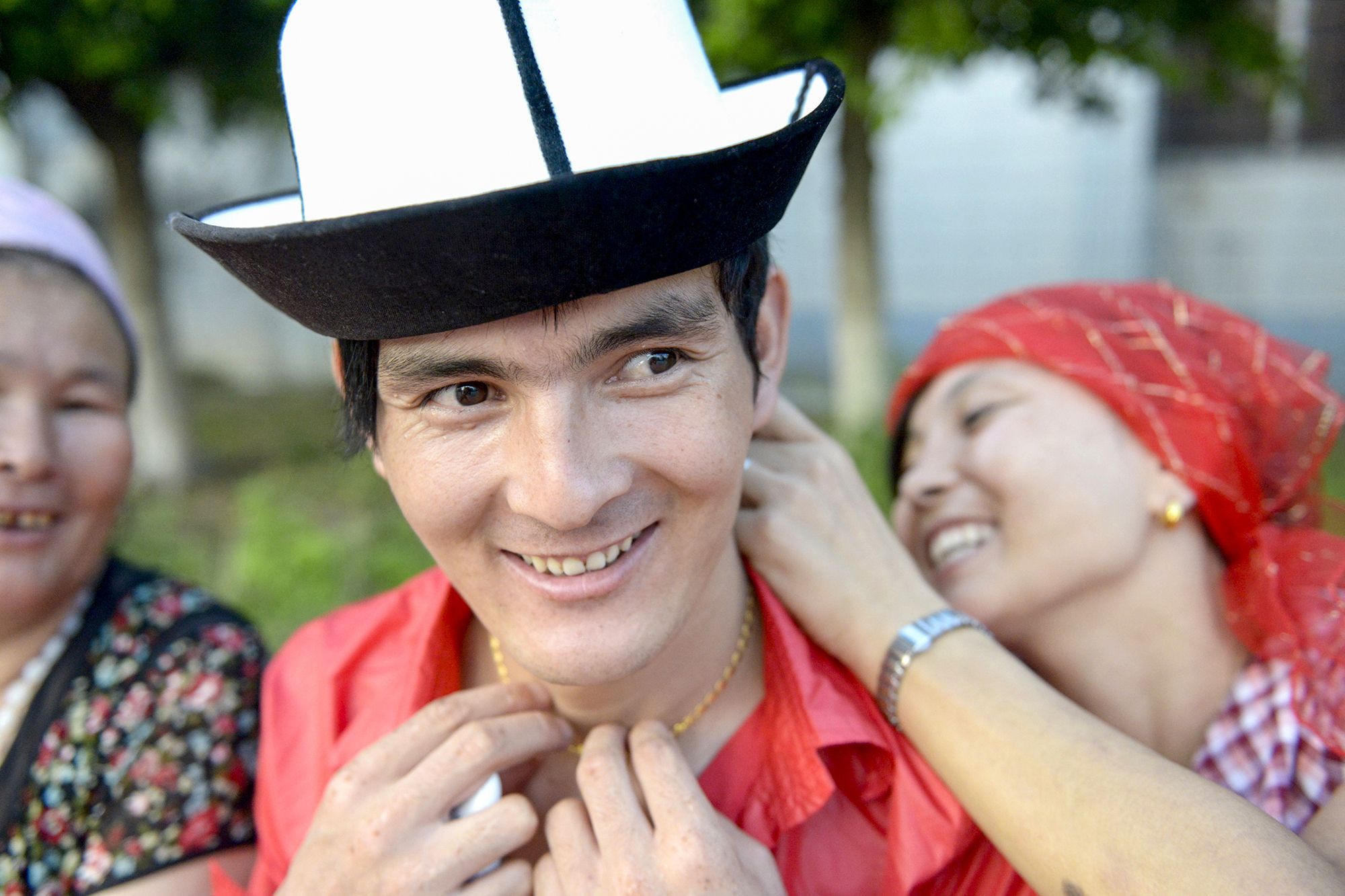
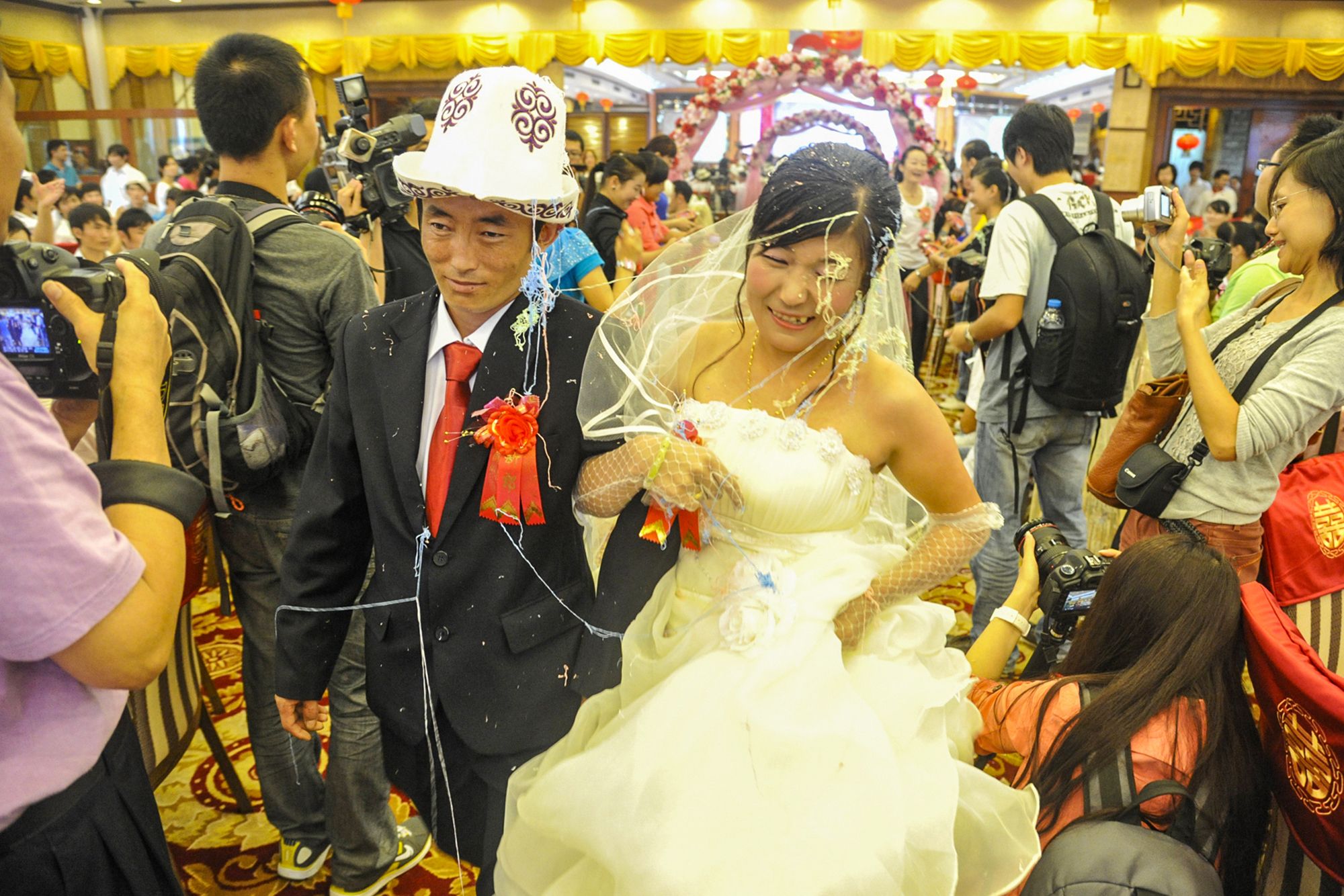
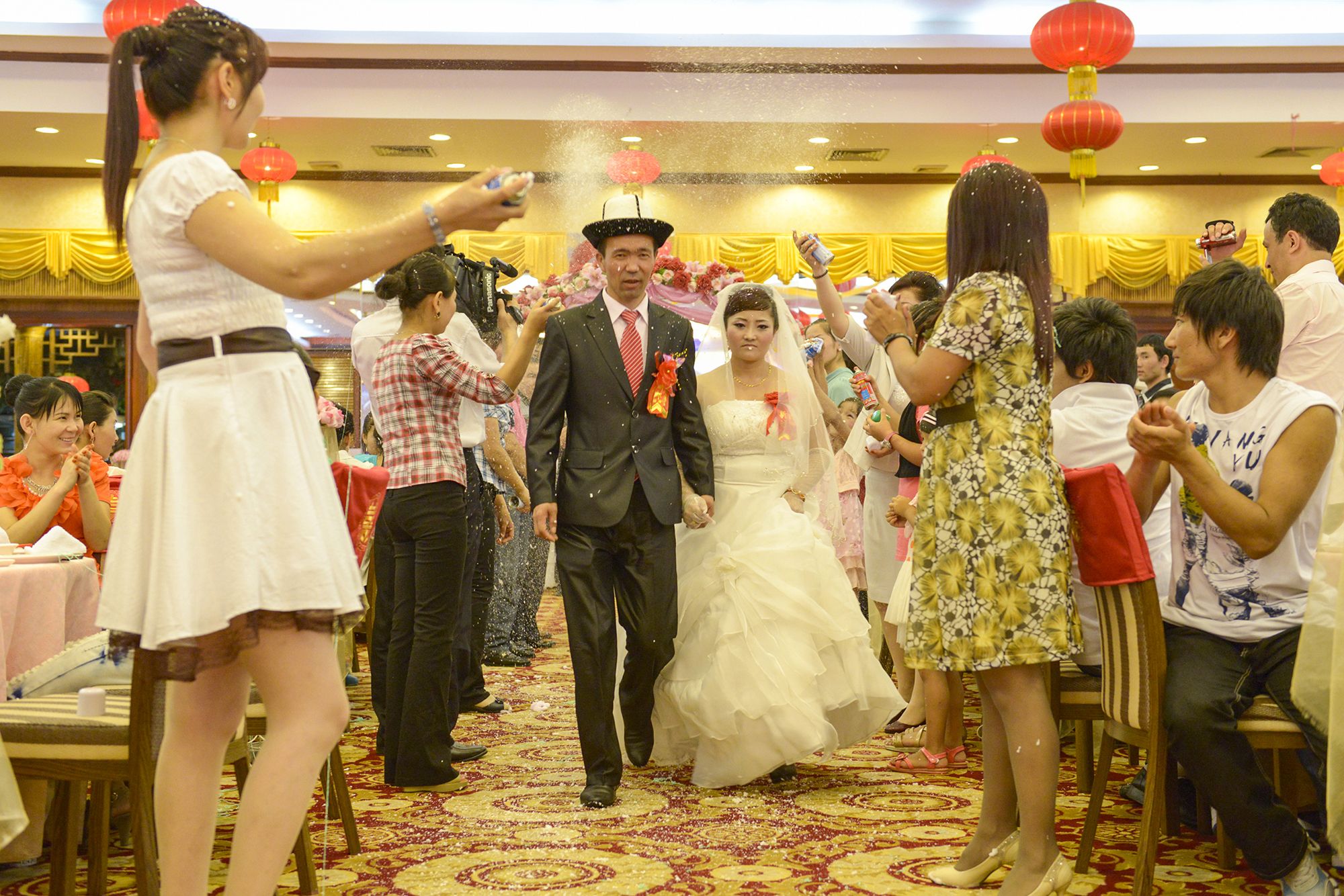
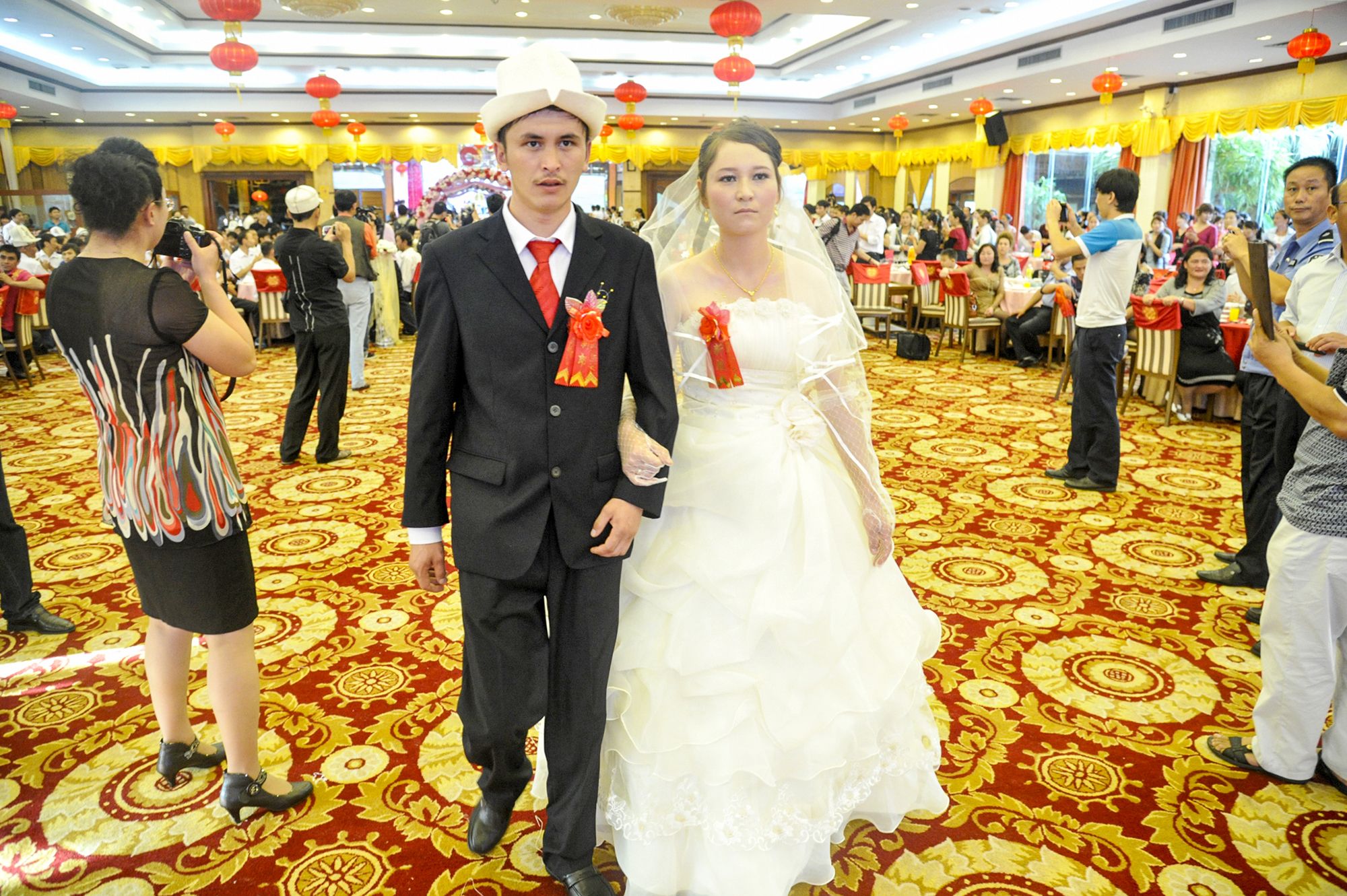
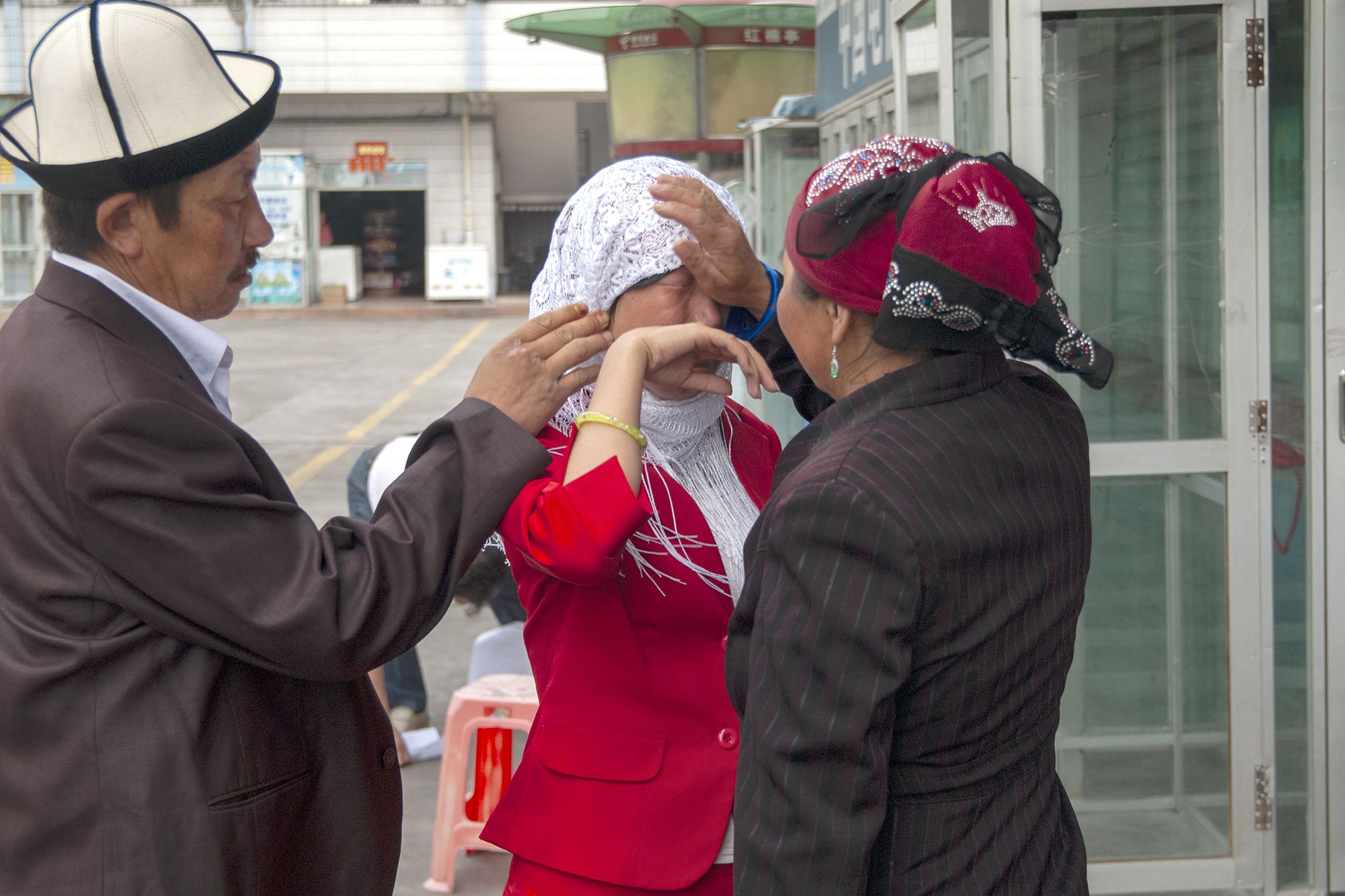
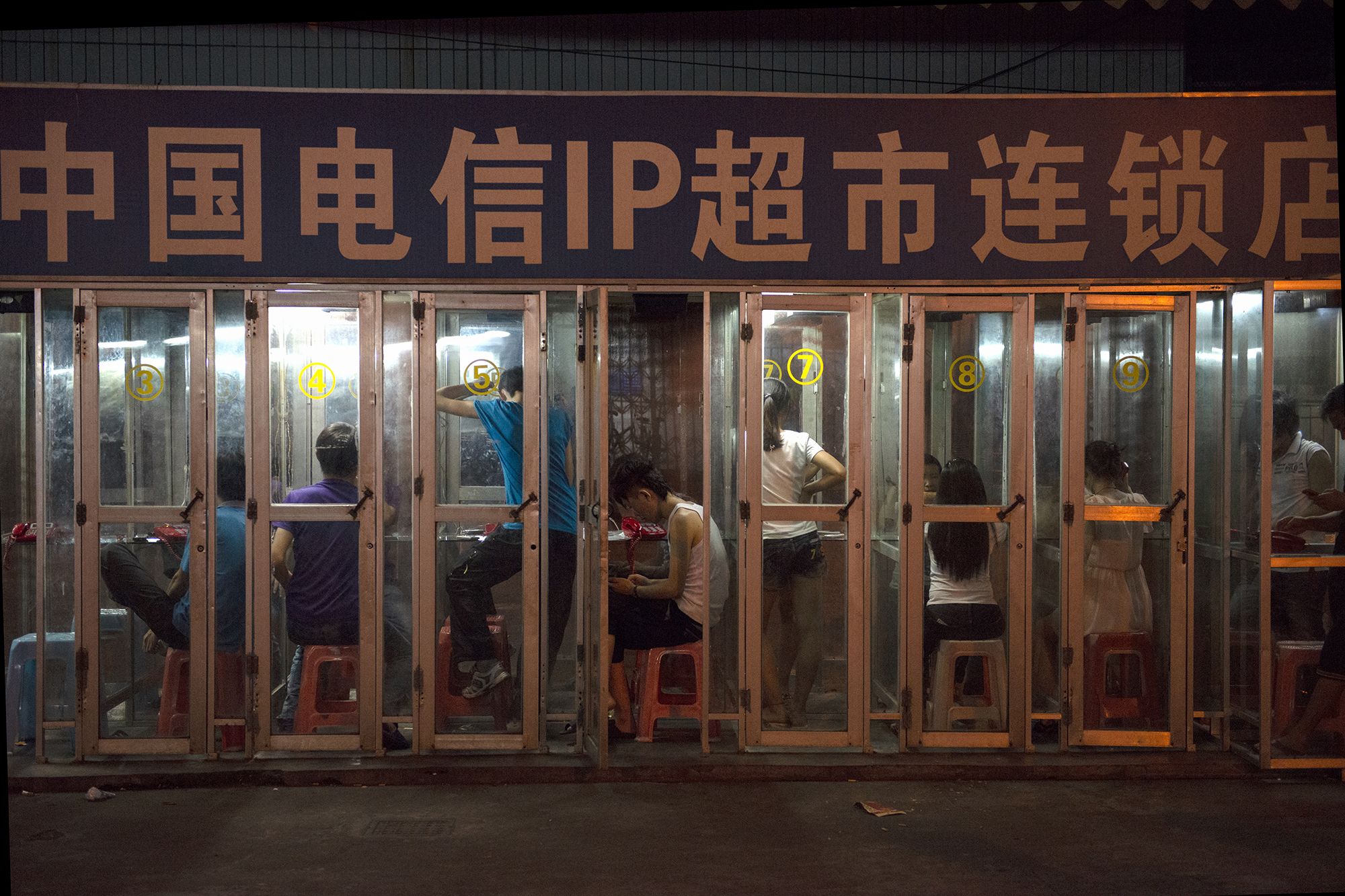
But life as a migrant worker isn’t all rosy. Unlike the nomadic lifestyle on the Pamir Plateau, in Dongguan’s workshops—where tasks are highly specialized—they must clock in on time and perform the same repetitive motions at fixed workstations. Once the initial excitement wears off, they begin to miss their hometowns and loved ones, and the phone booths in the industrial park become their most frequented spots.
Under the labor dispatch agreement, the young people were required to work in Chang’an Town for at least 18 months. In 2013, the owner of the Xinjin Handbag Factory absconded, and two years later, the Qiaoda Electronics Factory also shut down. The Kyrgyz youths returned to Aheqi one after another, and I gradually lost touch with them.
More than a decade later, on October 25, 2025, Air China Flight CA2513 touched down in Aksu. A ride-sharing car took me westward; the leaves on the poplar trees had already turned yellow. At the end of the paved road was the checkpoint for Wushi County, and by the time I reached Aheqi County, it wasn’t dark yet. Xinjiang is in the Eastern 6th Time Zone, where the sun doesn’t set until 7:50 p.m.
I’m here to find some people—the Kyrgyz youths I’ve photographed many times on the assembly line at my factory in Dongguan. My search in Aheqi didn’t go smoothly at first. Sherbai, the groom I’d followed and photographed back then, didn’t accept my WeChat friend request after three attempts; no one answered my calls, and my text messages went unanswered.
The turning point came in the hallway on the sixth floor of the hotel. A housekeeping staff member asked me who I was looking for, and I told her I was searching for people who had worked in Dongguan back in the day. She told me she had also worked in Dongguan. I spread out the more than 1,000 photos I’d brought with me on the bed. She looked through them for a while and rattled off a string of names—some ran hamburger shops, others ran fruit and vegetable stores, and still others worked at the Public Security Bureau.Her name was Su Yihan Nai. She had worked at the Qiaoda Electronics Factory from 2011 to 2013. After that, she moved around to various places. In 2024, she returned to Aheqi to be with her son, who was attending school, and took a job as a housekeeper at the hotel, earning over 3,000 yuan a month. Her husband was still in Jinjiang. She became my first subject.
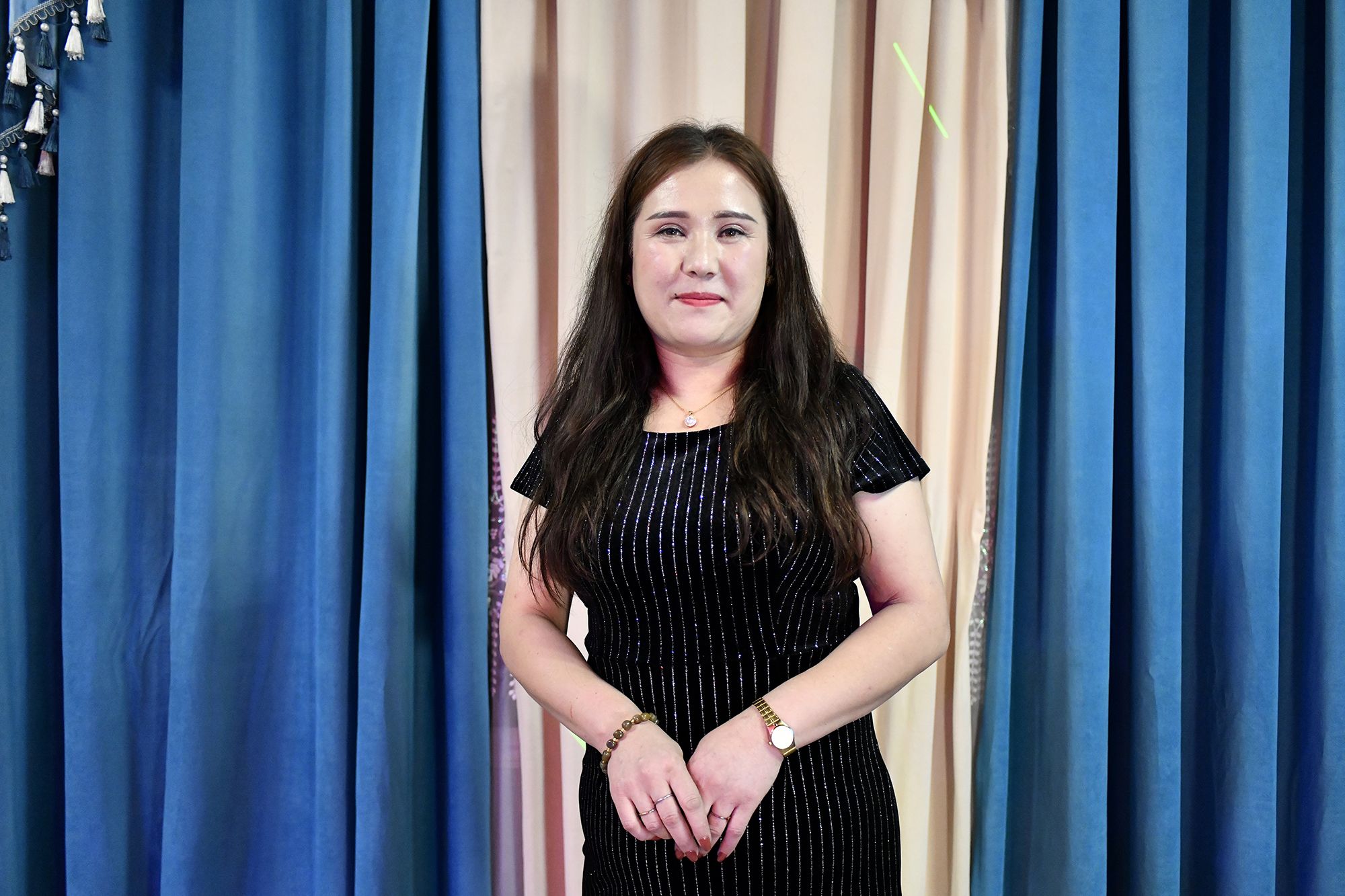
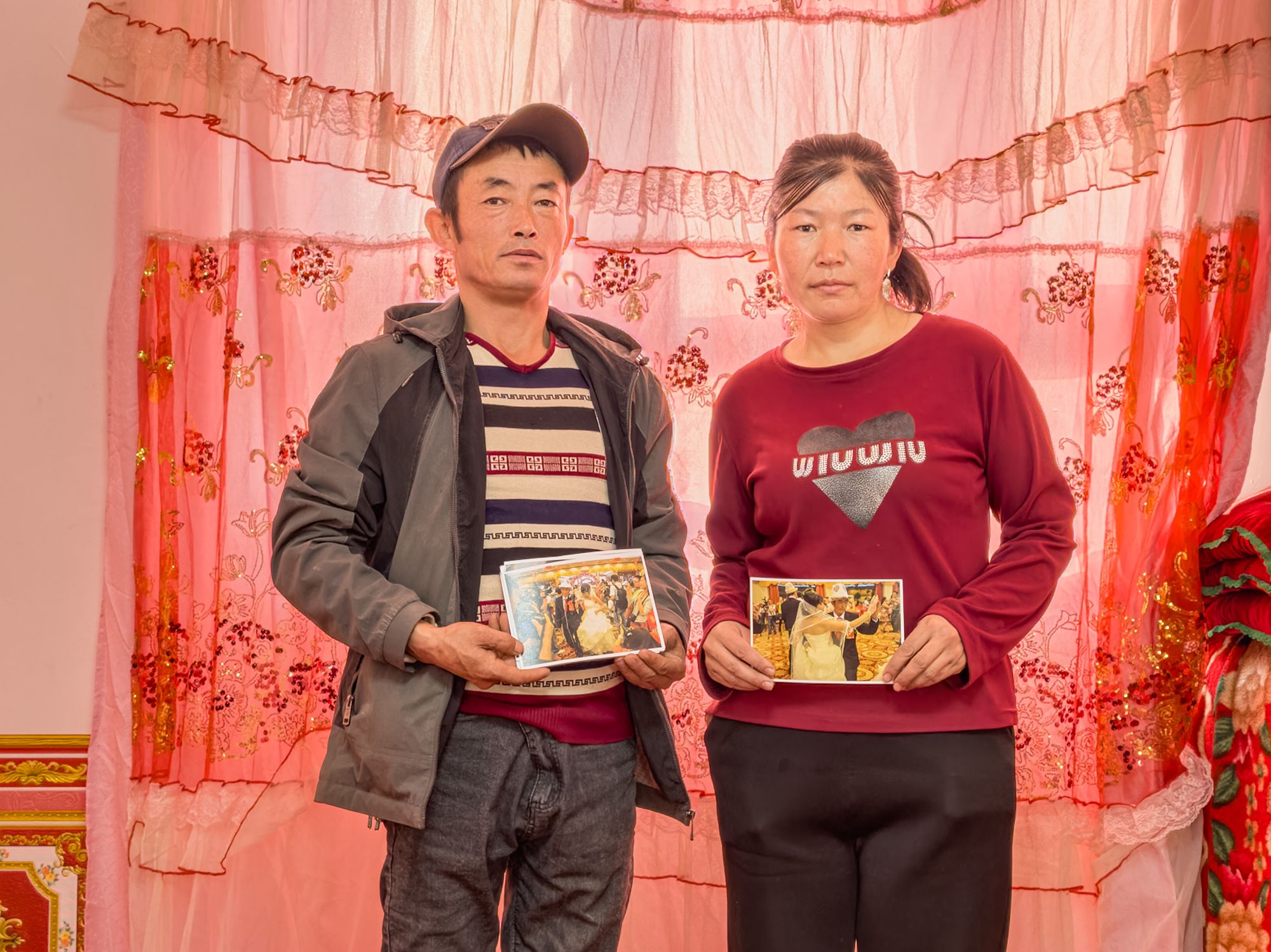
Following the clue she gave me, I found the Le Pai Burger Shop near People’s Square. When the clerk, Tursungul, saw a photo of the workshop, she said, “Where did you get this photo? That’s my husband.” It was from a group wedding in 2011, where she and Dui Xianla were one of the newlywed couples.
Tursungul was born in 1990. When she went to Dongguan in 2009, she was the youngest among the migrant workers. After returning home in 2013, she went to Korla to learn how to make hamburgers, to Aksu to learn how to bake cakes, and then to a hamburger shop in Urumqi to learn about business management. In 2018, she took out a loan of 260,000 yuan to buy this hamburger shop and recouped the purchase price in just over a year.At the height of business, the shop employed four people, and they were constantly on their feet. Her eldest daughter, Dinaz, is now in the first year of junior high; she ranked second in her class on exams and serves as the math class representative. Shortly after, two customers dining at the burger shop recognized Tohadali—the man who had led the group to Dongguan back in the day—from a photograph, and then kindly helped me flip through my phone book. In this way, connections spanning half the county were reestablished, one photograph at a time.
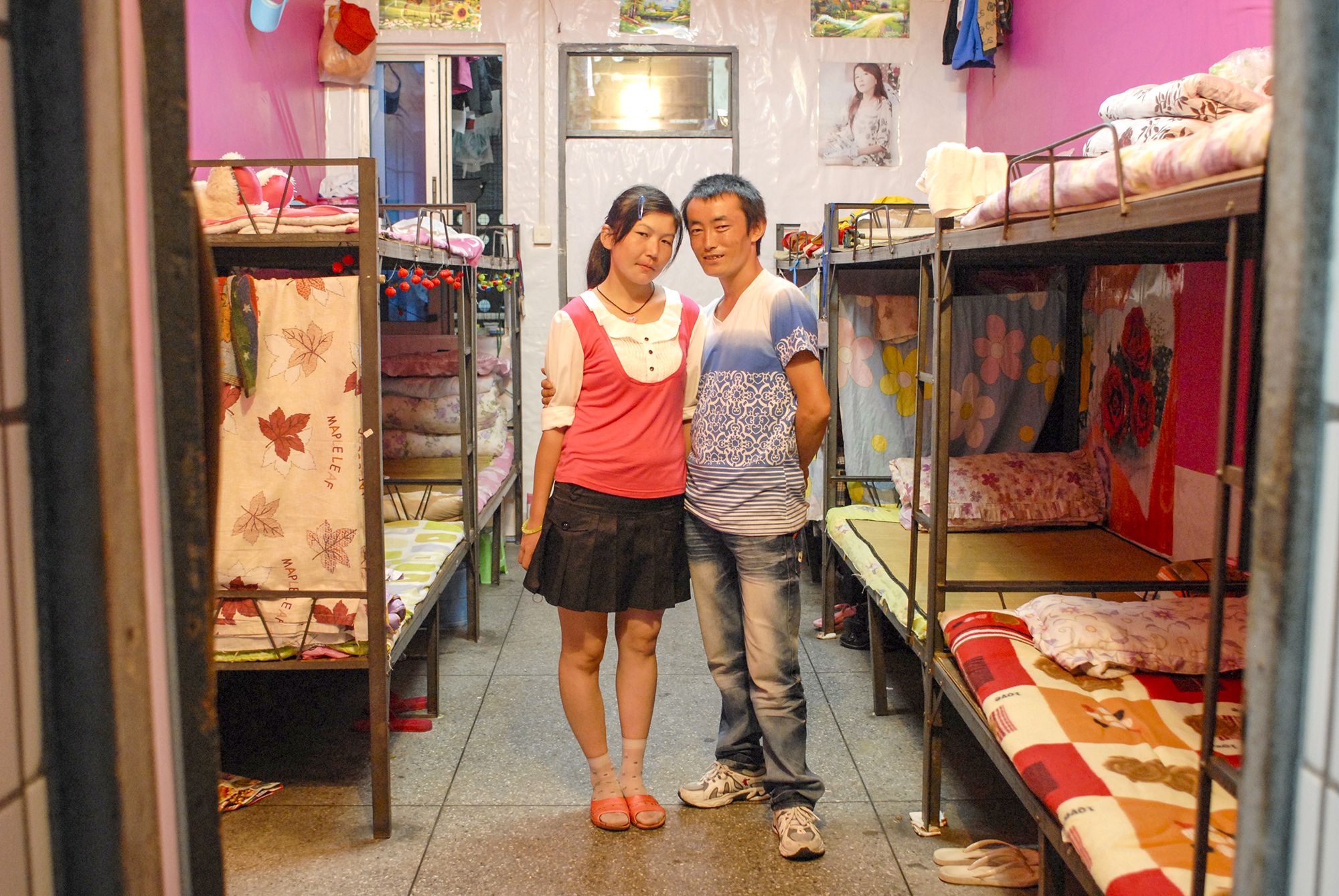
Qing Tu'er has only one storefront in Aheqi’s general store, with an annual rent of 26,000 yuan and shelves lining three walls. From 2009 to 2012, he learned to operate flat-bed, medium-bed, and high-bed sewing machines at the Xinjin Handbag Factory—the high-bed machine is particularly difficult to operate but pays well, and few Kyrgyz migrant workers know how to use it.After returning to their hometown, he and his wife, Torkenbubi, turned down government-arranged jobs and used the money they had saved from working away from home to open a restaurant in their village. Later, they closed the restaurant and opened a general store in the village, eventually opening a branch in the county seat and hiring three employees. As their financial situation gradually improved, Qingtuer’s family purchased three apartments and a commercial space in the county seat, as well as a truck and a car.
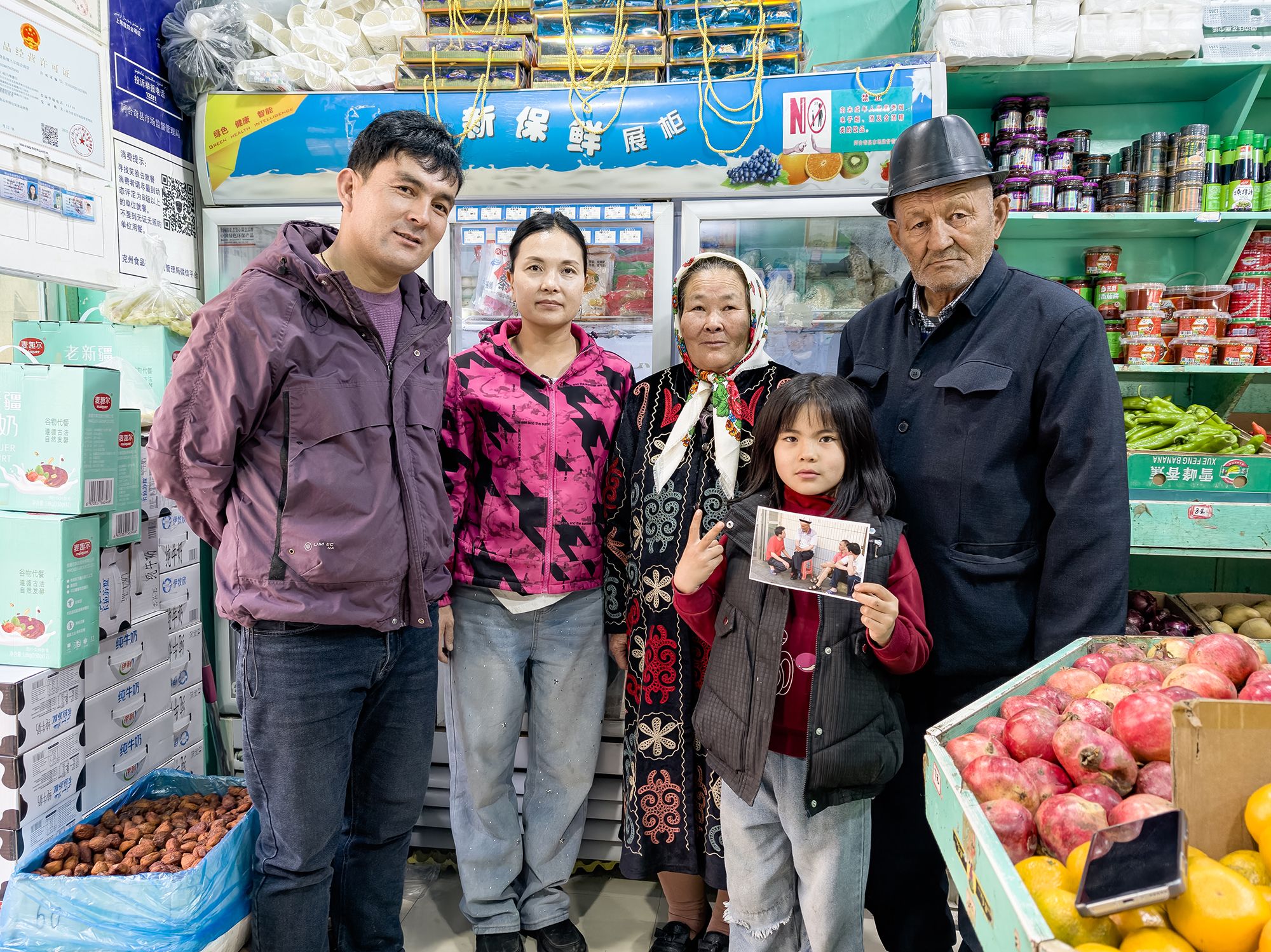
I laid the photos out on the freezer in his store. Qingtuo closed up shop to look at them first; even customers who had finished shopping didn’t leave—they all gathered around to look, chatting away in Kyrgyz. Qingtuo’s father had also gone to Dongguan back then and attended his son and daughter-in-law’s group wedding.
In Kulansazik Township, Torkenbubi introduced me to Halibinur, a shepherd born in 1989 who worked at the Qiaoda Electronics Factory from 2011 to 2013. After returning home, he trained as a motorcycle mechanic and ran a repair shop in the township for six years before closing it in 2022 to return to herding. Today, he has 50 sheep, 4 horses, and 5 cows.
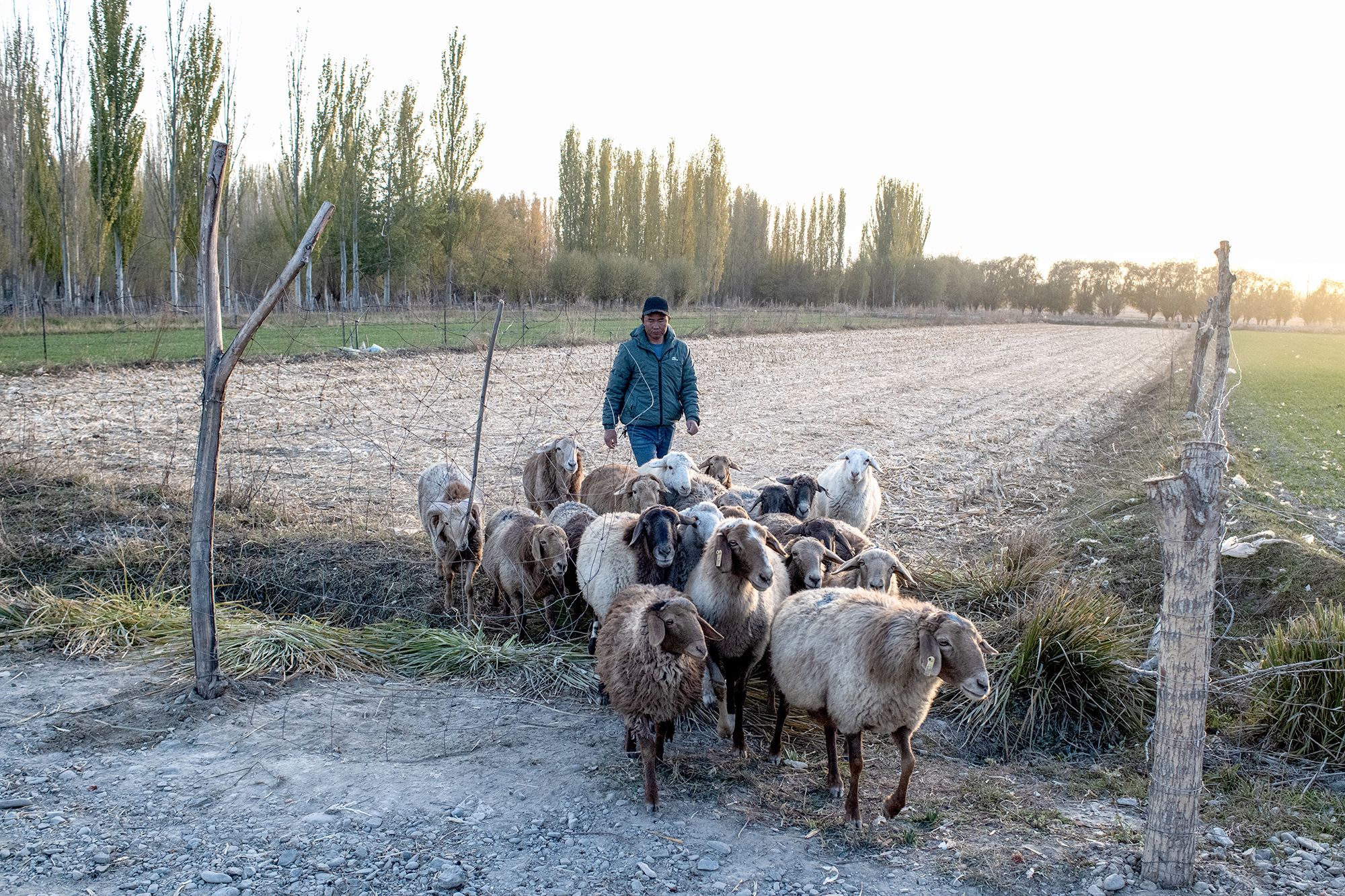
At dusk, Hali Bienur went out to herd his sheep. With a wave of his long stick and a loud shout, the lead sheep set off at the head of the flock. A sheep that had strayed to graze on the grass by the roadside fell behind, but when his wife honked the horn, it ran to catch up. This scene was exactly what I most wanted to capture on this trip—this is how the herders of Aheqi had lived for generations before moving to Dongguan.
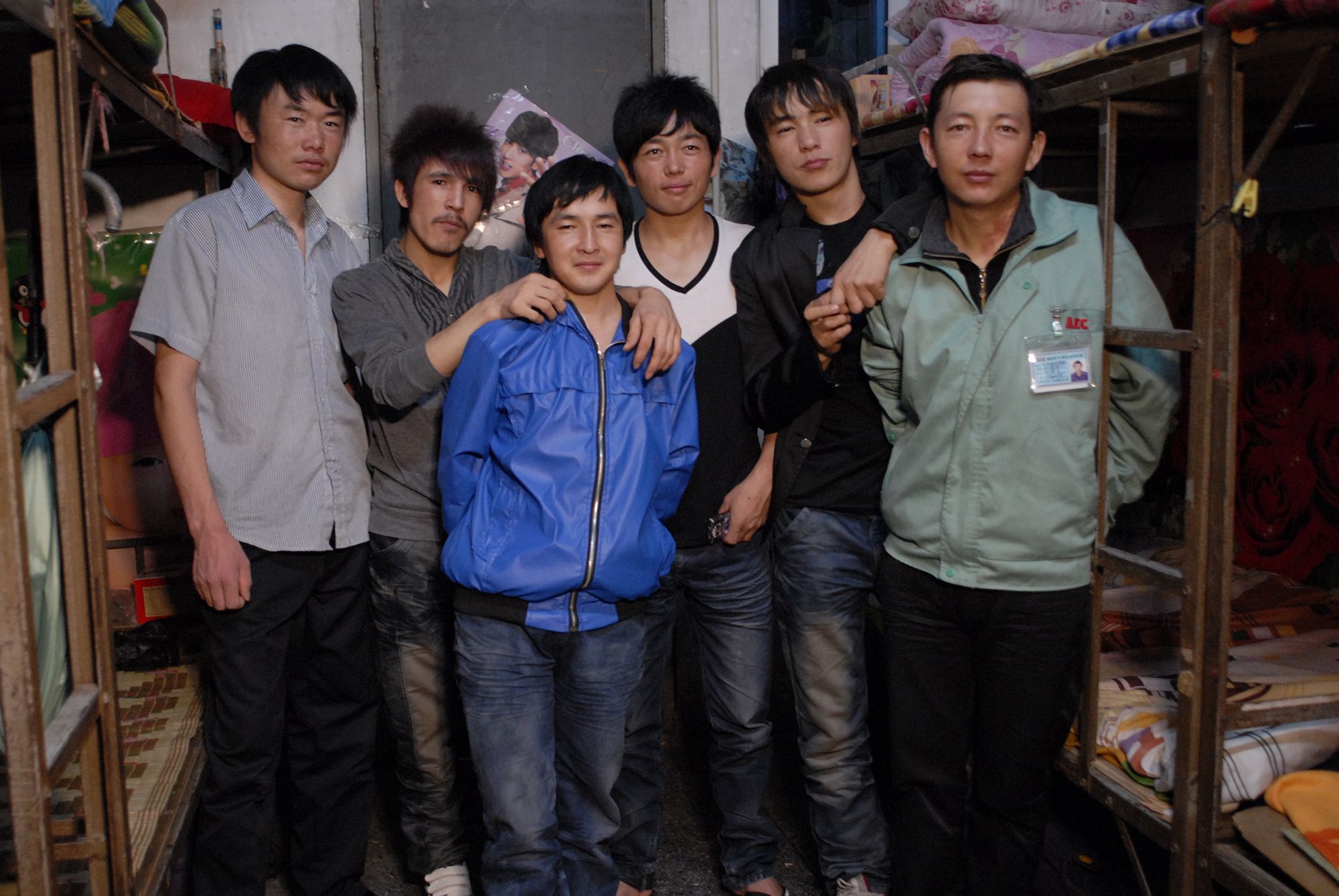
Sixteen years have passed, and the fates of these coworkers have varied.
When Shayila went to Dongguan, she was one of six people selected for a trial period at the Qiaoda Electronics Factory. When she first arrived, she soldered 60 electronic circuits a day; a year later, she was soldering 200 and had become a shift leader, even serving as the emcee at a group wedding. After returning home, she became the food and beverage manager at the Tuohe Junlan Hotel—the highest-paying job in Aheqi at the time.
Saimala has worked as a security team leader and an auxiliary police officer, and he once worked on the assembly line making shoe soles at the 361 Company in Fujian. He is now a trim finisher, earning a monthly salary of 2,000 yuan, and he also herds sheep.
After returning home from the handbag factory, Aman Gul worked as a security guard at an elementary school for four years, and in 2017, she also began working as a border guard.
Kangjibek returned from the handbag factory. He had worked at the Public Security Bureau and the Armed Forces Department, and later became a driving instructor; many drivers in the county seat were his students. Having only completed the fifth grade of elementary school, he said that before going to Dongguan, he didn’t realize the world was so big. Fortunately, he ventured out when he was young—the money he saved during his four years of working was enough to buy a house in the county seat.
Aiguli Tawali’s husband, Mamat, returned to his hometown and worked as an auxiliary police officer, but later tragically died in an accident. That evening, from a stack of photos, she picked up a picture taken at her wedding. At the time, she was hospitalized at the county hospital with a spinal condition, and the county public security bureau had arranged for her to work as a cleaning lady—enough to make ends meet.
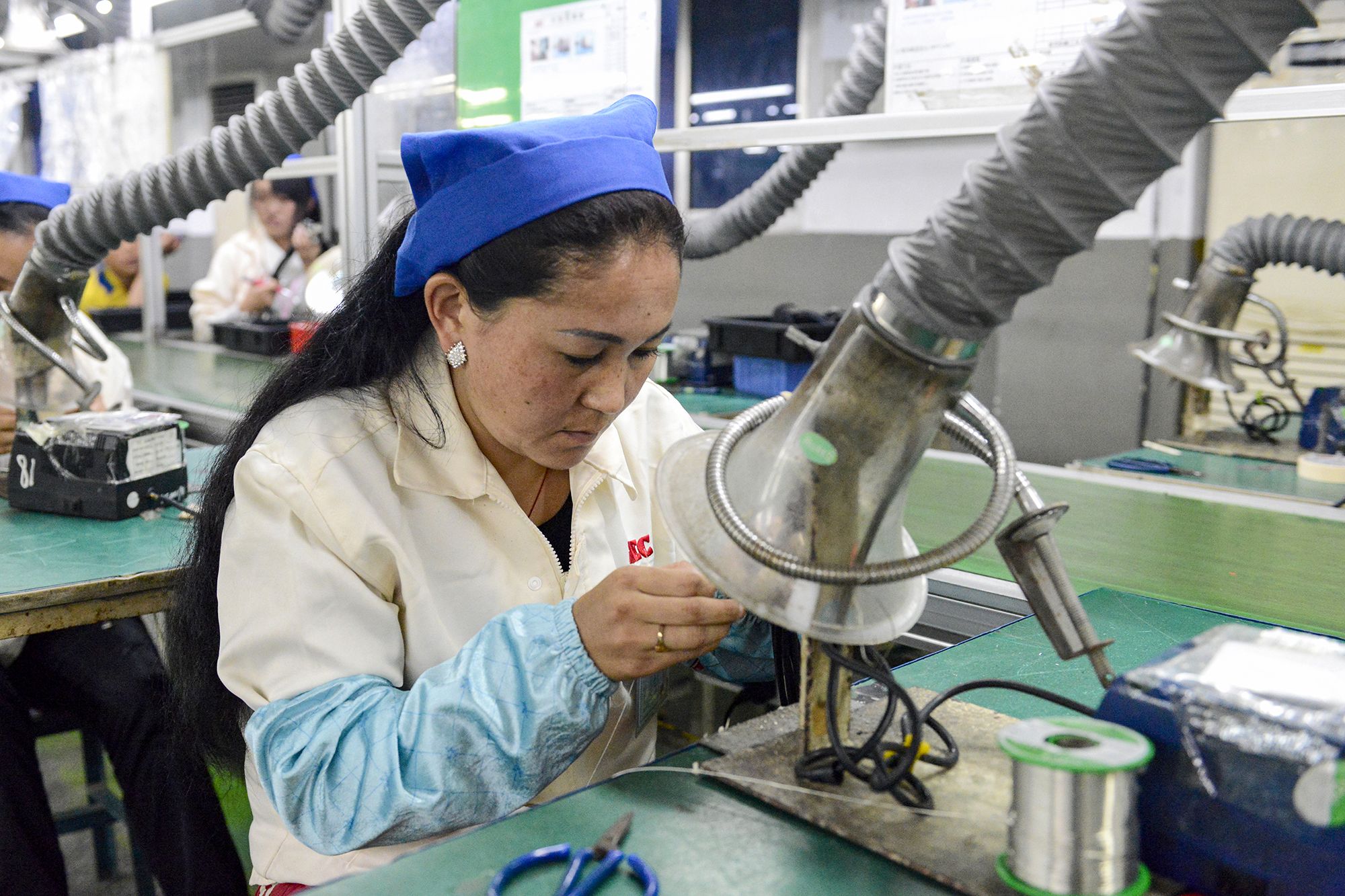
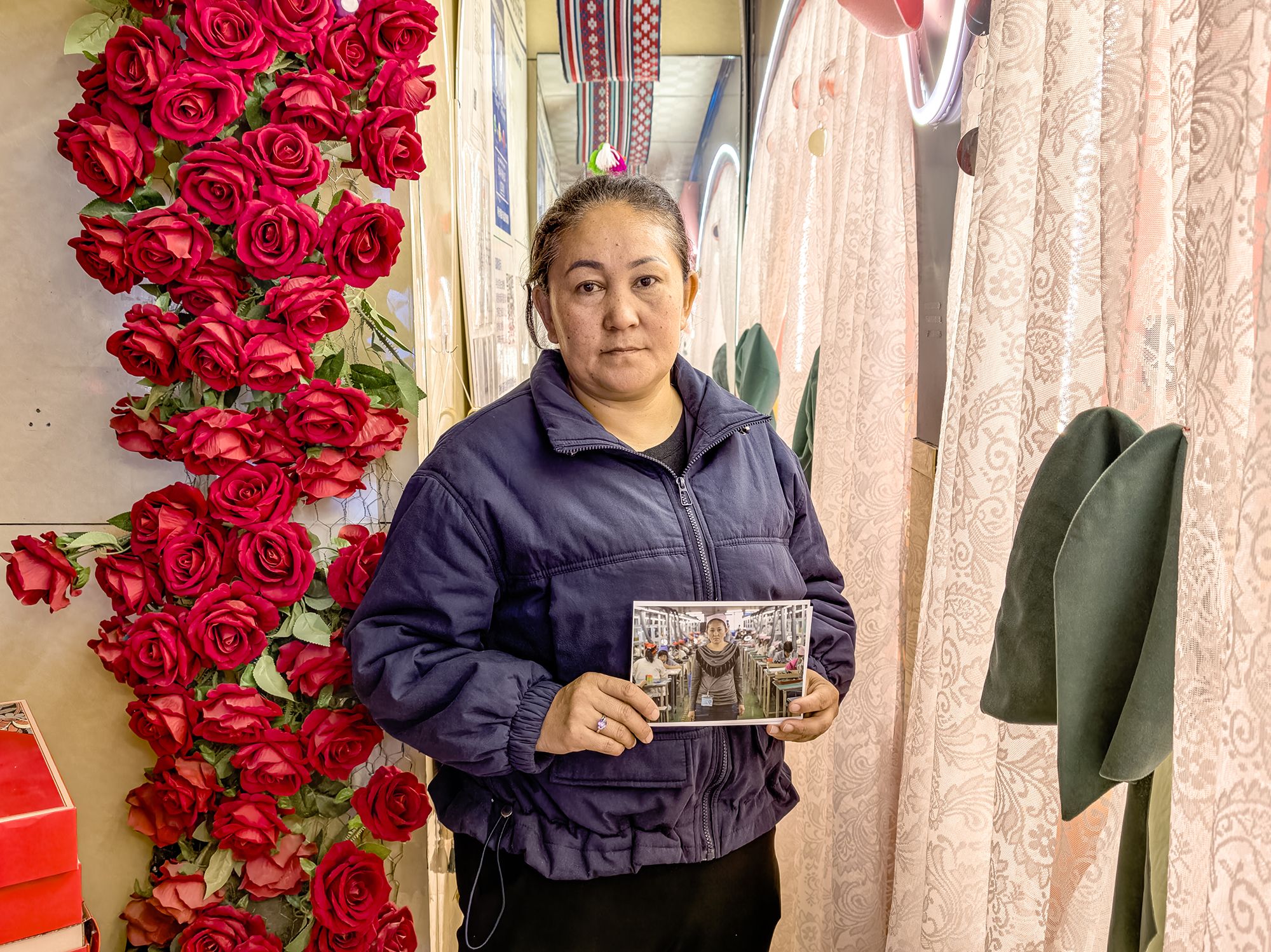
Sherbai and Gulimire divorced and both remarried. Sherbai never came to see me.
In Sumutashi Township, I happened to attend the wedding of Tohutobek’s nephew. The groom’s family slaughtered a horse and some sheep and prepared pilaf; the next day, it was the bride’s family’s turn. Tohutobek had also been a groom in a group wedding back in the day. After returning to his hometown, he worked as a chef in a TV station cafeteria for 10 years, and in 2022, he opened his own restaurant with a dance hall—which had just temporarily closed at the time.His family raises 40 sheep, 10 cows, and 3 horses, and they’ve built a new house.
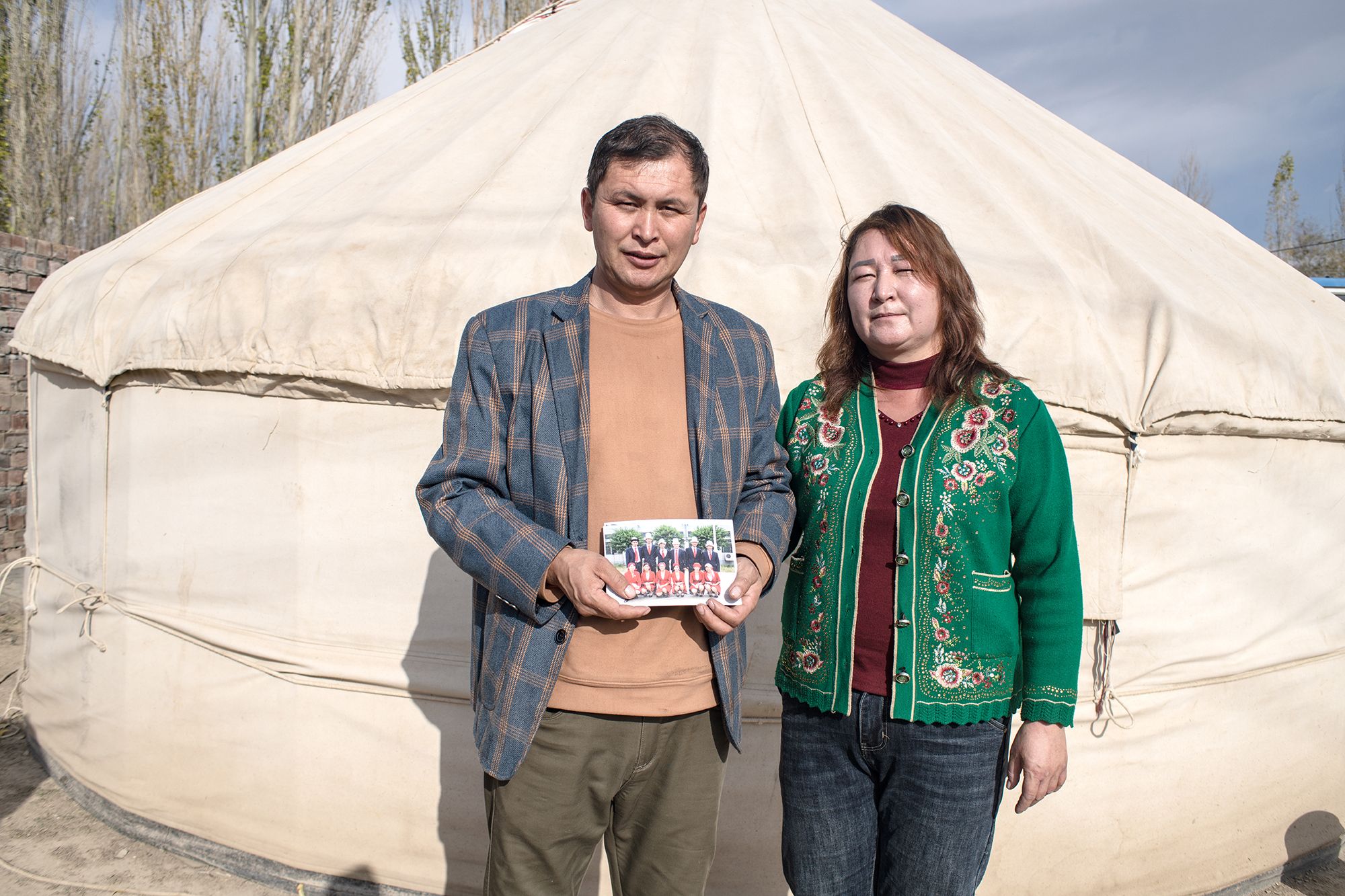
When I tracked down another groom from that year, Qiaerxian, he insisted on slaughtering a sheep to treat me to a meal. As he was carving the lamb, Qiaerxian pulled his wife close and kissed her—his wife from the 2011 Dongguan mass wedding had passed away from illness; the woman beside him was his second wife.
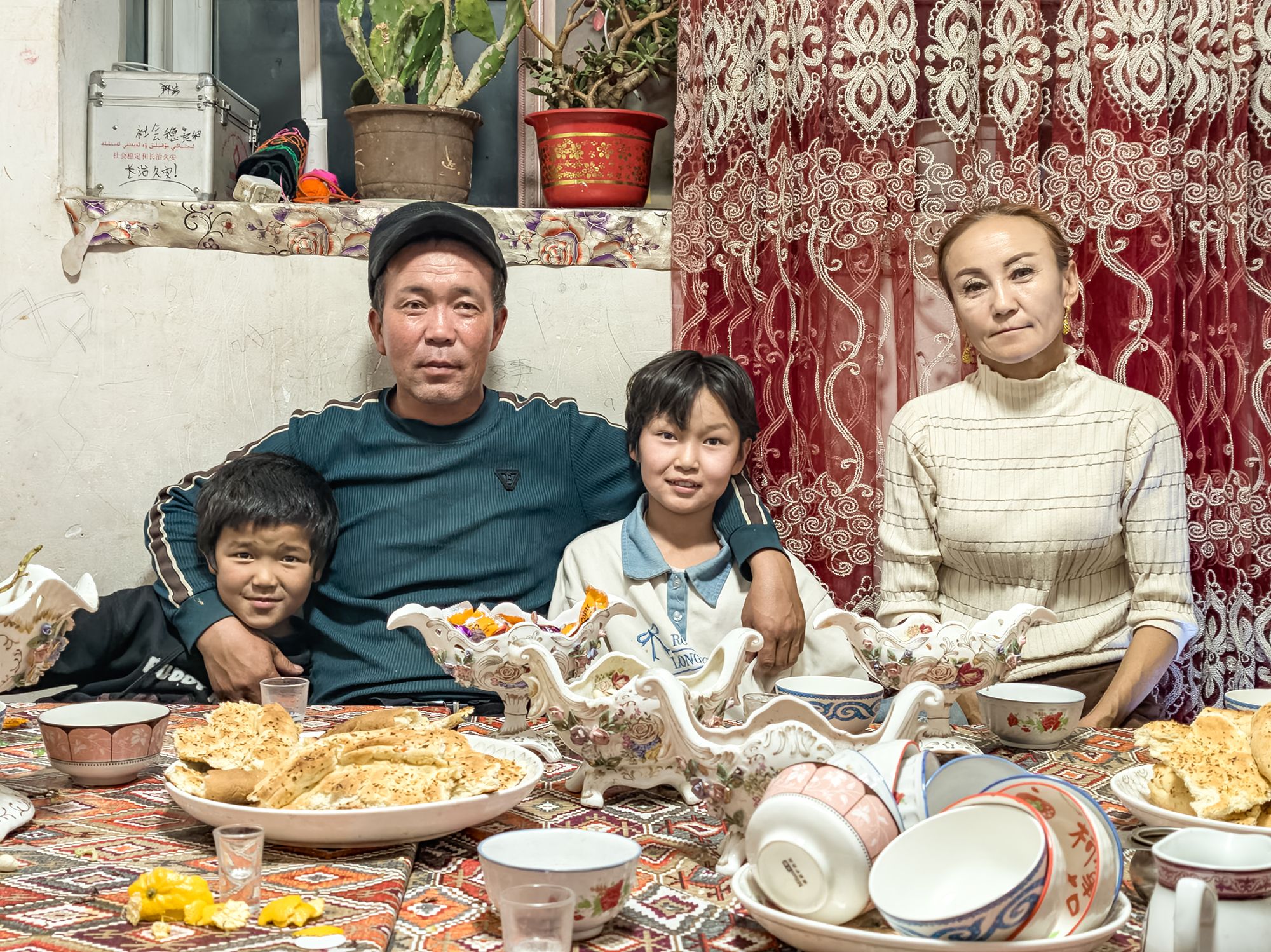
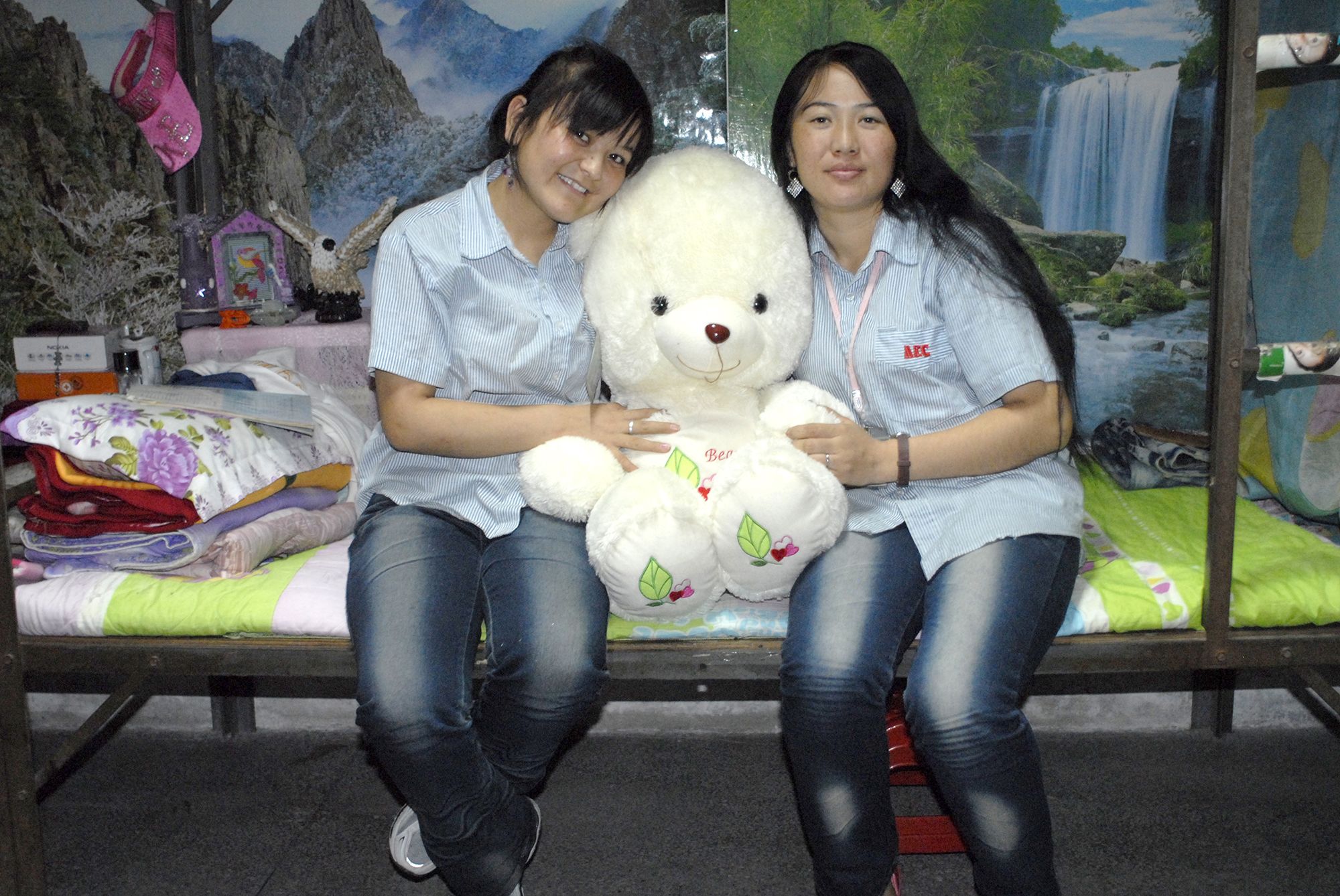
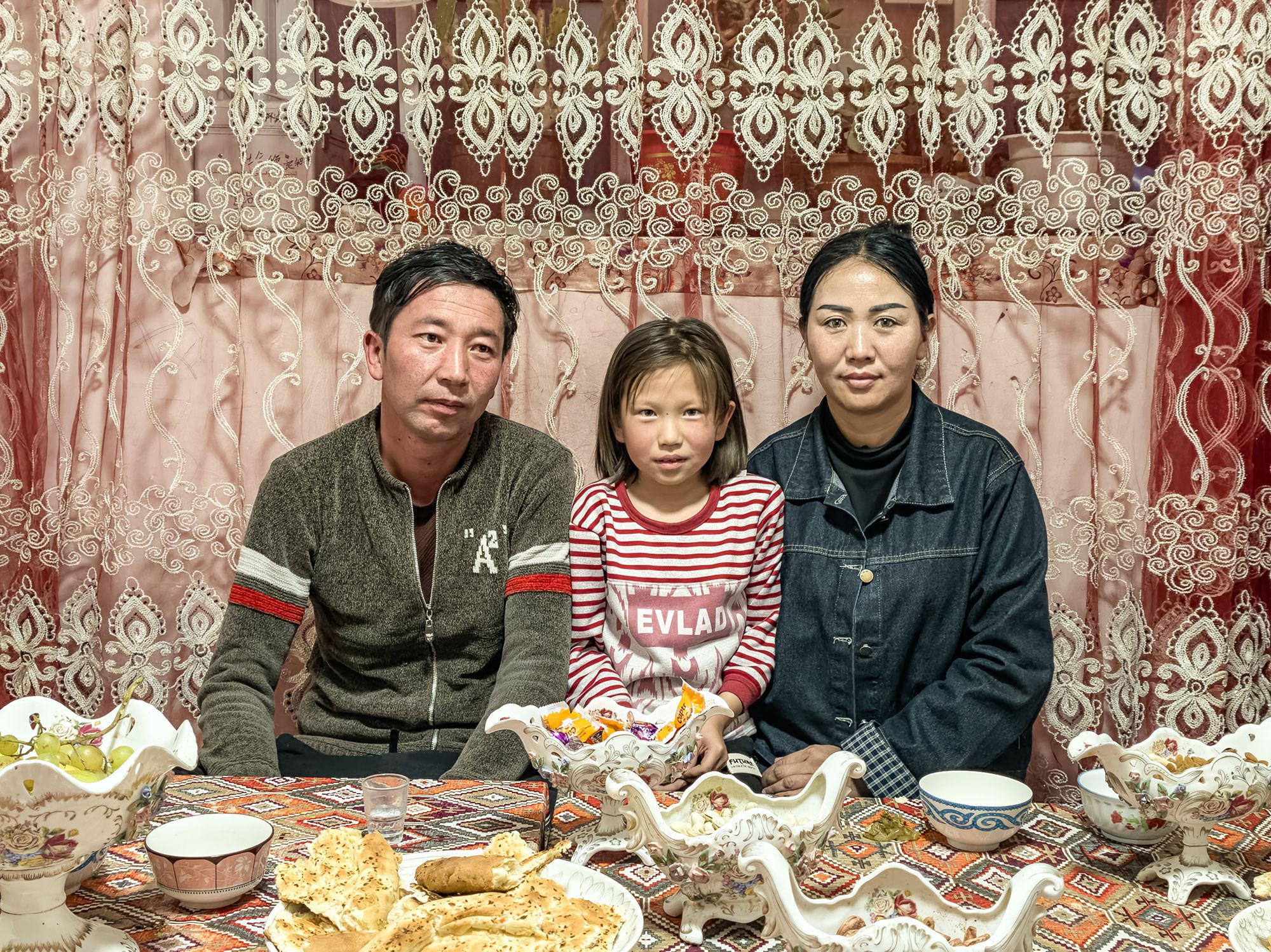
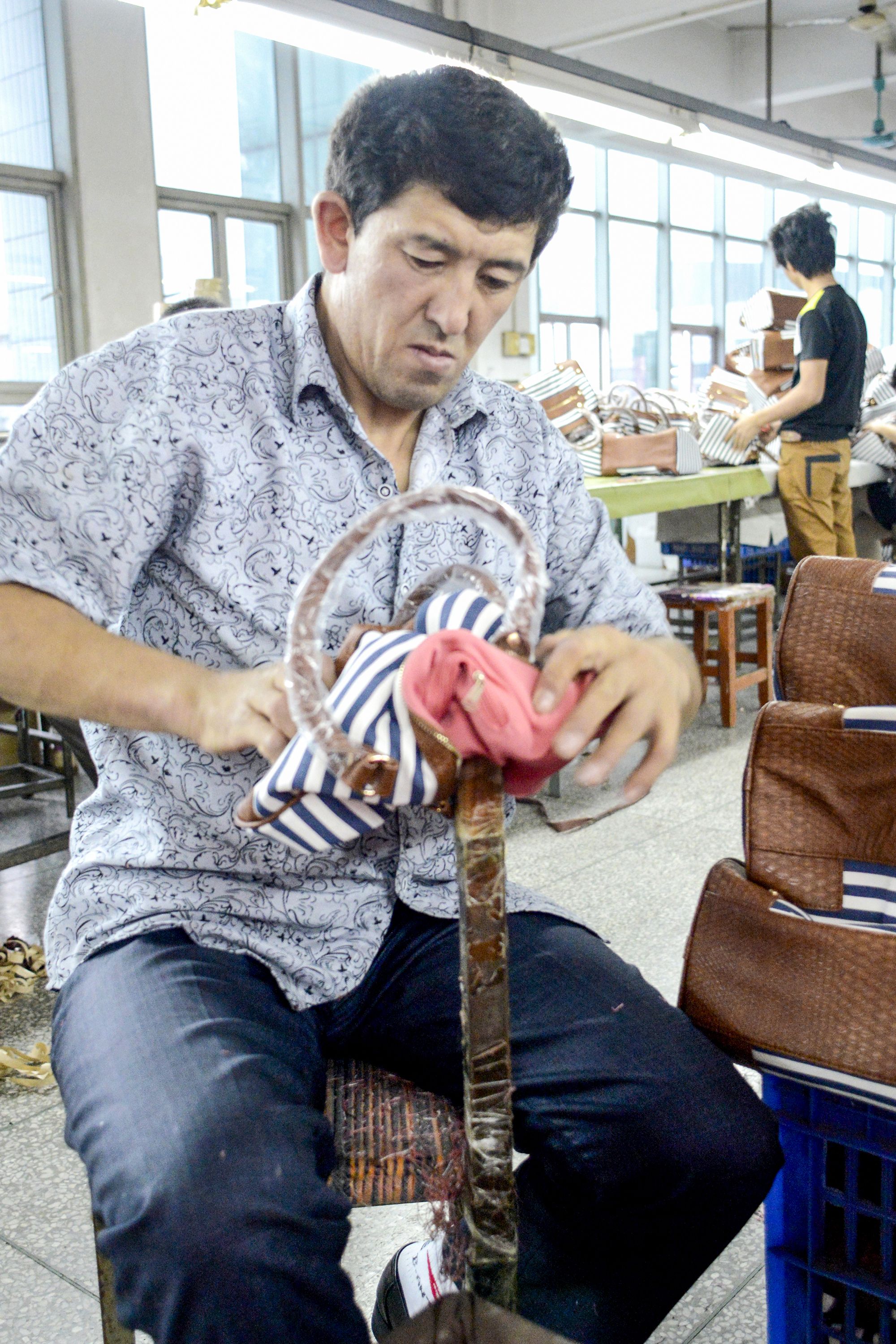
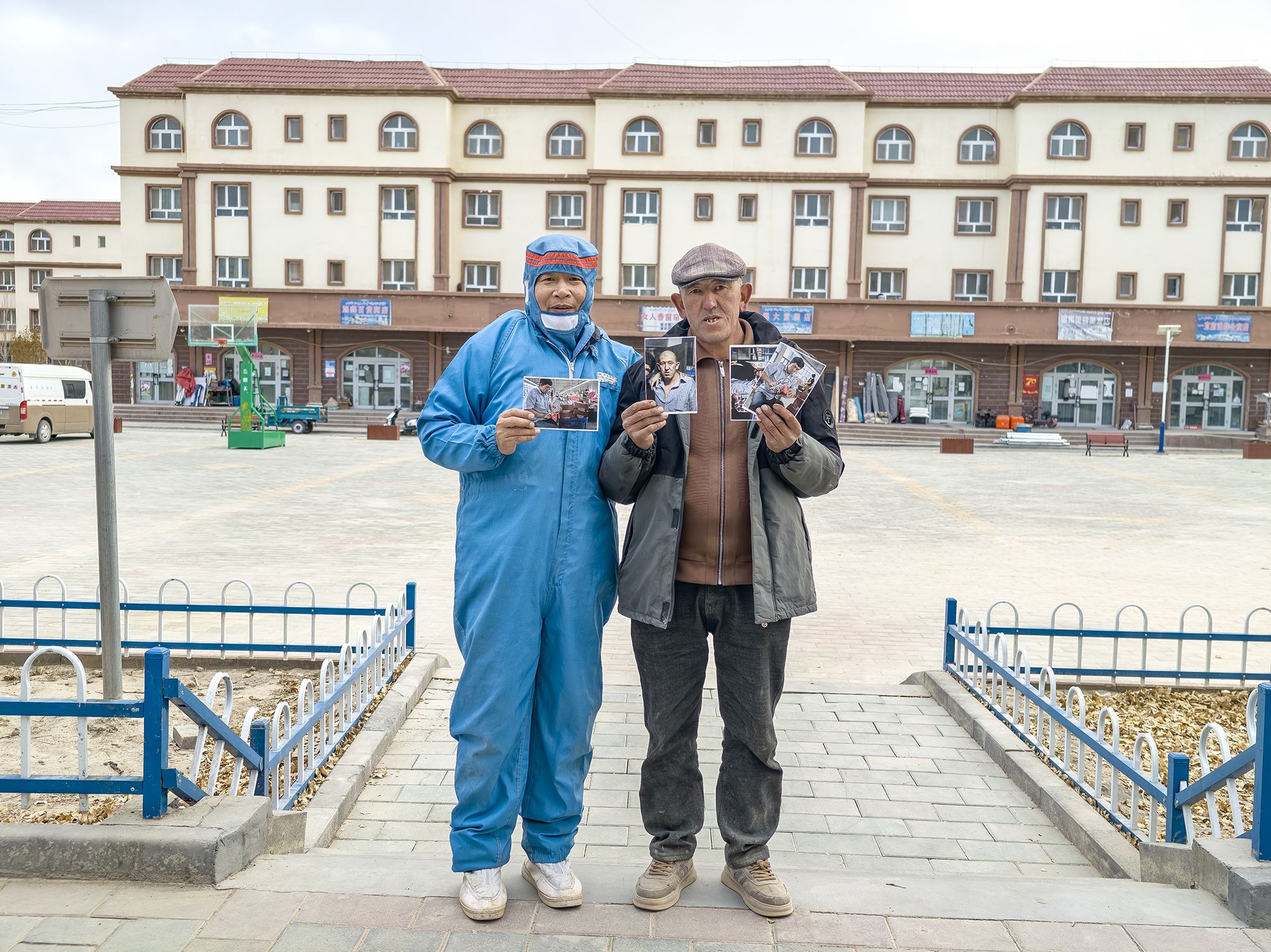
On the evening of October 29, 2025, nearly 30 fellow workers gathered at Hunter Farmhouse. This was their first reunion in 13 years since returning from Dongguan. They created a WeChat group for my visit, with over 120 members.The photos I posted in the group helped many of the workers relive memories from those days. Zhu Matuerdi Cheker spoke on behalf of everyone: “It’s been more than a decade since we left, and the fact that people in Dongguan still remember us really moved us. These photos are also very precious.” They presented me with a small gift—a wooden carving in the shape of a kumiz.
As the Xinjiang “Big Chicken” was served, the accordion began to play. People rose from their seats, gathered in the center to form a circle, and danced for two or three songs before returning to their seats to continue eating. These people, now in their 40s, used to dance in the cafeterias and dormitories of Dongguan when they were in their 20s, leaving the exhaustion of their work behind on the assembly line.Dancing and singing the “Manas” are memories deeply ingrained in the Kyrgyz people’s very being. As they danced, they pushed me into the center of the circle.
I was wearing a blue cleanroom suit from the electronics factory. From the very first day I arrived in Aheqi, I wore it while taking photos among flocks of sheep, beside corn cobs, under poplar trees, and in front of yurts. To my coworkers, this was the most familiar outfit imaginable—they had earned their “first fortune” while wearing it.
These workers went from a nomadic lifestyle to the assembly line, and then from the assembly line back to the pastures. Over the course of 16 years, what used to be a five-day, four-night journey on a green-painted train has been reduced to a six-hour flight. They return from a manufacturing hub at an elevation of 20 meters to a border county at 2,000 meters, where they buy apartments, open shops, herd sheep, guard the border, operate excavators, and work as driving instructors. Every skill they learned while working away from home has become a path back to their hometown.
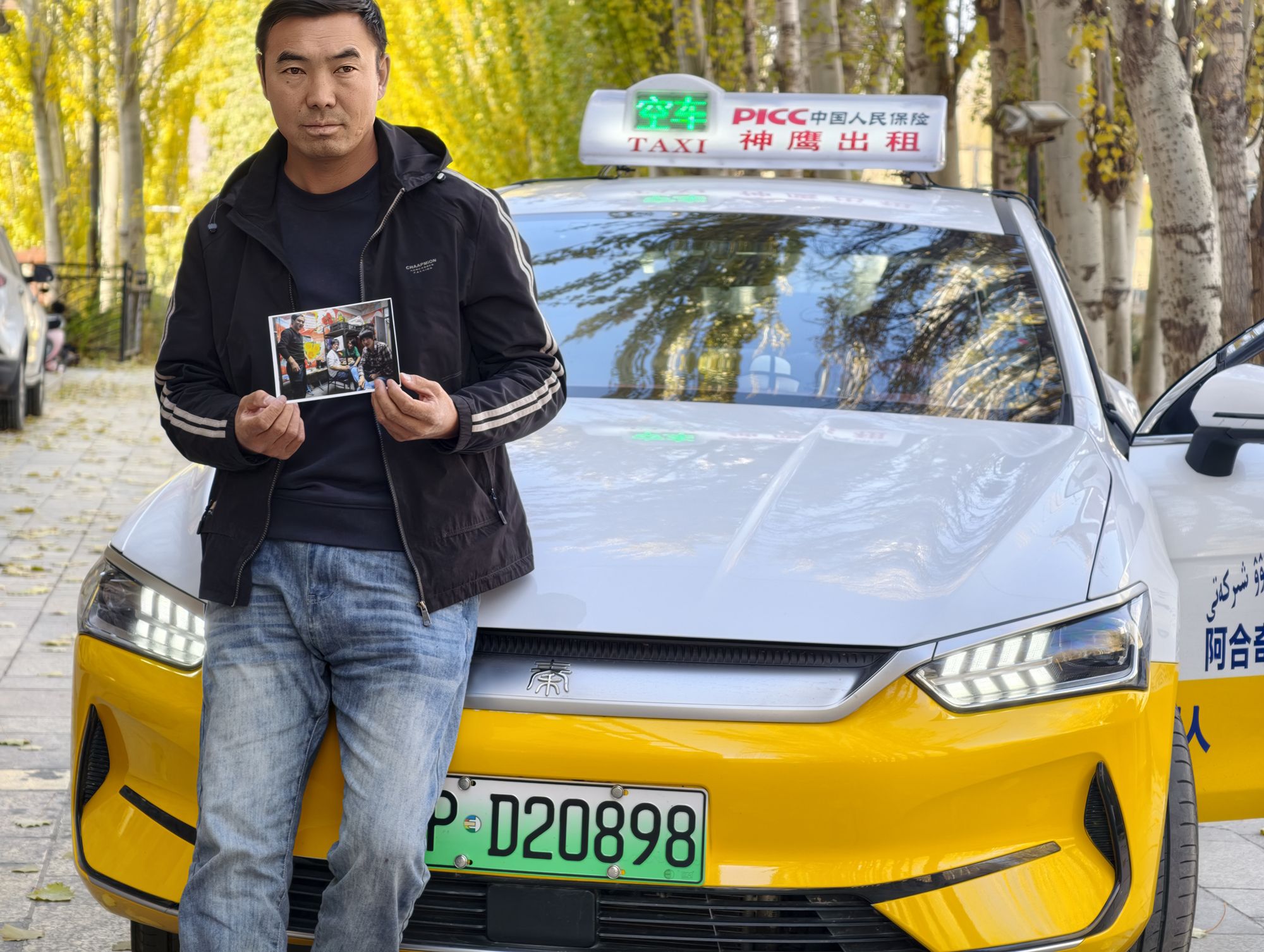
Early in the morning on November 2, 2025, before dawn, I paid my bill and left Aheqi. A taxi ride across the entire city cost just 3 yuan; the driver would stop whenever someone wanted to get on, making it feel like riding a bus. Outside the car window, the sky gradually began to brighten. The mountains in the distance were a withered yellow.
This trip to Aheqi yielded more than 1,400 video clips and over 8,500 photos, renewing a special connection that had been on hold for more than a decade.
Photo Editor | Weng Qian
Comments
No comments yet.