Books
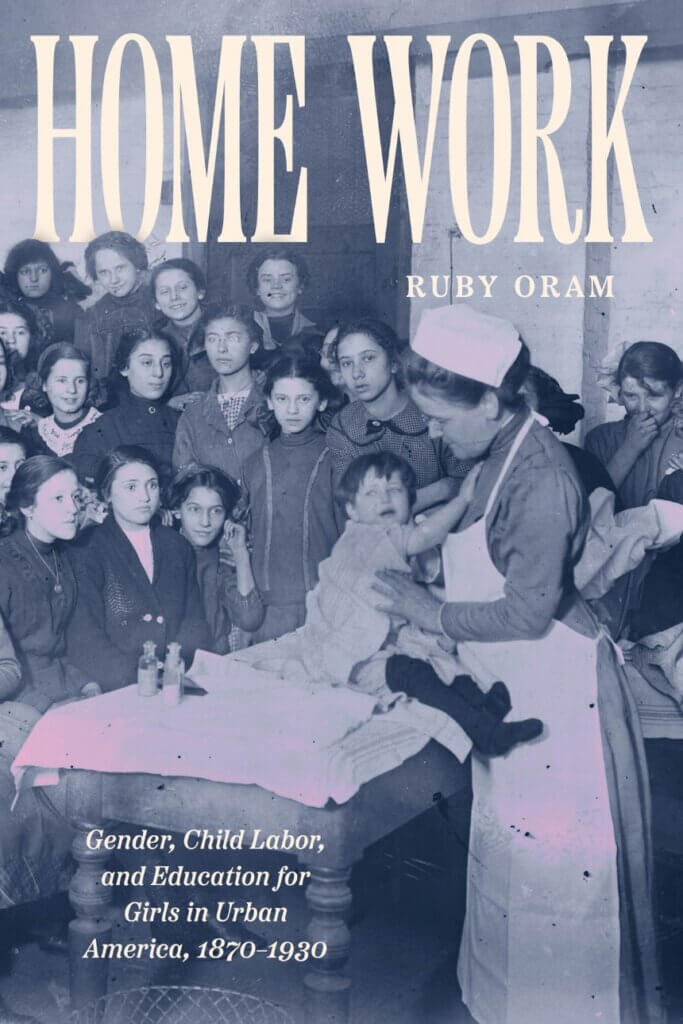
Home Work: Gender, Child Labor, and Education for Girls in Urban America, 1870–1930
Ruby Oram’s Home Work: Gender, Child Labor, and Education for Girls in Urban America, 1870-1930 (University of Chicago Press, 2025) examines how working people and reformers in Chicago debated secondary education curricula for girls in the late nineteenth and early twentieth centuries. Debates over the curriculum for junior high and high school “manual training” and later “vocational” education for girls turned into deep discussions on the privileges and obligations of the working classes. On one hand, as Oram shows, club women often aspired for working girls to learn the arts of domesticity, including food preservation, food preparation, hygiene and childcare. Many pushed for courses on these subjects in continuation schools starting in the late nineteenth century, anticipating that many girls from immigrant and African American families would enter paid domestic service and later serve their own families. On the other hand, trade union women in Chicago, as well as many working-class parents of girls, consistently rejected defining vocational education for girls around domestic labor. They knew, after all, that most family caregiving would not earn a wage. Some were attracted to secondary programs in the skilled trades (like needlework) and an even greater number were interested in preparing for secretarial work in fancy office buildings, alongside middle class men. Oram’s rich community study shows how debates about the curricula of girls’ education were a lens into a broader conversation about how to define “good citizenship” for the working classes, and particularly for working-class women.
Comments
No comments yet.