As a person of Kurdish and Alevi descent who came to Sweden from Turkey, I didn’t just learn the meaning of this word from dictionaries. I know which words have been used to marginalize people in our homeland and how this language has repeatedly led to dire consequences. That is why, to me, the fact that a politician in Sweden titled his book “Infidel” is not just an ordinary book title.
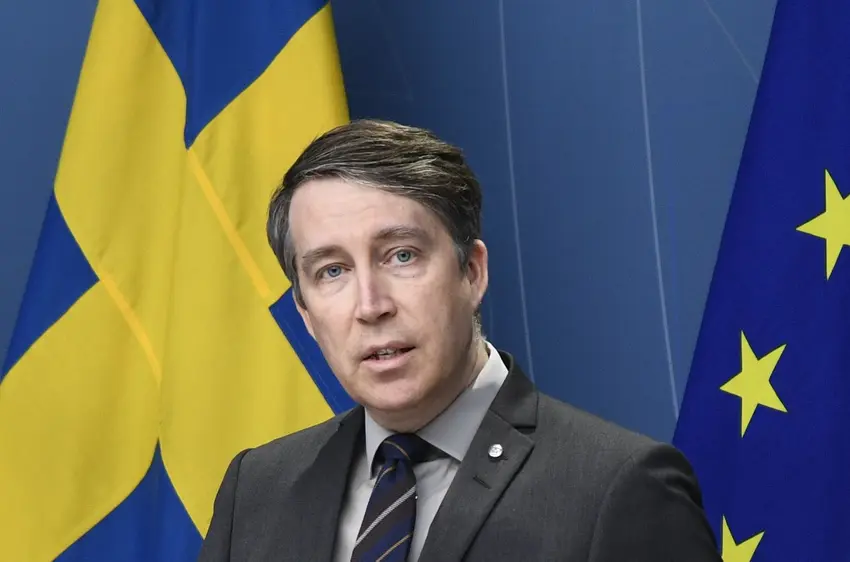
Elections will be held in Sweden on September 13, 2026. In the run-up to the election, propaganda promoting racism and xenophobia has reached a peak, driven primarily by the right-wing bloc, led by the racist Sweden Democrats (Sverigedemokraterna).
In this vein, Richard Jomshof, a member of parliament and party leader for the Sweden Democrats, published a book titled “Infidel.” The first print run of 2,000 copies was released on August 11, 2026. Adlibris, the largest book platform in Sweden and Scandinavia, refused to sell the book. Another platform, however, made the book available for sale, and it sold out the same day.
I went to the library to look at and read the book. However, I found out that the book was available at only one library and that 199 people were already on the waiting list for it. I didn’t want to pay to buy the book; however, I was later able to find it through other sources.
One of the reasons I was curious about the book was that the title was chosen from among the hateful terms—such as “kafir” and “gâvur”—that are used in our region, particularly against non-Muslims, and which are derogatory and insulting.
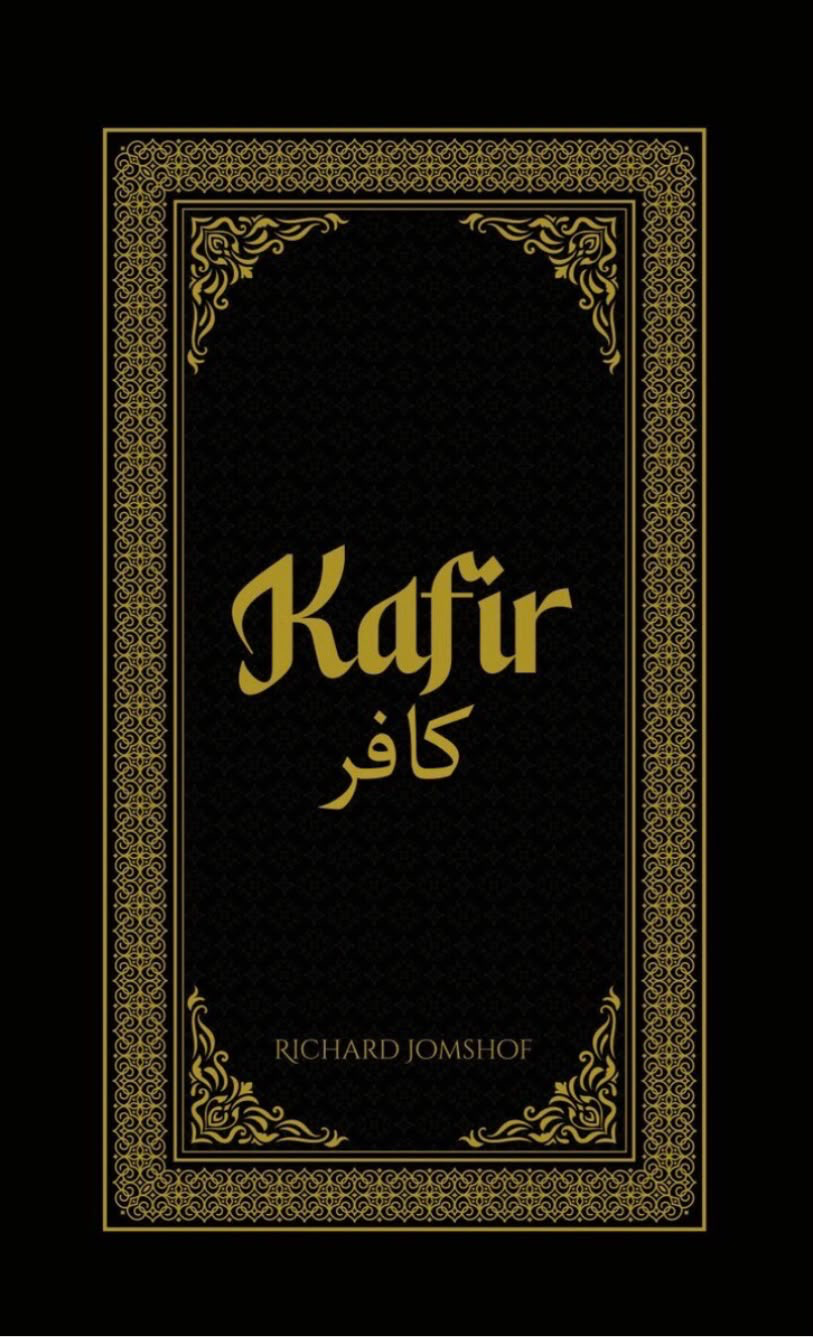
“Infidel”
“Kâfir” is a word of Arabic origin and is generally used to refer to a person who does not accept Islam or the faith.
However, for me, the word “kafir” is not merely a term of Arabic origin. This word carries a history in our region. It embodies faith and sectarianism; it also carries exclusion, humiliation, and hostility.
It was also used against the Alevi-Kizilbash in Turkey, particularly during the Ottoman period.
During the reign of Yavuz Sultan Selim—which has recently been the subject of renewed debate and is associated with the massacre of thousands of Alevis and Kızılbaş—his collaborator, the Kurdish feudal lord İdris-i Bitlisî, described the Alevis and Kızılbaş as “heretics,” “rebels,” and “infidels at heart,” and advocated for the eradication of the Kızılbaş.
The term “mülhid” refers to a person who denies the existence of God, His attributes, or the afterlife; or who distorts religious evidence to substitute his own interpretation for the religion itself.
“Infidel”
“Gâvur,” on the other hand, is a historically derogatory and insulting term used in Turkish to refer to non-Muslims, particularly Europeans and other non-Muslims.
The author of this book and the ideology he advocates are entirely shaped by racism.
In a post I published a short while ago, he used a phrase that alluded to Vidkun Quisling—a Norwegian Nazi collaborator who shared the same views as him and the Sweden Democrats—in reference to a left-leaning Swedish journalist and Social Democratic Party leader Magdalena Andersson.
Following the Nazi occupation of Norway on April 9, 1940, Quisling, who took the helm of a puppet regime with Germany’s support, has since been regarded in the Scandinavian languages as one of the most severe political insults, meaning “traitor” and “collaborator with the occupier.” This collaborator was executed in 1945 after the Nazis’ defeat.
This time, Rickard Jomshof is attempting to use Islam as a tool to promote his own racist, Nazi, anti-immigrant, and xenophobic views.
The book characterizes the ideology of organizations such as ISIS, al-Qaeda, and the Taliban as the “essence and true face” of Islam and argues that these organizations’ ideas are not deviant interpretations disconnected from Islam.
According to Jomshof, these organizations are groups that apply the teachings of the Quran and the hadith “without distorting” them, taking them at face value.
The book draws a historical connection spanning from the early Islamic conquests during the time of the Prophet Muhammad to today’s jihadist organizations, and it argues that jihadism is already present in Islam’s foundational texts.
Swedish political analysts and anti-racism researchers—such as the Expo Foundation—point out that Jomshof’s approach actually aligns with the propaganda of ISIS and al-Qaeda.
Al-Qaeda and ISIS encouraged young people in the West to join their organizations by spreading the idea that “there are only two camps in the world”—Muslims and infidels—and through promises of paradise and similar propaganda. We have seen hundreds of young people from various European countries join ISIS, al-Qaeda, and similar jihadist organizations, as well as the atrocities committed by these groups and footage of beheadings.
In his book, Jomshof argues that “there is no such thing as a Swedish Muslim” and that Muslims pose a threat to Western civilization, thereby seeking to fuel and promote racism.
There are also millions of ordinary, secular Muslims in Sweden and Sweden.
Today's News (DN)
Dagens Nyheter asked Jomshof if there is a message to Muslims who live in peace in Sweden, do not have to do with terror acts or namus murders.
Jomshof’s answer was as follows: “They can give up to be Muslim first. ”
I learned from Turkey to Sweden as a person with a left, Kurdish and Alevi. I learned what this word means. I know what words people have been over in our territories and how this language has led to heavy results repeatedly.
That’s why it’s not an ordinary book title for me to give the book of a politician in Sweden.
“Kâfir” is used in terms of the person who does not accept Islam or faith.
But words do not only carry the meaning of the dictionary during the date.
Our geography has been part of the foreigner political and religious language, which is mainly used against different beliefs and mezheps.
Flames know it very well.
Superblics, Armenians, Greeks and other minorities also know it very well.
The phrases used for Flame-Girls during the Ottoman period were not only part of a religious discussion. Who is people, who are saying, who had the code of a mind that determines who would count the enemy.
For me, there is only a religious meaning of the word “kâfir”. There is a date behind this word. There is a memory.
In 1500s, more than 40.000 Redbaş Flame was added in Yavuz Sultan Selim period.
Now the same word is called the book of a politicalist recognized in Sweden, with immigrants and anti-Muslim discourses.
Other than Islam criticism, other than Muslim enemy.
I don’t think Islam will not be criticism.
On the contrary, religion in a society can also be credible, sacred texts can also be discussed, religious institutions and historical applications can also be reviewed.
The history of Islam can also be assessed by a critical view of all other religions and ideologies.
But with a religious criticism, there is a huge difference between men and millions of people sing the same heart.
Millions of Muslims multiply both historical and social reality.
The Muslim being of a man does not identify his political opinion, morality, world vision or democracy.
It should not be very difficult to understand.
Who is the Swedish Muslim?
I don’t see a single community when I look at Muslims living in Sweden.
Turkish
There are abortions.
Arabs have.
There are Somaliians.
There are divorces.
There are Iranians.
Pakistanis.
There are people from different countries in Africa.
And there are many more people.
There is a dynasty, which is secular. There is going to the glass, there is no go. I have put faith in the center of life; Muslims have only seen as a cultural identity.
In the same way, political views are completely different from each other.
There is socialist, there is liberal, there is conservative, there is social democracy.
To a man, “You don’t say, you’re here.”
“You’re Flame, you’re going to say,”...
“You’re Armenian, you’re now here.”
“You’re not Muslim, you don’t say,”...
I know how dangerous it is from our own history. Several names were given to flames for centuries:
Home
Wed.
Mülhid
Home
Redhead.
Some of these words may be left in the past today. But their memory still lives.
Common point of congestion with rkçı Jomshof
Cihatçı organization: “Real Muslims and Muslims. ”
Irkçı Richard Jomshof: “We and Muslims. ”
The first unMuslims enemies. Second Muslims.
Methods and ideological purposes are of course not the same; but both approaches bring people to two opposite camps through their identity, “we” and “in the way” are absolutely feeding a mind.
Sweden is not only the country I live for me. Living in Sweden, I came from Turkey; I am a person of left, Kurdish and Alevi.
I am bringing historical memory from Turkey. With a word, I know how the exclusion started with the “right” can turn into social enemy in time.
Democracy is not only the choice. Democracy is able to live in confidence against the majority of the saint. Because human is Muslim, because it is Alevi, because it is atheist, it does not have to defend itself continuously because it is Jewish or has another personality.
I don’t see the book “Kâfir” only as a “other book written about Islam”.
The word “Kâfir” was used to define one of the history as “the first”.
And “right” scoring comes back in Sweden, another political context.
A man does not terrorist him to be Muslims.
A man does not hain her to be flame.
A person does not threaten him to be immigrant.
It doesn’t even make it superior to being a man’s Swedish.
It’s what human is doing before the identity it carries.
Whatever the ID, I believe that every person should have the right to live equal and honored.
Union. Since the Org started broadcasting life, Org has been offering an open discussion platform from different political perspectives on the agenda of labor class movement, left and general social opposition. The articles published on our site may not show compliance with the political perspective of the publication board. Our aim is to provide all the contributions to enrich the production of scientific and political information required by the struggle, as possible in the framework of our publication principles.
Sendika.Org'u destekle
Okurlarından başka destekçisi yoktur
Comments
No comments yet.