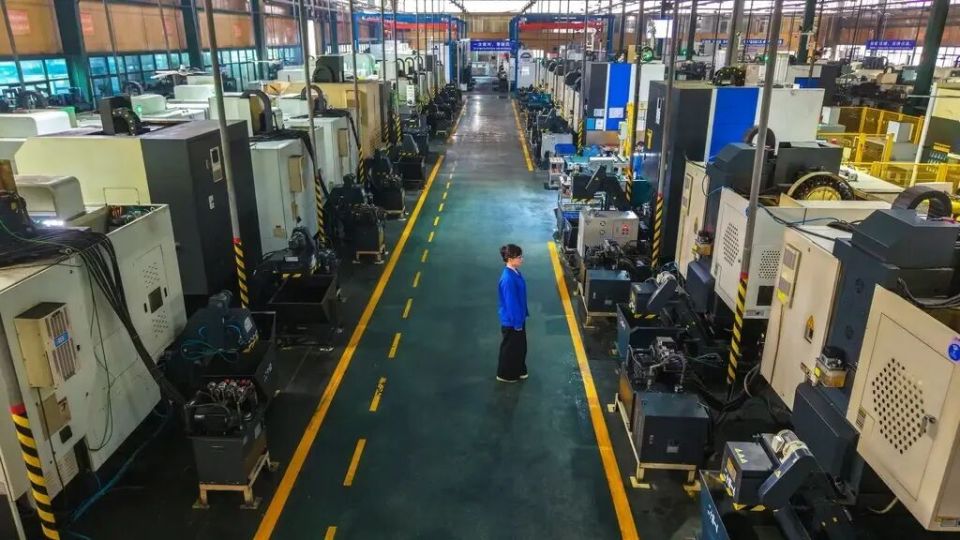
For a long time, programmers were seen as representatives of good jobs: high salaries, opportunities for raises, and respectable working environments. However, under structural changes in the job market, some programmers are now leaving office buildings to head into manufacturing workshops.
In Taizhou, Zhejiang, an automation training classroom is filled with workers preparing to switch careers. The training instructor says that among the students, those with a background in civil engineering make up the majority, accounting for about 60-70%, followed by programmers, who account for about 20%.
These career switchers need to relearn technical skills and adapt to the working environment and intensity of factories. And perhaps even more importantly, in the shift of the times, they need to find their place again.

Layoffs came earlier than expected. On October 9, in a taxi heading to the high-speed rail station, 34-year-old programmer Situ received a call from HR at his company. The caller bluntly notified him: "The client project has ended; return to the company on standby after the deadline."
The project ended very suddenly, and no new work was assigned over the phone. Situ was a bit confused and only replied with an "Okay." But after hanging up, he quickly realized that he was being laid off.
This programmer, who had worked for ten years, remarked that the changes were coming much faster than he imagined.
Last year, Situ felt that AI was merely replacing Baidu's search function. By early this year, its programming capabilities had reached a "kindergarten level." But by April and May, it had reached a "high school level," able to analyze code frameworks and problems as a whole and find bugs to fix them. He said that for a project originally planned with three frontend and three backend programmers, the plan was changed midway to have one backend programmer take over. With the help of AI, the work that would have taken three months was completed in a week.
In recent months, Situ's working style has also changed. He rarely types code anymore; instead, he often scrolls on his phone while waiting for AI to pop up a dialog box asking, "Do you want to apply these changes to line xx?" He just clicks the "Yes" option with the right mouse button.
"Nowadays, we developers have become 'Yes Engineers,' constantly saying yes, yes, yes," he said.
Before the layoffs arrived, a sense of crisis had already set in. For example, in April this year, Situ saw that a major domestic internet company launched digital programmers. Also, in June, news broke that three US internet giants, including Meta, all cut at least 10% of their employees, attributing part of the reason to artificial intelligence.
● May 30, 2026: Engineers in Hangzhou installed the open-source AI agent OpenClaw (Lobster) for citizens for free. IC photo
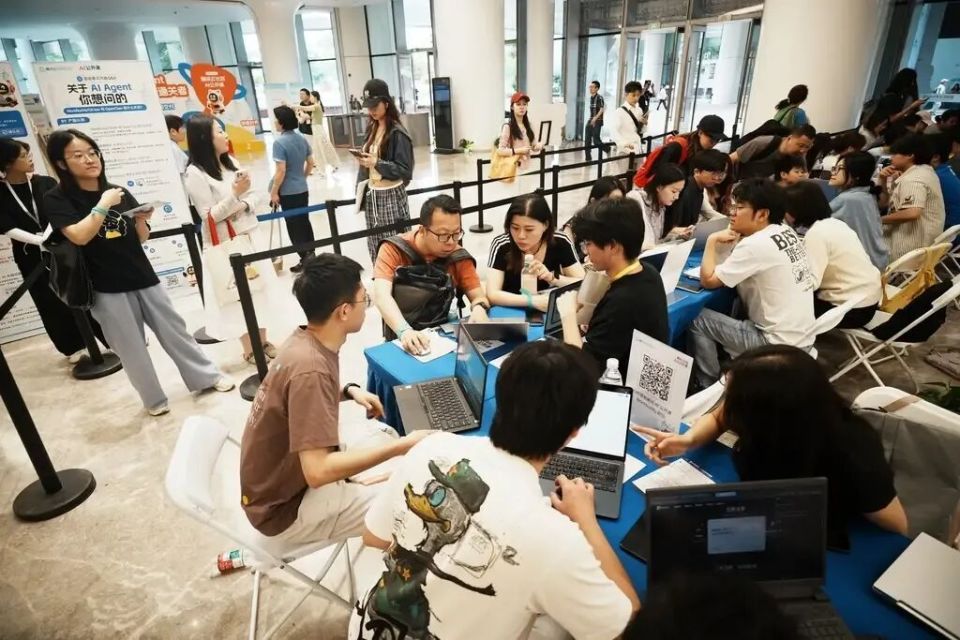
Situ said that since the beginning of the year, he and his colleagues had all changed to varying degrees. He roughly categorized people's responses into three groups: one group is the "radical faction," known in the industry as "code traitors," who actively help AI improve programming capabilities, effectively "eliminating their own positions"; another group is the "moderate faction," who also learn AI technology hoping to stay in their original field; and the third group belongs to the "retreat faction," which begins planning a career switch.
Situ belongs to the retreat faction. In his observation, most of this group are over 30 years old, considered "older" among programmers. They can no longer keep up with new technologies and do not want to face the risk of being laid off at any moment. At the beginning of the year, he started searching for the automation industry online and began planning to work in a factory.
This direction was recommended by a colleague who also belonged to the "retreat faction." The colleague sent him a link to the "15th Five-Year Plan," saying that industrial intelligence would be vigorously developed in the future, and "(in this industry) age is not as critical." In July this year, after the colleague was laid off first, the two of them signed up for a 9,400 yuan training course together and started learning every weekend.
That layoff was more intense than imagined. The team of 30 people that Situ worked in had 25 people cut. But as one of the remaining "1/5," Situ only survived for three months before receiving that phone call in October. The next day, he went to the company to sign papers, received N+1 compensation, and left smoothly.
The next destination was still that training class, but he planned to change from a weekend course to a full-time one, devoting three months entirely to study.
Similar training classes are very popular in many cities. A teacher at an automation training class in Taizhou said that over two years, the number of local training classes increased from 1 to 4 or 5. Among the students, the most numerous were from the civil engineering industry, followed by engineering majors, and then programmers, accounting for about 20%, with their proportion continuing to grow.
Of course, programmers coming here is not just due to the impact of AI. The job market has long undergone structural changes. Recruitment platform Liepin summarized in its annual report that in recent years, industries such as the internet and real estate have seen a contraction in job demand, while manufacturing sectors like new energy vehicles have shown "gradually increasing employment absorption capacity."
Wang Yuxiang, a 26-year-old frontend programmer, decided to switch careers to automation in 2024. At that time, he faced the situation where his company's outsourcing orders increased but they did not expand their workforce. He worked overtime more and more, lost more hair, started drinking Chinese medicine, smoked more cigarettes, yet his income did not increase, still around five or six thousand yuan.
Graduating from a computer science major at a second-tier university in Chengdu, Wang Yuxiang had only stayed in this industry for two years. He said that the dozen or so holders of junior college diplomas and bachelor's degrees hired at the same time left one after another, replaced by graduates from prestigious universities. Being immersed in it, Wang Yuxiang felt he was becoming less and less competitive, and finally submitted a resignation letter.
The main reason for choosing to turn towards manufacturing was money. He compared himself with his uncle, a factory general worker over 40 years old without higher education, "who earns seven or eight thousand a month and doesn't have to worry about these things."

Situ and Wang Yuxiang are aiming for the same position: PLC Engineer.
This is not a coincidence. An automated production line requires various engineering positions with programming capabilities, but PLC has the lowest threshold and is easiest to get started with.
PLC refers to "a programmable controller tailored for factories." This role is like someone who writes scripts for machines; they write programs to decide when conveyor belts turn, when robotic arms grab, and also crouch by the production line, adjusting parameters bit by bit like a sound engineer, until the entire line runs as smoothly as flowing water.
The first step for Wang Yuxiang's career switch was learning to become an electrician. This wasn't difficult; he had already obtained his electrician certificate upon graduation. The harder part was PLC programming. One must not only understand technology but also understand machines and practice with real tools.
To practice, Wang Yuxiang specifically spent over 1,000 yuan to buy equipment swapped out from an old factory and followed tutorial videos to operate it. But he couldn't figure it out; the program ran smoothly on the computer, yet the machine always reported errors, with red fault lights flashing continuously.
Later, he discovered that this equipment had long been phased out by factories, and the teaching videos were from five or six years ago. Half a month later, he listed the equipment on a second-hand platform and sold it for 400 yuan, "selling it to the next beginner."
After hitting a wall with self-study, he entered an auto parts factory as an apprentice. The master taught him hands-on how to connect wires and disassemble machines to replace parts. Hundreds of red, green, and yellow wires needed to be stripped one by one and connected to corresponding components. He also had to learn to replace worn blades, guide rails, or needles; once a part failed, the entire production line could stop. For those few months, his hands were always black, and he was constantly soaked in the smell of machine oil.
But in Wang Yuxiang's experience, being an apprentice made it hard to quickly learn the essence. Every time the master needed to input programming instructions on the equipment, he would look around left and right, sometimes simply sending Wang Yuxiang away to get wires. When Wang Yuxiang returned, the master had already written the program and wouldn't show him the source code, only teaching him how to handle small bugs.
Wang Yuxiang could understand; the master was only in his 40s and relied on this craft for a living, "teaching an apprentice starves the master."
Finally, he decided to spend money on a training class. The class was held at a university with closed management, resembling the atmosphere of preparation for the college entrance exam. Most students in the classroom were people like Wang Yuxiang wanting to switch careers, with ages concentrated around thirty.
Wang Yuxiang said that everyone was putting their heart and soul into it. Before class, students voluntarily placed their phones at the classroom door. Evening study sessions were quiet like middle school classrooms; occasionally two desk mates whispered to discuss technical difficulties. At 9:30 PM, evening study ended, and they returned to their dorms to continue reviewing class notes and quizzing each other until 11:30 PM. They also studied actively on weekends. After months of training, Wang Yuxiang and his roommate almost never went out to play and rarely touched their phones.
After finishing the training, he interned at a factory for another three months, accumulating experience on seven or eight projects, before finally starting to look for a job. After two rounds of interviews, he successfully entered a domestic new energy vehicle company with a monthly salary of 12,000 yuan, including meals and accommodation. The factory was in a remote suburb, with closed workshops where white lights were on all year round; machines twice as tall as people roared constantly, and Wang Yuxiang was responsible for the automation design and commissioning of the entire production line. In the factory, he wore navy blue work clothes, distinct from the light blue and orange worn by other workers.
Finding a job in this industry seems not difficult nowadays. Another programmer, Chen Haoyu, said that two years ago, he submitted 2,000 resumes before finding a programmer job paying 6,500 yuan monthly. And upon entering this industry, without taking classes or having project experience, after five months of self-study and starting interviews, he still received offers from nine factories within a week. Finally, he went to a new energy battery factory in Suzhou with a monthly salary of 7,200 yuan.
Not only that, but he also changed jobs twice within three months. For his first job, he said the factory was unwilling to hire an electrician, so the boss asked him to design a circuit diagram, only to find out he had copied it. "I studied connecting wires for a few days and couldn't learn it; I was afraid of getting electrocuted." His second job lasted only seven days because the master was "very fierce." But he quickly found a third job with a salary increase of 1,500 yuan.
● May 2026: Jinhua City Technician College held a student skills competition, where students participated in PLC control system installation and commissioning projects. Visual China
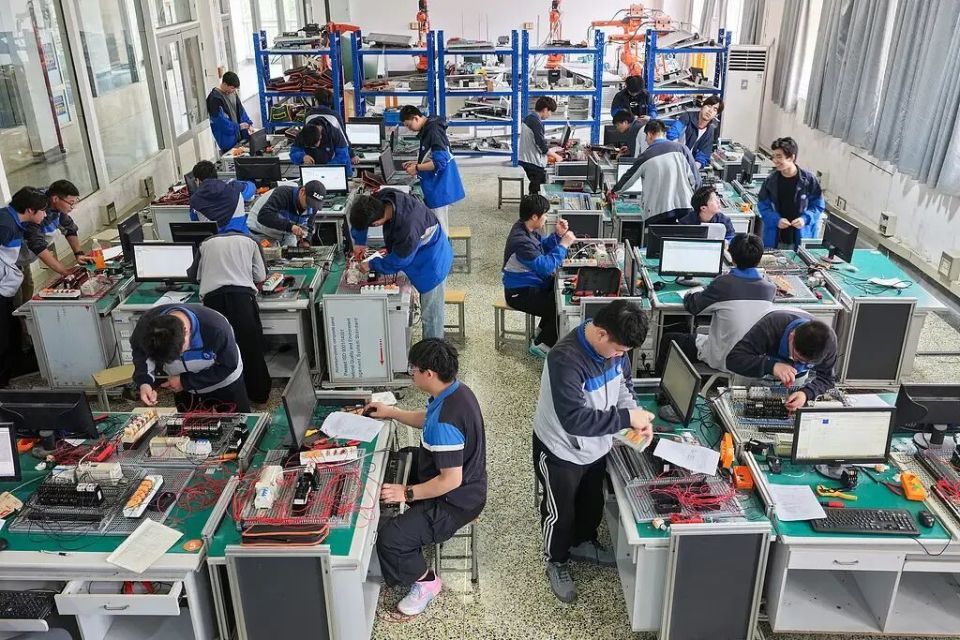

Although finding work is not difficult, for programmers, switching careers also means adapting to many things.
What Chen Haoyu found most unbearable was business trips. On the third day of joining the new company, he followed the equipment on a trip to Shandong, working continuously for three months without a single day off. "The equipment doesn't stop, so we can't either." After that, one trip followed another, with about 300 days spent traveling in a year. The factory locations were remote; they stayed in small hotels and ate boxed lunches from roadside stalls costing around ten or twenty yuan, occasionally with dust blowing in.
Another programmer-turned-engineer, Zhang Shuo, even said that due to long-term business trips and working on holidays, he broke up with his girlfriend of four years.
Every time the machine went somewhere, Zhang Shuo was packed up and sent along, ready to handle problems arising during installation and production. The drifting life brought him a special sense of loneliness: "One person becomes an isolated island; constantly new colleagues, unfamiliar places, no roots."
Another thing he found unbearable was that in client factories, his status seemed to be the lowest. Once a machine had a problem, three or four people from the client stood with their hands on their hips and watched him fix it. One night around 11 PM, while he had already changed into pajamas and was lying in bed, he was suddenly called to the factory to repair equipment. A manager who was "strong, dark-complexioned and fierce-looking" came rushing over angrily, shouting at him as if scolding a child: "How dare you finish work when it's not done?" Zhang Shuo kept his head down and dared not speak.
In the workshop, his activity area was only 1-2 square meters beside the machines; he described it as a "prison." As an outsider, he did not have permission to enter or exit the workshop freely; he had to report before using the restroom and ask someone to take him out. Therefore, he didn't dare drink water all day and almost never went to the toilet.
Zhang Shuo sometimes thought of his life as a programmer; at least it was stable and respectable. Public holidays were off, and handling emergencies could be done remotely. Colleagues were all technical staff, speaking politely, without facing direct client pressure. When there was no work, he could sit in the office, order a milk tea, and slack off.
But they had only changed companies. Zhang Shuo still did similar work and still traveled, but remained based in the same city. After all, at least this is a profession "not easily replaced by AI."
● August 26, 2026: A company's digitalized factory in Jiangsu; production and commissioning occurred alongside automated production lines. IC Photo
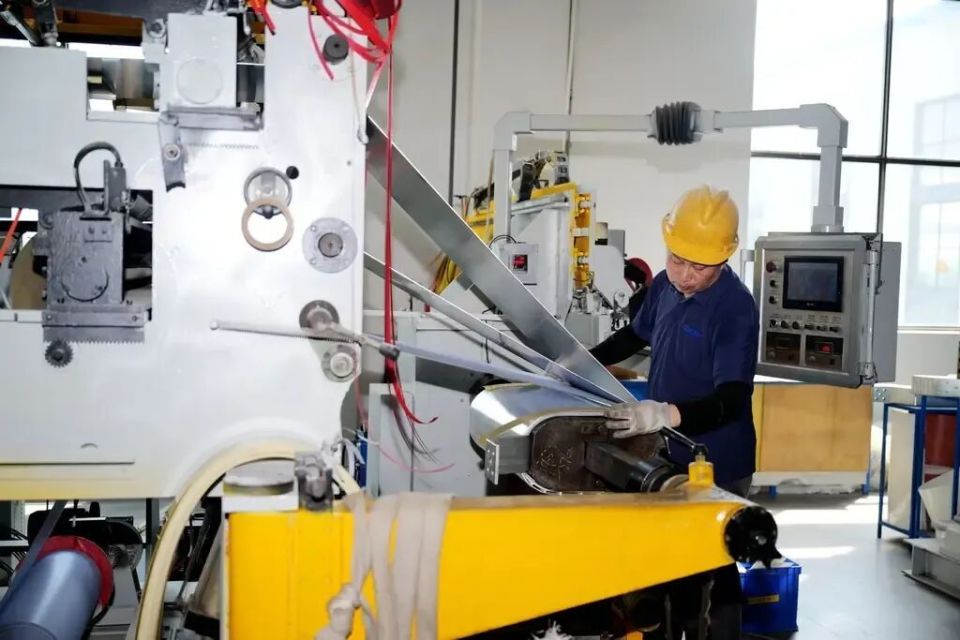
Zhang Shuo said that this industry deals mostly with non-standardized products; each production line must be customized according to client needs, which AI cannot directly generate. Moreover, writing programs accounts for only 30% of the work; the key is ensuring stable production without errors through manual commissioning. This ability to solve on-site problems requires experience accumulation and becomes more valuable with age. He no longer has to tirelessly chase behind new technologies as he did when being a programmer. This gives him a sense of professional security.
Situ, who recently lost his job, needs this sense of security the most right now.
In the past, he earned this sense of security through long-term "996" schedules and many sleepless nights. Riding the wind of internet development, he jumped jobs four or five times, with his salary rising steadily; before becoming unemployed, his monthly salary reached 15,000 yuan, which was considered a good income in Qingdao.
He said that unlike the Yangtze River Delta and the Pearl River Delta, Qingdao's manufacturing industry is not as developed, so there are not many positions for PLC engineers, and salaries are half of what they would be elsewhere. However, he feels that "layoffs shouldn't happen at will"; being stable and able to pay a 6,000-yuan mortgage is enough.
He believes this is a position where one won't easily lose their job. One thing also fills him with confidence about the new direction: this year's top-ranked major in the college entrance examination popularity list is Electrical Engineering and Automation. However, he also remembers that over a decade ago, when he was filling out his college application preferences, the major occupying that position was Computer Science.
(At the interviewees' request, Situ and Zhang Shuo are pseudonyms)
Copyright Notice: All content in this article is copyrighted by Jizhou Studio. Without written permission, it may not be reproduced, excerpted, or used in any other form, except where otherwise stated.
Comments
No comments yet.