Sweeping Cuts at Volkswagen from 2024? Carmaker Plans Billions in Cost Reductions to Boost “Efficiency”
Dossier
RESTRUCTURING VW at Verkehrswendestadt “… Since the beginning of October, VW management has been negotiating behind closed doors with the works council about an ‘efficiency program’ intended to reduce costs by ten billion euros over the next three years. It is now becoming clear what form this drastic cut, dubbed ‘Accelerate Forward,’ could take. As reported by Handelsblatt on Monday, Schäfer plans to eliminate between 4,000 and 6,000 jobs in VW AG’s administration alone. The affected employees are to be preferentially phased out through early retirement schemes; the remainder could be handled through severance packages. The goal is to permanently reduce the number of employees, and new hires are to be kept to a minimum. Accordingly, a hiring freeze was already imposed at the beginning of November for the most important German locations: Wolfsburg, Hanover, Braunschweig, Salzgitter, Emden, and Kassel. The automaker even intends to cut jobs among the highest-paid employees in the ‘Tarif-Plus’ group, which currently comprises around 9,000 employees …” Article by Ralf Wurzbacher in junge Welt from November 14, 2023 , and more on this and the alternatives (for all car/metal workforces):
-
The goal is to make VW’s workforce more profitable. Period. Even “horror stories” and “letting off steam” about Blume’s tour can help with that. New ( image )
-
Media reports are nonsense: Is the closure of four plants already a done deal by board decision? “ No – but the media are giving the false impression that the fate of the sites is already sealed. Since Tuesday afternoon, headlines such as: ‘Board decides to close four VW plants’ have been circulating in the media. One of the media reports also states: ‘The board could probably implement the shutdown of the German plants without the supervisory board’s approval. Because they are not planning a direct closure of plants – they just won’t receive any more successor models.’ A brief preliminary remark: This is all nonsense, rubbish, and utter rubbish. Further down in this article, we explain in detail why this is the case …’” Article from September 2, 2026, by IG Metall at Volkswagen
-
Report from East Frisia and Hanover : “ A clear stance in Emden as well: The state government stands firmly behind the site. Olaf Lies and Julia Willie Hamburg visited the factory in East Frisia – proposal for a 40-hour week rejected . (…) Daniela Cavallo also said this Monday during the press conference in Emden: “Here in Emden, we saw today that what we jointly agreed upon in 2024 – this tough path we agreed upon together – has indeed been implemented. The workforce, the works council, IG Metall: We delivered. And now, of course, we rightly expect, because it was agreed exactly as stated, that the board of directors will also keep its promise; namely, that there will be successor models here in Emden as soon as current products are phased out. And we will, of course, continue to stand by that!” …” Report from September 1, 2026, at IG Metall at Volkswagen
-
VW: Major Attack on IG Metall “ Volkswagen is a prime example of the automotive industry in Germany. The company has boycotted the shift towards sustainable mobility and, instead of producing affordable small cars, has focused solely on large, expensive vehicles. Chinese automakers have left the German companies technologically far behind. Now, VW is once again threatening its employees, aiming to curtail the influence of the works council and break the power of IG Metall. The company is talking about cutting another 50,000 jobs and closing plants in Zwickau, Emden, Hanover, and Neckarsulm. This is a major attack on the workers and the union. Just at the end of 2024, in exchange for wage cuts, extended working hours, and agreement to reduce more than 35,000 jobs, VW had ruled out plant closures and layoffs until the end of 2030 …” Article from August 28, 2026, by and at Stephan Krull
-
Blume pushes for tough cuts: CEO explains himself to workers at VW plants, remains vague, and receives pushback from the works council chairwoman. Volkswagen CEO Oliver Blume continues to beat around the bush. He had hardly anything concrete to say on Tuesday in Wolfsburg to over 10,000 employees regarding the announced loss of another 50,000 jobs within the group and the future of four German factories. At the works meeting, however, he announced that “about half” of the jobs would be cut domestically and the other half abroad. Employees at the main plant of Germany’s largest automaker had gathered in and around Hall 11. Many watched the exchange between Blume and the Chair of the General Works Council, Daniela Cavallo, live on screens outside. The CEO also stated that “reliable prospects” would be created for all locations within the next six to twelve months. The same scenario then played out again before the assembled workers at the Braunschweig plant. (…) The committee will meet again on September 4. “They are working day and night” on the new plan, IG Metall chairwoman and supervisory board vice-chairwoman Christiane Benner already revealed to the Frankfurter Allgemeine Sonntagszeitung (FAS). However, she didn’t divulge much more. “The future isn’t built on gradual sacrifice and withdrawal,” clarified Thorsten Gröger, IG Metall district manager for Lower Saxony, in a statement released Tuesday shortly afterward, which jW has obtained. He referred to the already agreed-upon loss of 50,000 jobs in 2024. “Cooperation is possible,” he offered the company bosses. At the same time, Gröger warned of a conflict “that could become even more bitter than before. ” … Article by Mirko Knoche in junge Welt, August 26, 2026
-
Why VW is cutting thousands of jobs: ” The car company is cutting staff despite making billions in profits. The reason given is the return on investment, which is said to be too low. What does that mean?” Volkswagen CEO Oliver Blume toured VW plants this week to prepare employees for further billions in cost-cutting measures. A reduction of 50,000 jobs is under discussion, even though the previous round of cost-cutting already reduced factory costs by about a fifth. Why is this necessary? After all, VW made a profit of approximately six billion euros (before taxes) in the first half of 2026. According to Blume, however, the real problem lies in the return on investment. It recently stood at 3.8 percent, which, according to Blume, is leading VW directly into an existential crisis. Why aren’t 3.8 percent enough? The answer lies at the heart of capitalism. In the prevailing economic system, it is often said, everything revolves around profit. The central measure, however, is the return on investment. Its level determines whether production is worthwhile for investors and therefore takes place, or not. (…) It should be at least seven percent. So why isn’t 3.8 percent enough for VW? Firstly, because a number of things still need to be deducted from the operating profit, for example taxes, interest or restructuring costs. Secondly, lenders – banks and shareholders – demand market-standard returns. To remain an attractive investment for them, VW must increase its returns. A calculation by UBS shows that the wealthiest households in Germany have achieved returns of over seven percent per year in recent years. In contrast, VW’s returns are declining, which is putting pressure on its share price and thus increasing the risk of a takeover. Thirdly, VW must finance its investments from its operating profit – and these are predictably enormous. (…) In short: VW’s workforce is to become cheaper and more profitable in order to satisfy the demands of its investors and to steal market share from its competitors, which in turn forces these competitors to cut costs among their own workforces. VW has to do this. And it wants to do this, since its corporate purpose is to increase the wealth of its owners …“ Article by Stephan Kaufmann from August 26, 2026 in ND online
-
VW CEO Blume is touring the sites to announce tough cuts for the workforce for the benefit of shareholders – the colleagues are booing, the works council wants it to be “socially acceptable”.
-
First of three site visits in Lower Saxony: Co-determination at VW knows the state is on its side. “ Daniela Cavallo confirms: Plant closures are out of the question – Olaf Lies warns the board.” Together with the works council, Lower Saxony’s Minister-President Olaf Lies made the first of three joint site visits to Hanover on Monday. (…) After the tour in Hanover, Lies and Cavallo will also visit Osnabrück (Wednesday) and Emden (Monday) in the coming days. The Minister-President of Lower Saxony is planning a virtual exchange with the Zwickau plant in Saxony …“ Report from August 25, 2026, under IG Metall at Volkswagen – see further daily commentaries at - Dates for the additional works meetings at the end of August have been set. HAVE YOUR SAY! — Special edition from July 17th PDF file - Blume pushes for tough cuts: CEO explains himself to workers at VW plants, remains vague, and receives pushback from the works council chairwoman. Volkswagen CEO Oliver Blume continues to beat around the bush. He had hardly anything concrete to say on Tuesday in Wolfsburg to over 10,000 employees regarding the announced loss of another 50,000 jobs within the group and the future of four German factories. At the works meeting, however, he announced that “about half” of the jobs would be cut domestically and the other half abroad. Employees at the main plant of Germany’s largest automaker had gathered in and around Hall 11. Many watched the exchange between Blume and the Chair of the General Works Council, Daniela Cavallo, live on screens outside. The CEO also stated that “reliable prospects” would be created for all locations within the next six to twelve months. The same scenario then played out again before the assembled workers at the Braunschweig plant. (…) The committee will meet again on September 4. “They are working day and night” on the new plan, IG Metall chairwoman and supervisory board vice-chairwoman Christiane Benner already revealed to the Frankfurter Allgemeine Sonntagszeitung (FAS). However, she didn’t divulge much more. “The future isn’t built on gradual sacrifice and withdrawal,” clarified Thorsten Gröger, IG Metall district manager for Lower Saxony, in a statement released Tuesday shortly afterward, which jW has obtained. He referred to the already agreed-upon loss of 50,000 jobs in 2024. “Cooperation is possible,” he offered the company bosses. At the same time, Gröger warned of a conflict “that could become even more bitter than before. ” … Article by Mirko Knoche in junge Welt, August 26, 2026 - Power struggle at Volkswagen: Works council chairwoman rules out layoffs. ” VW is planning plant closures and intends to cut tens of thousands of jobs. Works council chairwoman Daniela Cavallo, meanwhile, is fighting to save jobs and offer early retirement options.” Volkswagen’s works council chairwoman, Daniela Cavallo, has ruled out layoffs at Europe’s largest automaker. “My position is clear,” she said on Monday after a visit to the VW plant in Hanover. “We have secured job security, and we will continue to fight to ensure that any changes are implemented in a socially responsible manner.” She emphasized the importance of continuing to offer phased retirement options, particularly the block model. “If that’s discontinued, we’ll have to discuss other measures, and as an IG Metall member, I’m not available for that,” she said. She also rejected the idea of plant closures, stressing that they were not an option for her. She expects the Volkswagen board to explain itself to the workforce at the extraordinary works meetings. This isn’t just about potential plant closures or massive job cuts. “A future program can’t be created or sustained simply by talking about reducing labor costs and job cuts and questioning locations,” Cavallo said … (Agency report from August 25, 2026, in taz online) - Quote on the topic of “socially acceptable”: “… The GoG (Working Group Against Borders) has repeatedly made it clear: for one person or another, such an outcome – job cuts with severance packages, etc. – might be individually ‘acceptable.’ Socially, in relation to society, it is appalling. In this context, the term ‘socially acceptable’ probably means ‘without social unrest …’ Comment from the GoG dated November 22, 2013 (Working Group Against Borders at Opel Bochum)” - Debate: Should VW be nationalized? More than just cost-cutting is at stake at VW. Should the state take over the company? “ Few corporations are as symbolic and real of Germany’s economic situation as Volkswagen. Nine extraordinary works meetings are scheduled for this period, and up to 100,000 jobs worldwide are at risk. Given the size and importance of the corporation, the outcome of this crisis will determine not only the fate of tens of thousands of jobs, but also who owns Germany’s industrial future: the Porsche-Piëch heirs and shareholders, or the workforce? Economist Katharina Keil argues for nationalization and a socio-ecological transformation of VW in her pro-con piece. Surplus editor Patrick Kaczmarczyk argues against it …” Pro and con by Katharina Keil and Patrick Kaczmarczyk from August 25, 2026, in Surplus magazine (subscription required from that date) - [The truth] Cheers in the dismantling department : “ With a completely new concept, Volkswagen is saving itself from the automotive crisis: A test plant not just for dismantling.” What had been whispered about at Volkswagen’s Wolfsburg headquarters for some time became official yesterday: The management of Germany’s largest automaker is implementing a completely new employment model with the concept “Volkswagen Industrial Museum – Vehicle Production in Demonstration Operation.” The plan is that hundreds of combustion engine vehicles of the classic Golf will continue to be assembled daily at the Wolfsburg plant, but will no longer be sold. Instead, the finished vehicles will go to a so-called dismantling line, where they will be completely disassembled by specially trained dismantlers. All the parts will then be returned to the production line, where the automakers will reassemble them into vehicles, which will then be disassembled again. Crazy? Not at all. A first test run is underway … Commentary by Fritz Tietz from August 26, 2026, in taz online – the best commentary on the topic, please read it!
-
Things are stinking at Porsche: The sports car manufacturer is destroying another 5,000 jobs in the Stuttgart region with its “future package.” IG Metall welcomes the “job security” and couldn’t care less about the climate. ” The future at Porsche stinks of gasoline. A real sports car has to roar, not purr, and it’s supposed to pollute the air. At least that’s what the predominantly male and wealthy clientele of the German automaker thinks, and they’re punishing its attempts to jump on the electric mobility bandwagon with declining sales. The top management has reacted to falling sales in Germany, but especially in China, where luxury electric cars are now produced more cheaply. As Der Spiegel recently reported, the company is changing its strategy: It wants to put the brakes on the production of electric vehicles and instead focus more on manufacturing “exclusive sports cars with combustion engines.” The magazine quoted a “frustrated” developer: “Everything feels like we’ve rewound time ten years.” The past is clearly still very much in favor with employee representatives. On Monday, the VW subsidiary presented a “future package” at a works meeting at its main plant in Stuttgart-Zuffenhausen, intended to chart the brand’s course until 2035. According to the plans, another 5,000 jobs in the region will be cut. In addition to the main plant, the development center in nearby Weissach is also affected. The staff reduction is to be carried out in a “socially responsible manner,” through natural attrition, demographic effects, phased retirement, and voluntary severance agreements, as stated in a Porsche press release. The remaining employees will have to forgo parts of current and future wage increases, accept reductions in Christmas bonuses and special payments, and will only be able to work from home eight days a week instead of the previous twelve. In addition to management and works councils, the IG Metall trade union and the employers’ association Südwestmetall also participated in the negotiations. The agreement sends a “signal,” according to the chairman of the overall works council, Ibrahim Aslan. “No one would have believed beforehand that we would be able to conclude a future-oriented package extending to the end of 2035.” The core of the agreement includes extending the site security guarantees for the next nine years and investments of around €2.1 billion in the two production facilities in southwestern Germany. While the two-door sports cars will continue to roll off the assembly line in Zuffenhausen, Weissach will remain the company’s main development site. (…) In Porsche’s case, even a disastrous course of action regarding climate protection is being glorified by the IG Metall union as a project for the future. “The agreement creates prospects for employees and is a clear commitment to Germany as an industrial location,” said Tamara Hübner, Second Authorized Representative of IG Metall Stuttgart. And Carsten Schumacher, Works Council Chair in Weissach, emphasized the importance of the site “remaining the linchpin for the development of our emotional sports cars in the future.” Porsche CEO Leiter’s wet dream is an upgrade of the 911, dubbed the “S1,” with an eight-cylinder boxer engine, costing €500,000. This ostentatious vehicle is slated to become a bestseller no earlier than 2031, at a cost of half a million euros. The average Porsche worker can start saving now. According to the agreement, unionized employees are to receive a one-time “transformation bonus” of €1,500. Those covered by the IG Metall union are even promised €1,911. That’s convincing . ( Article by Ralf Wurzbacher in the newspaper “junge Welt,” July 29, 2026)
-
VW boss ignores IG Metall’s ultimatum, which threatens works meetings after the summer break – and an “automotive expert” sees the problem in collective bargaining autonomy.
-
Preliminary praise is gone: VW boss Blume lets ultimatum expire – loss of trust grows. “ After the summer break, the CEO now has to answer questions at works meetings. ” Group CEO Dr. Oliver Blume has let a deadline pass by which he was supposed to finally provide employees with details of his plans for several plant closures in Germany and a large-scale reduction in staff. The group’s works council issued the ultimatum on Thursday after a supervisory board meeting in Wolfsburg failed to clarify the speculation that had been rife for weeks ( more on Thursday’s events here). and the ultimatum). The CEO ignored the request, instead only informing management on Friday – who, in turn, are reportedly not disclosing the crucial details. Therefore, Dr. Blume must now meet directly with the employees: Works meetings will be used for this purpose …“ IG Metall press release from July 11, 2026, at Volkswagen
-
Group Works Council and Volkswagen Management Association issue statement: Employee representatives write letter to the workforce “ In connection with the reporting of the past few days, in particular with regard to the Supervisory Board meeting at Volkswagen on Thursday, the Group Works Council (KBA) and the Volkswagen Management Association (VMA) are addressing the workforce in a letter. (…) The supervisory board of Volkswagen AG met yesterday, Thursday. Following the meeting, the management board addressed the issue with the usual platitudes. We have spoken out . None of this addresses the company’s actual core problems. And none of it even remotely addresses your fears and concerns in an appropriate way. Because this is so shameful, we also spoke out on Thursday evening and gave the company CEO a ultimatum PDF file We have set a precedent. Rarely have we received such clear and unanimous feedback on our communication. In particular, the statement “The board’s treatment of the workforce is beyond disrespectful” clearly resonates with you as employees. You are not alone in this criticism of the company’s leadership. (…) Colleagues, we, as your employee representatives, know all too well how intense the economic pressure is right now, how fierce the competition is, and how urgent the need is to fundamentally change things – even by making adjustments that will be painful. But the crucial question is: What is the purpose of this, i.e., what is the long-term goal, and what is the overall context? (…) In this context, a debate about the terms “existential threat” and “intelligent solutions” is urgently needed. We currently see no acute threat to our existence, but we also cannot ignore the persistently difficult circumstances. After all, it shouldn’t be forgotten that in recent years the Executive Board considered the company to be in such a strong position that dividends could be paid to shareholders. The same applies to the mantra-like repetition of the phrase “intelligent solutions” for at-risk locations. For these solutions to materialize, the Executive Board must deliver them – and not just pay lip service to them to the media and investors. And for that, we need cutting-edge technologies and inspiring products across all brands – that is the Executive Board’s task and responsibility. Dear colleagues, we would like to offer you much encouragement and hope for greater confidence. But we know that this letter cannot instantly dispel your unease … ( Report and letter dated July 10, 2026, from IG Metall at Volkswagen – see also:)
-
“… The union representatives currently hold a majority of ten votes on the equally represented supervisory board, as one seat on the capital side has been vacant since Julia Wiegand’s resignation in June. They could therefore block any resolutions. Furthermore, the state of Lower Saxony, which holds over 20 percent of the voting rights, often votes with the union representatives. (…) In fact, IG Metall and the works council are preparing to cooperate even more closely with the board of management in the next round of massive layoffs. This is evident in a joint letter sent to the workforce by the Group Works Committee (KBA) and the Volkswagen Management Association (VMA) the day after the supervisory board meeting. The KBA unites the top works council representatives of all German brands and companies, while the VMA represents the interests of management. The letter from the works council leaders reads as if it were written by Roland Berger or another management consultancy. Behind a veil of moral outrage – ‘The board’s treatment of the workforce is beyond disrespectful’ – it reiterates the offer of cooperation and offers advice on how the so that drastic cuts can be implemented more effectively and smoothly. As the letter states, “we know all too well how intense the economic pressure is at present, how fierce the competition, and how urgent the need is to fundamentally change things – even by means of adjustments that will be painful… ” From Peter Schwarz’s commentary of July 10, 2026, on wsws : “Volkswagen: A rigged game between the board, the works council, and IG Metall”
-
VKL EXTRA: The future needs clarity – not uncertainty! VKL dated 17.07.2026 PDF file
-
Resistance at VW and Mercedes-Benz: Automotive workers fire a warning shot. “ Automotive workers have had enough. They will no longer be made scapegoats when management errors and geopolitical conflicts are the cause of the crisis. There were nationwide protests at VW, and 33,000 Mercedes-Benz employees took to the streets. This was just the beginning …” IG Metall press release, July 9, 2026
-
Dudenhöffer calls for end to 35-hour week at VW : “ In light of the crisis in the German automotive industry, automotive expert Ferdinand Dudenhöffer is calling for a return to the 40-hour week without wage compensation at Volkswagen. This would at least partially solve the problem of high production costs,” the head of the private Center Automotive Research (CAR) told the “Neue Osnabrücker Zeitung.” “Let’s throw away collective bargaining for a few years!” said Dudenhöffer, urging politicians, unions, and companies to engage in joint talks. “Employees have to make sacrifices.” Germany has indulged in too much prosperity while international competition has intensified …” (Report from July 11, 2026, in Handelsblatt online)
-
Day of action by IG Metall shop stewards and works council members (“no warning strikes”) on Thursday, July 9 (during the Supervisory Board meeting) at all German VW Group locations. “ In light of the recent reports about the drastic job cuts and the attacks on co-determination by the Volkswagen board, the shop stewards and works council members of IG Metall at the Volkswagen Group are taking a stand. Therefore, actions will take place on Thursday, July 9, at all VW Group locations in Germany.” Christiane Benner, First Chair of IG Metall, explains: “This sends a clear signal to the board: Not with us! The employees have made their contributions. Instead of passing the buck for the failures of recent years onto the workforce, focus on the optimization potential between the brands and better cooperation. We will not accept the constant attacks on the rights of our colleagues without resistance. In this difficult situation, we stand together and demand from the corporation and also from politicians: ideas and plans for how to utilize the plants to their full capacity and protection from unfair competition.” Daniela Cavallo (Chairwoman of the General and Group Works Council of Volkswagen AG) and Thorsten Gröger (chief negotiator of IG Metall for the company-level collective agreement at Volkswagen) will address the press in Wolfsburg (see below). Attention: These are actions by the shop stewards and works councils of IG Metall. They are informational or protest events and not warning strikes – we are currently bound by the industrial peace obligation under the company-level collective agreement of Volkswagen AG as well as in the metal and electrical industries .” Announcement from IG Metall at Volkswagen dated July 7, 2026, with start times of all actions across Germany (Volkswagen, Audi, Porsche, and MAN Truck & Bus).
-
The IG Metall union has announced a “hot summer” for the automotive industry; see IG Metall’s “Hot Summer,” Part 1 at Mercedes-Benz: 33,000 workers protest against an unpaid extension of working hours — will more actions turn up the heat?
-
Will the threat of the VW Law break the resistance of IG Metall and GBR against further job cuts and plant closures – or activate the rank and file?
-
” with an attack on employees: According to media reports, the Volkswagen Group plans to cut up to 100,000 of its current approximately 657,000 jobs worldwide. The announced reduction targets represent a doubling of the previous target. The report also states that four plants in Germany could be closed in the medium term. In addition to job cuts, management is planning adjustments to the company structure. The core Volkswagen brand and its components subsidiary are to be separated from the group and transformed into independent companies. These plans by the Group Management Board are on the agenda of the Supervisory Board at the beginning of July. (…) The German Association of the Automotive Industry (VDA) also A warning system warns of 225,000 job losses. When such warning signals come from the executive suites, “it’s no longer just normal crisis noise, but an indication that the old success model is visibly eroding,” says Stefan Reindl, Director of the Institute for Automotive Economics (IfA). Is this a painful transformation – or is the German automotive industry facing a historic collapse? (…) At the Beijing Auto Show at the end of April, Volkswagen tried Volkswagen CEO Oliver Blume is demonstratively projecting a sense of optimism. “We are in delivery mode,” he said. Now, a massive cost-cutting program is being implemented in Germany, at the expense of employees. As the investigative network Correctiv has revealed, Blume is even prepared to circumvent potential resistance on the supervisory board, where employee representatives and the state of Lower Saxony hold 12 of the 20 votes. According to German stock corporation law, if the supervisory board votes against the executive board, the management board can call an extraordinary general meeting if it believes the company’s existence is threatened. That is precisely what is happening. According to Correctiv, the shareholders’ meeting could take place as early as August. With such an affront to the representatives of organized wage labor And without their unions, the necessary restructuring and reorganization of the company cannot be achieved, even if Blume were to win over the majority of shareholders. A corporate reorganization against employee resistance would take years. Time that VW simply doesn’t have .” Commentary by the editors of Sozialismus.de, June 30, 2026 , see also
-
Volkswagen: Management Board wants to push through savings package even against the Supervisory Board’s objection “The board of directors, led by CEO Blume, intends to convene an extraordinary general meeting if the supervisory board rejects the stringent restructuring plan. (…) To prevent a collapse, the company plans to implement massive cost-cutting measures. The board has commissioned a package that includes job cuts, a reduction in the number of models offered, and the sale of subsidiaries. Among other things, the sale of the motorcycle brand Ducati and the car rental company Europcar is planned. The stake in the truck division Traton is to be reduced from 87 to 75 percent. VW intends to raise funds through these sales.” The package also includes the closure of the four plants in Emden, Hanover, Zwickau, and Neckarsulm by 2035 if labor costs there cannot be reduced. Furthermore, the main plant of its subsidiary Porsche in Stuttgart-Zuffenhausen is to be significantly downsized. According to information obtained by CORRECTIV, production is to be relocated to Eastern Europe. Labor costs are considerably lower at the plants there, according to company sources. In addition, up to 65,000 more jobs are to be cut. (…) Lower Saxony is the second-largest shareholder after the Porsche/Piëch family and, through the so-called VW Law, has a say in location decisions, including plant closures. The state and the works council together hold 12 of the 20 votes on the supervisory board, meaning they can block the restructuring. In the past, these two factions have frequently voted in unison. The split is intended to give management more power. According to sources, the extraordinary shareholders’ meeting could take place as early as August. A restructuring of the group would also be up for a vote. Unlike Audi or Porsche, the VW brand is merged with the holding company. According to the plans, the core brand is to be spun off and transferred to its own unit. The components division (i.e., car parts) is also to be separated into its own division. With this restructuring, the VW division (including Skoda and Seat/Cupra), components, Audi, Porsche, and the truck division Traton would be organized under the holding company. One advantage from the board’s perspective: The special rights for the locations enshrined in the VW Law would then only apply to the actual VW plants. The influence of Lower Saxony would thus be somewhat diminished …“ Research by Martin Murphy from June 29, 2026 at correctiv.org
-
VW to cut 100,000 jobs – four plants on the brink. VW is apparently planning a larger round of job cuts than previously known. The Wolfsburg-based company intends to eliminate 100,000 of its approximately 657,000 jobs worldwide. Four plants could close, including some in Lower Saxony. The plants in Hanover and Emden could be among those affected. The Zwickau plant (Saxony) and the Audi plant in Neckarsulm (Baden-Württemberg) are also at risk. When the models currently being built there are phased out, all production is to be halted. According to NDR, VW CEO Oliver Blume has presented a corresponding restructuring plan to executives. The “Manager Magazin” first reported the story, citing insiders. With these cost-cutting plans, the VW Group is doubling its previous reduction targets. (…) Works council criticizes “irresponsible threats” The workforce immediately announced its resistance to the new cost-cutting plans. The VW works council spoke of “irresponsible threats,” according to a joint statement by Christiane Benner, First Chair of IG Metall, Daniela Cavallo, VW works council chairwoman, and Thorsten Gröger, district manager of IG Metall Lower Saxony and Saxony-Anhalt. Should the plans be pushed through, the employee representatives would prevent them by any means necessary, the statement continued … ( NDR report from June 26, 2026)
-
Alleged plans for massive job cuts at VW : ” Group Works Council and IG Metall: VW Group Management Board should finally do its job!” Once again, media reports are unsettling the workforce – now also with speculation about the VW law. (…) In response, the First Chair of IG Metall, Christiane Benner, the VW Group Works Council Chairwoman Daniela Cavallo, and the IG Metall District Manager responsible for the VW company-level collective agreement, Thorsten Gröger, issued the following statement: “The renewed media reports are rightly unsettling our workforce and our production sites. However, attacks on the VW Law, co-determination, and our locations are irresponsible threats. Should such plans be pursued, we would prevent them with all our might. What is crucial, however, is something else entirely: Instead of engaging in blind activism, the board should finally do its job and concentrate on its actual work: competitive products, technologies, corporate structures and synergies, and thus also secure employment.” (…) The speculation also led to numerous reactions from across the industry, extending beyond Volkswagen. Here is an example from Barbara Resch, district manager of IG Metall Baden-Württemberg: “Should the reports be confirmed, it would be a frontal attack on the future of industrial jobs! Plant closures and massive job cuts are not a strategy for the future of the German automotive industry. Those who close locations lose know-how, innovative strength, and the trust of their employees. Our solidarity goes out to all affected employees – in Neckarsulm as well as in Hanover, Emden, Osnabrück, Zwickau, and at all other Volkswagen Group locations. The future of the German automotive industry will not be decided by competition between locations, but by investment, innovation, and a clear industrial strategy .”… IG Metall press release at Volkswagen dated June 26, 2026 , including statements from Lower Saxony’s Minister-President Olaf Lies and Deputy Minister-President Julia Willie Hamburg, and the official statement from Volkswagen.
-
Regarding Audi, see the dossier: In 2019, Audi announced the reduction of 9,500 jobs in Germany over the next 5 years – core workforce “secured” until 2029?
-
VW Zwickau: IG Metall shop stewards make their voices heard with two actions. “ With two actions on June 29th, around 100 colleagues made it clear: We do not accept how VW treats us. (…) They are completely taking us for a ride! We are supposed to build cars in 40-degree heat, cut factory costs, keep our mouths shut – while these fine gentlemen are lining their own pockets.” Rumors are circulating that some managers want to leave the plant. “The rats are leaving the sinking ship.” There are many discussions: Is it all too late, have the die been cast? Should we just give the companies even more money and let them do their thing, as AfD members post? Or should we fight hard and put everything on the line? It’s becoming increasingly clear that people need to take the lead and have a plan. The fact that IG Metall wants to organize days of action is welcomed . ( Correspondence report from June 29, 2026 on rf-news.de)
-
Job cuts at VW: Wrecking ball instead of transformation. “ The audacity of the bonus-grubbing executives at the top of the company is hard to surpass. Once again, the workers are supposed to pay for their inaction on problems (…) If the flagship electromobility plant in Zwickau, which was expensively modernized just a few years ago, is to be demolished in Saxony alone, then this is a more than clear indication that the managers have no concept whatsoever for the future of the company. And that they are prepared to destroy one of the few remaining industrial centers in Saxony for their own interests and those of major shareholders. Because with every one of the 10,000 VW jobs there, another one is lost at regional suppliers.” Such behavior is hardly distinguishable from that of an absolutist ruler and is a frontal assault not only on the workforce, but on democracy itself. While there are many democracys, this one is so serious that the federal government and the state of Lower Saxony must intervene to stop the corporation’s management if they don’t want to lose all remaining credibility. And the employees themselves must prepare for a tough fight. The socialization of this corporation, into which vast sums of taxpayers’ money have already flowed, would be the order of the day. But it must be a socialization in which the employees have the final say, not managers who operate according to the same “market economy” principles as those in the healthcare sector . Article by Jana Frielinghaus from June 27, 2026, in ND online
-
VW: No regard for jobs “ Volkswagen plans to cut 100,000 jobs, close four plants – and spin off the Volkswagen brand to reduce the influence of the union and works council (…) Furthermore, according to Manager Magazin, plans are in place to spin off the Volkswagen brand from the Volkswagen Group. The group’s structure is subject to the VW Law, which grants the state of Lower Saxony a blocking minority. The aim is to remove the brand from the VW Law and thus radically curtail the influence of Volkswagen employees. In the future, the chairman of the supervisory board of the spun-off brand, together with the shareholder representatives, would be able to overrule the employee representatives. The business magazine cites insiders who provided information about a board meeting on Wednesday. (…) Uncertainty is spreading in the factories as a result, complained Jan Mentrup, spokesperson for IG Metall Lower Saxony, in an interview with jW. Union chairwoman Christiane Benner, VW Group works council chairwoman Daniela Cavallo, and IG Metall Lower Saxony head Thorsten Gröger declared in a very brief joint statement that they would “prevent” any such cutback plans “with all their might.” According to Mentrup, this also includes warning strikes …“ Article by Michael König in junge Welt, June 27, 2026
-
Further plant closures or Chinese partners for VW? According to the works council and IG Metall, “red lines remain unchanged” – without “ideological blinders”.
-
A battle for survival at VW: IG Metall and the works council are fighting against plant closures in Germany. But the logic of capitalism and the ongoing crisis are formidable adversaries. “… Four plants are currently under discussion, facing closure or ‘repurposing.’ Even works council chairwoman Cavallo announced at the beginning of March that, in an emergency, the underutilized Osnabrück plant could also produce armaments. ‘I believe that Germany and Europe need to become more independent in the defense sector,’ she said in an interview. This could be a possibility for Osnabrück.” Besides Osnabrück, rumors of closures are primarily focused on the plants in Hanover, Zwickau, and Emden. The Neckarsulm plant of VW subsidiary Audi is also mentioned as a possible candidate for repurposing, sale, or closure. The trigger was a report in Manager Magazin on May 6th. …“ From the article by Klaus Fischer in Junge Welt on May 16, 2026 - Red lines unchanged: Daniela Cavallo, Christiane Benner and Thorsten Gröger on the current situation “ The trio with the top representatives of the works council and IG Metall is countering the speculation about German locations. Wolfsburg/Hanover/Frankfurt – The top representatives of the employee representatives at Volkswagen have issued a joint statement regarding the situation at the German VW plants. This comes in response to the ongoing speculation about the Allegedly planned closure of several factories and further, supposedly stricter cost-cutting measures by the board – even including hypothetical scenarios about a Entry of Chinese partners into the production capacities of German VW factories. In their joint statement, the trio, consisting of Christiane Benner, First Chairwoman of IG Metall, Daniela Cavallo, Chairwoman of the General and Group Works Council of Volkswagen AG, and Thorsten Gröger, District Manager of IG Metall Lower Saxony and Saxony-Anhalt and chief negotiator for the VW company-level collective agreement, declared the following: “At the end of 2024, the collective bargaining parties at Volkswagen reached a comprehensive wage agreement, the likes of which had not been seen in the company for approximately 30 years. As is well known, this agreement combines several key elements: On the one hand, it offers the workforce far-reaching prospects with future products at the German VW plants, coupled with job security that cannot be terminated until the end of 2030; and on the other hand, it provides the employer with billions of euros in relief from labor costs.” The compromise demands a great deal from both sides. For the employees, it involves noticeable, albeit mostly temporary, financial cutbacks. The employers, on the other hand, had to completely abandon the plant closures and mass layoffs they had favored until the end of the negotiations. Since the agreement, however, progress has been made, particularly regarding factory costs and job reductions, far surpassing the results of similar efficiency programs such as the Future Pact in 2016. At the same time, the December 2024 agreement preserves Volkswagen’s unshakeable DNA, according to which job security and profitability are equally important corporate goals, especially in times of severe crisis, to which both the works council and management contribute equally. And, of course, this agreement is not up for debate now. (…) There will be no plant closures with us, the Works Council, and IG Metall! Of course, all locations will remain open. And if the business models for these locations become unsustainable in the foreseeable future, new ones will have to be developed. Even then, it would be perfectly clear: new business opportunities in other industrial sectors are out of the question for us as a way to replace existing commitments from the 2024 agreement. At most, these could be considered supplementary – as additional new pillars for our existing locations. Should such opportunities arise – whether within the group or with external partners – the employee representatives will examine them with an open mind. Just as they always have. Examples like the MAN/Scania integration, partial IPOs at Traton and Porsche, or even the sale of individual business units repeatedly demonstrate that the Works Council and the union at Volkswagen are not ideologically blinkered. Our guiding principles are always the same: good work, future prospects, and secure employment for our colleagues. Anything that contributes to this has our full support. Anything that contradicts this will be fought with all our might in the future .”…“ Message from May 15, 2026 at IGM at VW
-
Discontent at VW in Saxony: Volkswagen announces breach of collective agreement and postpones the integration of the Saxon locations into the overall company
-
Employees in Saxony accuse the VW Group of breach of contract: ” The integration of the Saxon locations into the overall company is to be postponed. Employees are ‘angry and unsettled’.” On January 1, 2027, the division of Germany was supposed to finally end at Volkswagen as well. On that date, the three East German plants in Zwickau, Chemnitz, and Dresden were to be integrated into the overall group. However, management has now announced that the process will take longer than planned. This has been met with extreme incomprehension from employees and the union. “If it comes to that, it would be nothing less than a violation of the law,” says Jan Otto, district manager of the IG Metall union for Berlin, Brandenburg, and Saxony. The news “hit like a bombshell,” adds Mario Albert, head of the works council at VW Zwickau. The consequences are “anger, disappointment, and uncertainty.” (…) Since the beginning of this year, the approximately 10,000 VW employees in Saxony have therefore been on equal footing with their colleagues in the West with regard to salary and working hours. Twelve months later, they were supposed to become part of the larger Volkswagen AG. Now, however, the company has explained that the “necessary conversion of numerous systems within Volkswagen AG” has led to delays, meaning that “the process will take longer than originally planned.” Knabel calls this announcement “political dynamite.” While the works council and union officials acknowledge that the move will have no immediate consequences for employees, particularly financial ones, they insist on the principle of collective bargaining: “Signed contracts must be honored,” says Otto. (…) At the same time, media reports, for example in the “Handelsblatt,” again mention overcapacity and whisper that two plants are “under pressure.” The Zwickau plant was once a pioneer in the transition to electromobility but recently appeared to be the loser in the transformation. Given this, the mood among the remaining 8,000 or so employees is still “tense and sensitive,” says Knabel. The fact that the integration into the group is now to be postponed intensifies concerns about the future: “The sense of security has been somewhat shattered for the moment.”… Article by Hendrik Lasch from May 5, 2026 in ND online about: - Discontent at VW in Saxony: Volkswagen announces breach of collective bargaining agreement. “ IG Metall Berlin-Brandenburg-Saxony, together with the employees, is demanding that the Volkswagen Group integrate the Saxon plants into the public limited company as agreed on January 1, 2027, and thus place them on an equal legal footing with the other German locations. IG Metall District Manager Jan Otto: “The special status of the Saxon VW plants within the Group must end on January 1. Volkswagen guaranteed this in a collective bargaining agreement. We will not accept a breach of collective bargaining agreements …” Press release from May 4, 2026, issued by IG Metall Berlin-Brandenburg-Saxony District
-
Speech by Lars Hirsekorn on March 3, 2026, at the VW Braunschweig works meeting: Fighting back against the attacks of capital. “ Dear colleagues, last Friday a friend posted, ‘Stop the world, I feel sick, I want to quit.’ I can’t even tell you how much he expressed what I was feeling. For the past few months, hardly a day has gone by that I haven’t felt nauseous. No matter how the world crept into my brain, the pressure on my skull just kept increasing. I’m a worker, legally insured for health, long-term care, and pension. I work part-time because the money is enough to live on, and yes, I’m already looking forward to retirement. In other words, I’m lazy, sick too often, and a disgusting egoist who isn’t willing to sacrifice his life for the interests of shareholders.” The world’s millionaires and their politicians have been shouting this into the cosmos every day for weeks, hoping for a response. Meanwhile, the dividend payouts of DAX-listed companies have risen from around €10 billion in 2003 and 2004 to around €52 billion in both 2023 and 2024. Colleagues, we’re talking about truly unbelievable sums of money here. Profits have increased fivefold in 20 years. But it’s not enough for them (…) Whether it’s Volkswagen, Ford, Tesla, or BYD, bosses all over the world have realized that they only get more if they take something away from us or make us work longer hours. The question is, when will we understand that? (…) Working three shifts until age 70? With all due respect, that’s practically assault and battery, with fatal consequences. That should mean jail time, not re-election. Germany ranks fourth in the world for the absolute number of billionaires, but only 43rd for life expectancy. Such a rich country—now someone try to spot the flaw. (…) “Here, a massive attack on our living conditions is clearly underway. We are supposed to finance the war and, every now and then, even 6 billion for management and shareholders. It will be up to us to defend ourselves against these attacks. We must resist them in the workplaces and throughout society. The Works Constitution Act alone won’t cut it …” This is the text of Lars Hirsekorn’s speech on March 3, 2026, at the VW Braunschweig works meeting, documented at gewerkschaftliche-linke-berlin.de , under the heading “…here, a massive attack on our living conditions is clearly underway. We are supposed to finance the war and, every now and then, even 6 billion for management and shareholders.”
-
See also: Petition by IG Metall colleagues, shop stewards and works council members from various VW plants: No to the conversion to a war economy! - See below also the speech by Lars Hirsekorn on September 2, 2025, and some interviews with him.
-
A 20 percent cost reduction, or 60 billion euros annually across all brands: Is Volkswagen planning further drastic cuts? Including factory closures?
-
20 percent cost reduction across all brands: Volkswagen plans further drastic cuts. At the end of 2024, the Volkswagen Group’s board of management and works council agreed to reduce 35,000 jobs in Germany at the core VW brand by 2030. Thirteen months later, the board is already planning the next round of drastic cuts – this time across all of the group’s brands. According to insider information obtained by manager magazin, costs are to be reduced by 20 percent by the end of 2028. The savings target is to apply to all brands and all cost categories. This would correspond to an annual volume of 60 billion euros, six times as much as in the 2024 savings program. The closure of entire plants is also planned. According to manager magazin, CEO Oliver Blume and CFO Arno Antlitz already briefed the company’s 120 top executives on the new savings targets in mid-January. However, the company has so far declined to comment publicly. Blume will provide information on the cost-cutting efforts when the financial statements are presented on March 10, it is said …“ Article by Peter Schwarz from February 17, 2026, on wsws , see IG Metall - Press article causes unrest: “ Report on cost-cutting program and plant closures – this is what Daniela, Thorsten and VW have to say about it. Chairwoman of the Works Council and the Group Works Council affirms: “There will be no plant closures with us.” According to a media report, the board allegedly launched a gigantic new cost-cutting program for the entire Volkswagen Group at the beginning of the year. The plan reportedly aims to reduce costs across all categories by the end of 2028 – that is, within three years. 60 billion euros Relief measures are revealed. However, upon closer inspection, the article turns out to be more of a description of the status of long-running efficiency programs – apparently embellished with the twist that these are now being intensified and that there are supposedly some voices favoring plant closures. To put this large number into perspective: According to the latest annual report (the for 2024 PDF file , see page 486) the various types of costs within the group (e.g., for raw materials, procurement, energy, sales, administration and much more) amount to Approximately 300 billion euros. Therefore, the 60 billion euro savings speculated upon in the media report would represent an improvement of around one-fifth. The report in “Manager Magazin” ( link ) was published Monday morning and is behind a paywall, meaning it’s only accessible to subscribers. The report contains a lot of speculation, including this statement from an unnamed source described only as an “insider”: “It must also be about factory closures.” The company is currently responding to media inquiries regarding the “Manager Magazin” article by emphasizing that it has been running multi-billion-euro efficiency programs for three years, which have already yielded savings in the tens of billions – and which are, of course, ongoing. Details on these interim results will be provided at the annual press conference on March 10. The complete statement from the Executive Board’s communications department can be found in the information box of this article. The group works council chairwoman* Daniela Cavallo* said on Monday: “I have taken note of the article in Manager Magazin. We are aware that we are still in a difficult situation with the Group. Therefore, at the end of 2024, we at Volkswagen AG already initiated all necessary steps with the December compromise to improve competitiveness and to make the impact on the workforce as socially responsible as possible. With this agreement, we have expressly ruled out plant closures and redundancies. Incidentally, contrary to what is claimed in the article, this collective bargaining agreement is completely independent of the works council elections. There will be no plant closures with us .”… IG Metall press release at Volkswagen, February 16, 2026
-
Following a cash flow miracle of 6 billion euros, the VW works council is demanding a special payment for the workforce – as compensation for concessions made in the 2024 collective bargaining agreement.
-
Following a sudden cash flow miracle: Works council: Negotiations with the board regarding a special payment. ” Employees should be appropriately involved – Cavallo considers a ‘recognition bonus’ to be only fair.” The Volkswagen Group Works Council is demanding a special payment for unionized employees from the board of management. The trigger is the unexpected jump in the key balance sheet figure “net cash flow,” one of several factors used to calculate bonuses for the board and management. The company’s top management attributed the surprisingly large positive figure to a team success in “intensive cost-cutting” during the year-end 2025. Group Works Council Chairwoman Daniela Cavallo now argues: “If everyone has now performed so well in terms of cost discipline that the net cash flow is positive, a recognition bonus is only fair. We demand this for all unionized employees – including those in Saxony .” Background: The collective bargaining agreement from December 2024 stipulates that the bonus will only be paid as an advance in November this time. The second part, the payment in May of this year, is omitted . ( Report from February 10, 2026, by IG Metall at VW ; further details can be found in the “MITBESTIMMEN!” special edition.) PDF file – it’s possible that Bild “helped” it along: - Bonus miracle at Volkswagen? VW works council chairwoman under pressure because of the “Bild” newspaper. ” VW board members could pocket a hefty bonus this year, but the employee representative hasn’t acted. This is causing unrest among the workforce.” There is widespread discontent on Volkswagen’s intranet regarding works council chairwoman Daniela Cavallo – just weeks before the election of this crucial employee body at the end of March. The prevailing sentiment among the workers is that IG Metall and the management board are in cahoots. The heated discussions revolve around an article in the Bild newspaper. The headline: “VW bosses have to explain their bonus miracle to the works council.” “This news could reinforce many employees’ suspicions that we were cheated in the last round of wage negotiations,” one employee wrote on the intranet. (…) The core of the employees’ discontent: Did the powerful employee representative, Cavallo, allow VW’s CFO, Arno Antlitz, to conjure up \$6 billion in cash so that the executives could receive bonuses? At the very least, Cavallo, who also sits on the company’s supervisory board, should have alerted the workforce to this unexpected windfall and its consequences for the top management at the Wolfsburg headquarters, according to insiders. On January 21, the crisis-ridden company announced that Antlitz had raised billions in cash within just a few weeks – thus retracting a statement from September when he spoke of completely empty coffers. (…) And what about the employees of the crisis-ridden carmaker? They’re not only worried that the Golf, produced in Wolfsburg for five decades, will soon be manufactured in Mexico. They also have to accept losses as a result of the wage agreement reached at the end of 2024. At that time, under pressure from poor VW figures, Cavallo agreed to suspend salary increases and the May bonus in order to secure plants and job guarantees. Furthermore, changes to the pay scales, which are currently being negotiated, will likely result in a real wage decrease. And who negotiated and agreed to these changes? Cavallo, the head of the works council, who has been in office since May 2021. (…) And the company itself? It remains silent. So far, Volkswagen has made no statements to the media regarding the allegations. VW also did not respond to inquiries from taz by the time of publication. Article by Kai Schöneberg from February 11, 2026 in taz online – headline unfortunately a bit off: Ms. Cavallo is not under pressure because of the Bild newspaper, but because of what Bild reported. - And when will VW “find” extra billions for the workers? “Volkswagen has no regard for its employees, but millions for board members and billions for major shareholders. This bonus and dividend miracle shouldn’t surprise anyone – least of all union representatives.” We’ve all been there: You’re spring cleaning and unexpectedly find 20 cents in the sofa cushions. That’s exactly what happened to VW’s CFO, Arno Antlitz, while reviewing the balance sheet. Suddenly, there were 6 billion euros he hadn’t even considered. Just in time, and just enough, to pay out the maximum bonus to the company’s board members. If only he had applied his “creative accounting” a year earlier: In the wage negotiations at the end of 2024, under the pressure of dire financial news, an austerity package was put together that is now proving very costly for the workforce: 35,000 jobs are being cut, vacation pay and bonuses are being reduced or eliminated, and wage increases are ruled out, meaning real wages are being reduced. Under pressure from the IG Metall union, the board members themselves also contributed to the savings, foregoing up to 11 percent of their multi-million-euro salaries. Now, the board will likely be rewarded with up to €1.75 million per person for their sportsmanship – and certainly also for having extracted significant concessions from the workforce during the wage negotiations. (…) If this story is good for anything, it might be for rekindling a healthy sense of class distrust within IG Metall. That could help them see through some of the bluffs in the upcoming wage negotiations in 2026. ” Comment by Thomas Zimmermann, February 12, 2026, on Jacobin.de
-
[Speech at a works meeting at VW Kassel] “Let’s all stick together, regardless of company logo or nationality, and let’s organize resistance in 2026.” ” Ready to strike nationwide,” that was the slogan exactly one year ago. Then came 2025, what a year. We had to learn that not the annual income, nor even the monthly salary, but only the basic monthly wage remained the same. A large portion of the employees received job security in return. Or so they say. Temporary workers and those on fixed-term contracts are not included. As we are seeing again today. In January, many colleagues said regarding the collective bargaining agreement: We should have gone on strike. I was one of them. The underlying message surrounding this willingness to make sacrifices is always the same: secure the location and become competitive. Colleagues, I get the feeling that when I hear about the cheap products from China, we can do without them to the point of self-abasement, and even then we will not be competitive. Whether it’s Mercedes, Bosch, or ZF, talk of job cuts and even deindustrialization is circulating, even if it’s not explicitly stated in the collective bargaining agreement. VW plans to cut 35,000 jobs. Colleagues, and if it’s not in the collective agreement, then we as a workforce should consider how we can prevent this destruction. From Bosch to Mercedes to ZF. From Suzuki to VW to Stellantis. Job massacres. Everywhere and worldwide. Colleagues, what do you think would happen if we fought together for shorter working hours and a better life? (…) We are facing attacks on our achievements. Whether it’s retirement at 73 or the 8-hour workday, the threat of war and deindustrialization. Much is at stake. Let’s all stick together, regardless of company logo or nationality, and let’s organize resistance in 2026. So that we don’t completely collapse. “I wish you happy holidays ” Speech by Thorsten Donnermeier on December 8, 2025 at the VKG, documented and delivered at the works meeting at VW Kassel on December 3
-
Speech by Lars Hirsekorn on September 2, 2025, at the VW Braunschweig works meeting: “We must learn” Lars Hirsekorn, works council member of VW Group Services (8,000 employees), gave a speech at the last works meeting that everyone should read. Here is the text of the speech: Saturday belongs to Dad We hardly ever talk about this demand from 1956 anymore. When the socialist states in Eastern Europe collapsed, the shareholders quickly recognized the potential for blackmail. “Either you work regular weekends again, or we’ll relocate production to Eastern Europe.” This increased flexibility of our workforce and the extension of machine operating times were intended not only to secure but also to increase the hefty profits of companies like Piech, Porsche, and others. And us? – We gave in. After this blackmail, we should have started traveling twice a year with a busload of colleagues to Poland, the Czech Republic, and Hungary to engage in a joint debate. Only in this way can we formulate common demands and stop undercutting each other. What did we do? – We agreed to Saturday work and invested in the location. And it wasn’t just VW that did that. Whether BMW, Daimler, or Opel, across the entire German automotive industry, we sold out the weekend in the early 1990s. In the early 2000s, profits were once again not high enough. “We want to outsource logistics, kitchen production, and assembly,” the shareholders cried. “Either you agree, or we’ll relocate everything to Eastern Europe.” And what about us? We stuck with the location and watched as a significant portion of the outsourcing took place at lower wages. (…) And in 2024? Once again, the shareholders’ profits were too meager. And once again, the same old refrain: “Either you extend your working hours and forgo wages, or we’ll close the plants and relocate the work to Eastern Europe.” And now? We’ve forgone wages, extended our working hours, and our application for educational leave is now being processed in Poland. We have to learn, dear colleagues. We damn well have to learn. (…) And now they’ve discovered a new investment opportunity, a commodity that constantly needs to be produced and whose market, if necessary, is insatiable. The Porsche family wants to produce weapons again because it’s profitable, dear colleagues. Not because they want to defend democracy in their factories or because they care about the well-being of their workers, no, dear colleagues, it’s about profit, it’s about making a profit. That’s why they want to produce weapons in Osnabrück and elsewhere. We must learn – dear colleagues, we must learn …“ Speech documented by Benedikt Hopmann on September 8, 2025 at gewerkschaftliche-linke-berlin.de
-
See Porsche and VW Osnabrück in the dossier: “Turning point” as a windfall for the arms industry – these companies profit (also in the labor market) – others “convert” backwards
-
Wage theft and increased working hours at Volkswagen: VW abolishes company-level collective agreement I on July 1st, union and works council on the defensive. ” After almost 75 years, the era of company-level collective agreement I at Volkswagen ends today. Thousands of workers who started there before 2005 will have to work two hours more from today onwards without a proper adjustment to their wages, with an annual compensation payment that doesn’t even begin to offset the wage theft. The old company-level collective agreement no longer exists. This is one of the most extortionate demands of management and ultimately part of the collective bargaining agreement that was still being called a ‘Christmas miracle’ in December 2024 (…)” In 2005, a collective bargaining agreement was concluded stipulating that newly hired employees would work 35 hours – at the same reduced pay as those working 33 hours for the equivalent of 28. The company dynamically saved up to two billion euros per year – totaling approximately 20 billion euros over the past 20 years. Today, July 1st, 2025, this inequality will end. Everyone will now work a combined 35 hours. Those who have already paid twice for “job security” are now paying a third time. The company is saving 150 million euros per year sustainably and dynamically, approximately 2 billion euros in the next 10 years. Meanwhile, the VW Group’s retained earnings have risen to €150 billion, and dividends of approximately €20 billion have been paid out in the last five years alone, a good portion of which went to the Porsche-Piëch clan …“ Article from July 1, 2025, by Stephan Krull (“Wage Theft and Extended Working Hours at Volkswagen,” emphasis added) with more information – the exclusion of redundancies, by the way, remains in effect until 2030.
-
An internal document specifies Volkswagen AG’s job cut target of 35,000 across all 10 German VW locations. ” VW is radically cutting jobs. An internal memo now reveals details about how far the job cuts have already progressed – quietly, quickly, and largely voluntarily. The planned job cuts at Volkswagen are taking concrete form – and faster than many expected. According to Head of Human Resources Gunnar Kilian, ‘around 20,000 departures from the company by 2030 are already contractually agreed upon.’ This is more than half of the total 35,000 jobs that VW intends to cut in Germany by 2030 in a socially responsible manner. This figure was first made public at a works meeting in early June. An internal document now provides detailed insights. The internal memo from the works council to VW employees, which is available to the editorial staff, reveals not only the specific figure of Volkswagen AG’s job cut target – namely 35,000 jobs.” The figure refers to all six West German locations of Volkswagen AG plus the three Saxon VW plants and the Osnabrück site, i.e., all ten German VW locations with currently 130,000 employees. If this goal is achieved, that would mean 27 percent fewer jobs …“ Article by Ulrike Hagen from June 13, 2025 in HNA.de (“VW job cuts: Internal document reveals surprising details”), see also e.g.:
-
VW Braunschweig Works Meeting: The “VW Family” Buried!? The Workforce Is Still Processing It! ” I have never experienced a works meeting with so little applause …” Correspondence from June 13, 2025 in the Red Flag News
-
“It’s not the times that are bad, but the power structures”: Common ownership is not a utopia. Colleagues, Temporary workers at VW are being let go like dead flies from a windowpane. 35,000 jobs are to be cut at VW. Job destruction is commonplace in the automotive and supplier industries, with dramatic consequences for the regions. We already know what deindustrialization means from the post-reunification period in the former East Germany. Trees were growing out of houses there. The return on investment is sacrosanct, and to uphold it, they’ll stop at nothing. What happens to the wealth we’ve earned with our own labor? Mr. Porsche wants to build a pointless tunnel near Salzburg to make driving to his villa more convenient. Colleagues, how many temporary and contract workers could be kept on with this money? How many jobs could be saved with the profits of the owning families through reduced working hours? One person builds a private tunnel while others are left without work and have to fear for their livelihoods. What kind of world do we live in? This clearly demonstrates how these forms of ownership of the means of production harm us. The latest example: converting production to war production. The following words appeared on the website of “Auto Motor Sport” on March 13, 2025: Volkswagen CEO Blume wants to entrust the company with military tasks. This was Mr. Blume’s statement at an investor conference. This arms race is, of course, financed by taxes, i.e., by us, the wage earners. Colleagues, what wonderful things could we finance with this money? From shorter working hours to a good healthcare system. Weapons and war materiel benefit no one; the general population becomes the victim. War profiteers sit protected in their bunkers and watch it all from a safe distance. It’s people like us who are supposed to die—people who speak a different language and perhaps eat something different for lunch. We don’t decide; others decide what is produced and under what conditions. It would be better if we decided. The lesson learned by the labor movement from the two world wars was the need for the socialization and thus democratization of corporations, so that we ourselves could decide what is produced and under what conditions. That’s why we find socialization and common ownership enshrined in Article 15 of the Basic Law and in Article 2 of the IG Metall statutes. The peace movement, the climate justice movement, and workers are taking up these demands again. Colleagues, VW was founded on a trail of bloody forced labor in Wolfsburg. VW, built on the foundation of war crimes, must never again produce war materiel! Our own Volkswagen history leaves no other conclusion: Only products that harm no one should be produced at VW. War materiel, whether with or without cannons, does not belong in that category. Public transport products and trams make sense for a better future. All common sense speaks in favor of them; capitalist interests speak against them. Colleagues, socialization and common ownership are not a utopia, but have become a present-day task so that we can make democratic decisions in companies about working conditions and products: a debate that we must have in the trade unions, companies and in society. In conclusion: We often hear that times are bad. I would add: it’s not the times that are bad, but the power dynamics. These must be changed. Stick together. I wish you a pleasant holiday .” Speech by Thorsten Donnermeier, shop steward at VW Kassel, at a works meeting on June 4, 2025 – thank you!
-
See also our dossier on Kassel: “ Results Improvement Program ” It is expected to cost up to 7000 jobs – does this include temporary workers?
-
[Speech by Markus Dufner at the virtual Annual General Meeting of Volkswagen AG on May 16, 2025] “Owners of Volkswagen AG are never satisfied” “… Mr. Blume and Mr. Pötsch, today I am presenting the counter-motions of the umbrella organization to agenda items 2, 3 and 4. I will begin with item 2, appropriation of retained earnings. Mr. Blume and Mr. Pötsch: Your proposed dividend of €6.36 per preferred share and €6.30 per common share is an outrage. It is not only socially and environmentally irresponsible, it simply undermines all efforts to lead Volkswagen out of its crisis. This dividend proposal really only allows for two conclusions: Either the crisis at Volkswagen is not as severe as the Management Board and parts of the Supervisory Board are publicly claiming, or both bodies are failing to draw the correct conclusions from their own problem analysis. We really have to rub our eyes in disbelief: While the words “crisis” and “Volkswagen” are inextricably linked in the news coverage, profits are plummeting, employees are foregoing wage increases, and the plants in Dresden and Osnabrück are slated for closure, the Management Board and supervisory board deem it appropriate to distribute over three billion euros as dividends instead of investing this amount in the future of the company and its workforce. This doesn’t add up. It will hardly be possible to overcome this largely self-inflicted crisis this way. Significantly more investment is needed in a socially, environmentally, and climate-friendly business model. We therefore cannot agree to this – indeed outrageous – dividend proposal. We urge you, our valued shareholders, to reject it as well. The state of Lower Saxony would also benefit more in the medium term if Volkswagen invested more in its own future, particularly in the future of its plants in Lower Saxony. Mr. Minister-President Weil, as a member of the Supervisory Board, you are unfortunately not present at this Annual General Meeting today. The state of Lower Saxony, and therefore you, must be asked whether it supports the actions of the Management Board. It is incomprehensible how the Management Board can, on the one hand, threaten job cuts and plant closures, and on the other hand, distribute this dividend. Added to this is the call for state aid. The subsidies are intended to boost the sale of electric cars. But what helps the corporation does not necessarily benefit the German plants. This behavior undermines the management’s credibility with politicians, the public, and especially with its own workforce. Unfortunately, at Volkswagen AG, we have an actor who apparently can’t get enough: Porsche Automobil Holding SE …“ Speech by Markus Dufner at the virtual Annual General Meeting of Volkswagen AG on May 16, 2025, documented by the umbrella organization of critical shareholders. See also:
-
Lars Hirsekorn on the automotive industry : “ Lars Hirsekorn has worked at VW in Braunschweig since 1994 and is a member of the works council there. He talks about the collective bargaining agreement reached at VW in December 2024 and the state of the German automotive industry in general. VW plans to cut 35,000 jobs and reduce the profit margin to 6%. The workers are furious with IG Metall, which reached such an agreement after a few hours of warning strikes – without touching the strike fund and, above all, without consulting the workforce. Hirsekorn is a co-initiator of a…” ” Action newspaper intended to fuel resistance and debate in the automotive industry .” Video at labournet.tv #video (German | 32 min | 2025)
-
[Flyer] No losses, only profit losses at VW: It’s not an economic crisis – it’s a robbery It’s not an economic crisis – it’s a heist . Volkswagen is distributing €3.2 billion to its shareholders. These aren’t losses, but rather lower profits at VW. This means profits are still being made, even though, according to ZDF, the current figures reflect the high closure costs of Audi Brussels. Car sales have fallen, but cash revenue has increased. €325 billion in revenue, €12 billion in profit after taxes, €3.2 billion in dividends for shareholders, of which a good €1 billion goes to the Porsche-Piëch clan. Only lower profits! And although no losses are being incurred, there are loud calls for government support: lower electricity prices, subsidies for the purchase of electric vehicles. Taken to its logical conclusion, this means nothing other than that the cashier at Aldi is paying for the profits through her taxes. And whose profits are being secured? (…) Reduced working hours with full wage compensation diminish profits, as does a conversion of the automotive industry to the production of public transport products. Therefore, the conclusion to be drawn is: Some are suffering profit losses, The employees and the regions are suffering losses. (…) Employees and society have the power to resist in order to decide for themselves what we want to produce and under what conditions. We can no longer afford to work for others, such as Mr. Porsche .” Leaflet from some colleagues at various VW locations PDF file (Konstanin Antjuschin, VW worker, Kassel; Hidir Budak, VW worker, Kassel; Thorsten Donnermeier, VW worker, Kassel; Sven Schrammen, VW worker, Sachsen GmbH Transparent Factory; Michael Stephan, Werner VW worker, Wolfsburg) – Tobi Rosswog also commented: “ Workers and activists must now jointly build pressure and make it clear: We can no longer afford the rich. Let’s take production into our own hands: factories for the people who work in them. Then we can decide to build sustainable products that we as a society truly need, and not those that only promise maximum profit for a few .”
-
Before debate and protests, here’s the information: the full text of the VW negotiation results and the future collective bargaining agreement – including the revision clause, of course.
-
Negotiation result between the negotiating committees of Volkswagen AG and the IG Metall district management of Lower Saxony and Saxony-Anhalt. Negotiation result of December 20, 2024. PDF file - Future Collective Bargaining Agreement [ZTV] of 1 January 2025 between Volkswagen AG and the IG Metall District Management of Lower Saxony and Saxony-Anhalt Annex to the negotiation result of 20 December 2024 PDF file
-
Metal Network Online on Thursday, January 23, on the significance of the VW collective bargaining agreement for all automotive workers and on IG Metall’s day of action on March 15: ” We want to discuss with you the attacks by metal capital on our jobs, working conditions, and wages, as well as assess the VW collective bargaining agreement and its consequences for automotive workers. In our view, IG Metall has allowed the worst attack in decades on its strongest bastion. It hasn’t truly fought it, but rather ‘co-shaped’ it. And it has sent a signal to the entire industry: The potentially most militant and best-organized wage earners, the ‘heavy battalions,’ will not be mobilized for battle, even in the face of a concentrated attack. IG Metall is thus not only betraying the immediate interests of its own members, but is effectively stabbing the entire working class in the back.” – How do we deal with this? – What can we do to counter the attacks of capital? – How can we fight to defend jobs and how do we network? – How can we use the IG Metall’s day of action on March 15th to initiate a change of course within the IG Metall – away from policies of austerity and the logic of social partnership towards militant strikes and a common, united front? – Which alternatives should we fight for? Shorter working hours, conversion, socialization of car factories, or …? From the invitation of January 7, 2025, from the network for militant trade unions (“Metal Network Online on Thursday, January 23”) to the ONLINE MEETING ON THURSDAY, JANUARY 23, AT 6 PM (Zoom link: https://us02web.zoom.us/j/7186072157 ) #video )(See the first metal crosslinking on December 10th further down here)
-
The pitfalls of the site-specific collective agreement: “This makes the whole absurdity clear: extended working hours combined with wage theft and job cuts” instead of socialization “Job cuts, longer working hours, weekend work, and wage losses. And all the workers, all the engineers, all the people in administration see the anachronism, the lies, and the deception associated with such antisocial measures, which are the antithesis of securing the future. There’s unrest at Volkswagen and in the cities with VW Group plants and branches. The Wolfsburg News reports on ‘unrest’ at the VW plant due to planned job cuts on the one hand and overtime on Saturdays and Sundays on the other.” “The planned job cuts will leave their mark on all areas. Even in production, the signs point to smaller teams. This means that with current production planning, extra shifts on Saturdays and Sundays will be unavoidable in the future. At the same time, job cuts will be achieved through severance packages and early retirement. This will necessitate increased weekend work. … Mandatory early Saturday shifts have been agreed upon for March 15th, 22nd, and 29th. … But things will be particularly hectic on Sundays. It starts on January 29th, followed by February 9th, 16th, and 23rd. In March, Sunday night shifts will be in operation throughout.” Wolfsburg’s CDU mayor is directing his discontent toward migrants after VW’s reduced tax payments led to a €270 million budget shortfall: “The lump sum payment for asylum seekers is also insufficient. Municipalities contribute €6,000 per person.” He announced plans to deport more people in the future. (…) Some flaws in the Volkswagen collective bargaining agreement are now becoming apparent. The sheer absurdity of it all is clear: longer working hours coupled with wage cuts and staff reductions. The company has been pursuing this strategy for some time now – overtime from many workers generates the greatest profit for shareholders. The plants run longer, more cars are produced with fewer employees, and personnel costs are kept to a minimum. Overtime, however, is extremely unhealthy; it robs workers of time with their families, their partners, their children. It is stolen time. Conversely, what would be socially and economically beneficial is shorter full-time hours for everyone and good jobs for those currently unemployed. The production of small, smart cars and vehicles for public transport would be beneficial. The situation looks even bleaker at several Volkswagen subsidiaries, for which the collective agreement does not apply. (…) And we are only at the beginning of this decline, for which the governments in Berlin and Hanover apparently have no solution. (…) If Volkswagen wants to halt or reduce production, that’s initially a good thing, because there are already too many cars. However, if this happens without producing vehicles for public transport, it will likely lead to a lack of mobility. And at least those parts of Volkswagen’s operations that are now being shut down should be expropriated under Articles 14 and 15 of our Basic Law and transferred into public ownership, then continued as cooperatives or non-profit organizations. Therefore, for Volkswagen, management and shareholders have failed! The company will be nationalized under Articles 14 and 15 of the Basic Law, and the state of Lower Saxony will retain its shares. At the current share price, this will cost approximately 30 billion euros. After the takeover as a cooperative or non-profit limited liability company (minus the damages caused by management), we will essentially pay this out of petty cash or from retained earnings. Article by Stephan Krull from January 17, 2025 on his homepage (“Unrest at Volkswagen”)
-
“Compromises are made at the end of a struggle, not at the beginning” – resistance is forming against this, including at the Transparent Factory in Dresden.
-
Following an agreement at VW: New visions for the Transparent Factory – resistance is forming in Dresden against potential job cuts at the VW plant “The agreement between IG Metall and the VW board came just in time for Christmas: no layoffs, no plant closures, but up to 35,000 fewer jobs – and a large dose of uncertainty. The Transparent Factory in Dresden is particularly affected. Conceived as a prestigious production facility – where work is done on elegant parquet floors and with white gloves – around 330 employees have been assembling small numbers of electric cars there since 2021. Vehicle production is now slated to cease at the end of 2025. An alternative plan is intended to clarify what happens after that.” On Tuesday, a group of activists initiated a debate about the future of the Volkswagen plant. According to their own statements, they are a loose association of VW workers, employees of the rail technology company Alstom, and other activists. The group calls itself “Future Volkswagen,” the same name given to the agreement between the IG Metall union and VW. “We understood the title as a call to action,” one of the activists explained to the newspaper “nd.” The group organized an information booth directly in front of the Transparent Factory. A banner proclaimed their core demands: “Preservation of all jobs, reduction of working hours, and a shift to public transportation now!” (…) The group’s first goal is to bring together the various stakeholders and interest groups. An initial meeting with the works council went well. “We want to make it clear that we share a common interest with our colleagues and want to develop joint concepts for the future. It’s clear: this is not about exploiting the workforce,” one of the organizers told “nd.” “This struggle of the VW employees is our struggle. It’s about more than individual plants – it’s about who decides our future: the working people or a select few who maximize their profits at everyone else’s expense,” adds a works council member in the rail transport sector. (…) A spokesperson for Volkswagen Sachsen GmbH confirmed to the newspaper “nd” that they had been in contact with the activists. He also expressed openness to outside ideas: “Volkswagen AG is developing alternative options. This includes the possibility of Volkswagen AG participating in a third-party concept.” Article by Anton Benz from January 8, 2025 in Neues Deutschland online , see also:
-
Uncertain future for the Transparent Factory: Protest against “Volkswagen’s future” in Dresden. What will happen to the Transparent Factory in 2026 is still unclear. However, for some activists, one thing is clear: there should be no layoffs or closure. They are counting on open dialogue in the future planning of the Dresden landmark. Protests are growing against the announced closure of Volkswagen’s Transparent Factory at the end of 2025. Employees of the Volkswagen Group, the mobility company Alstom, and civil society activists have joined forces to set up a joint information and networking stand in front of the Transparent Factory on Tuesday. Their goal is to initiate a public debate about the future of Dresden’s landmark. The overarching objective: to preserve all jobs, reduce employees’ working hours, and shift the focus to public transportation. (…) However, the union’s promises are insufficient for the group. The employees of the Dresden plant, as well as those at other Saxon locations, have already been subjected to many such upheavals in the past, according to a statement from the informal association, which also calls itself “Future Volkswagen.” For example, many workers have had to commute between their homes and Zwickau since the discontinuation of the luxury “Phaeton” model and the end of “Flying Spur” production. In the coming days, weeks, and months, the association intends to engage in dialogue not only with citizens and workers but also with academics, politicians, and cultural figures. With its open architecture, the Transparent Factory offers the opportunity to provide insights into production and could thus become a pilot project, which in turn could provide inspiration for the design of other VW plants . Article by Celina Kintopp from January 7, 2025 in dnn.de
-
Wolfgang Schaumberg: “Compromises are made at the end of a fight, not at the beginning.” “The German automotive industry is in crisis – and the employees are paying the price. Wolfgang Schaumberg, co-founder of the group of opposition trade unionists at Opel in Bochum, talks about how class-struggle-oriented workplace politics can succeed. (…)” When talking about VW, one has to talk about the fact that VW is one of the most powerful capital groups in Germany and employs over 680,000 people worldwide. VW has 39 factories in China alone and more in over seven European countries. And when you consider all of this, you unfortunately become aware of the difficulty of dealing with such capital. Nevertheless, we must confront it. We must pin our hopes on the fact that we will not simply accept the blows threatened against us, but that we will show: “We won’t stand for this!” (…) Unfortunately, we only have contact with individual colleagues from VW plants, and they feel alone in their criticism of the now visible path of weak compromises and concessions that the union is officially taking. I always think it’s good when someone speaks up and says: “We find all of this appalling.” Perhaps there was an organized core at some point. At Audi in Brussels, they went on strike and held protests, but even that didn’t just happen out of thin air. (…) It’s about making a piece of collective power visible. I don’t see that happening on the part of the IG Metall leadership for the members in the VW plants. A Europe-wide day of action against VW is not desired by the IG Metall leadership, which also includes SPD members. Negotiations can’t simply be conducted locally; they must be united. (…) We need Europe-wide actions against the VW attack. The attack is also starting at Mercedes, BMW, and other automotive companies. It’s starting in Italy and other countries, not just at VW in Germany, but also at supplier companies. On a smaller scale, it’s now crucial that colleagues, regarding overtime and Saturday shifts during this period, ask the works council: “Are you all out of your minds? Why are we doing this? Why are we helping the company even more?” Then they’ll hear the justification: “We don’t want to hinder VW’s competitiveness.” And at this point, it’s essential to make clear the constraints under which managers operate and that we are subject to them as well. [So accepting the logic of renunciation already weakens one’s own position and does not offer salvation?] Basically, that’s exactly what you have to say. We’re then accused of being uncompromising, but compromises come at the end of a struggle, not at the beginning. This is a sham struggle! “Rely on your union leadership and works council leadership! And you can put on a red IG Metall uniform and demonstrate with a cap and a whistle.” But that’s not enough if we want to fight back. A compromise at the end of a struggle has a different significance and is associated with different experiences than obediently following the usual path. Especially when the union leadership says it wants to save the German automotive industry. (…) “Basically, we don’t care what we produce. We don’t come here to tinker with cars, but to earn money.” With wage labor, what you produce in the factory is secondary. The crucial thing is earning a living for yourself and your family. (…) You have to understand that you’re happy if you get 30 euros an hour on the assembly line at VW. You’re fighting to maintain your income, not to produce cars or SUVs …” Interview with Wolfgang Schaumberg conducted by Patrick Lempges on January 7, 2025, on Jacobin.de – conducted before the end of December, see also:
-
A different automotive industry is possible: Socio-ecological ways out of the automotive industry crisis Article by Thomas Goes from January 9, 2025 in ND online
-
From “Christmas miracle” to disaster for the whole class: Some further comments on the “uncontested wage concession” at VW
-
“Christmas Miracle” at VW – Rude Awakening on Closer Look: “ The IG Metall leadership and the VW works council celebrated the year-end agreement after 70 hours of negotiations as a success, dubbing it the ‘Christmas Miracle of Hanover’ in keeping with the season. For them, it’s proof that social partnership works. But when the Christmas spirit fades, there’s a rude awakening. Ultimately, the Management Board pushed through far-reaching downsizing plans and massive cost-cutting measures at the expense of employees with the union’s approval. Things could have been different if IG Metall had organized a genuine labor dispute. But a comprehensive mobilization of the workforce failed to materialize. (…) But exactly how the “socially responsible” job cuts will be implemented through early retirement and severance packages remains an open question. These voluntary options haven’t been used to the extent necessary to achieve such a significant reduction in staff. Therefore, this would require considerable pressure on employees, such as stricter return-to-work interviews and performance reviews, to force them to accept severance packages. Meanwhile, preparations are underway for the sale of the Osnabrück plant. The Dresden glass factory is also slated for closure in this manner. The second Saxon plant in Zwickau, with approximately 9,000 employees, is also expected to face a slow demise, as the Frankfurter Allgemeine Zeitung (FAZ) reports: “But the East is quite clearly the loser in the poker game between the union, management, and major shareholders. The electric car factory in Zwickau, which was converted with €1.2 billion in investment, is losing most of its work to Wolfsburg and Emden. This means a significant surplus of employees and weighs even more heavily than the closure of production in Dresden, where the ‘Transparent Factory’ has long been relegated to a niche existence.” Furthermore, many temporary and contract workers will gradually lose their jobs at VW. In addition, the number of apprenticeships will be significantly reduced. While there were 1,150 available positions last year (less than one percent of the workforce), there will only be 650 per year. Extension of working hours What makes this particularly ironic is that the massive job cuts are accompanied by an agreement to increase working hours by one to two hours per week, which is intended to apply to those who started at VW before 2004. These employees had previously received a reduction in working hours with partial wage compensation under an earlier agreement, while new hires were offered less favorable conditions. Now, working hours are to be “equalized,” which means nothing more than the removal of their existing protections – again without full wage compensation. This affects a total of forty percent of the current permanent workforce. (…) IG Metall needs a change of course – away from the policy of social partnership and towards consistent mobilization for strikes, even to the point of factory occupations. But this also urgently requires an organized, militant network of colleagues. Such a network would make it possible to systematically build pressure from below or, if necessary, to take the initiative themselves. Establishing such a structure is crucial. It will be important to learn the lessons from the current defeat without a fight and to prepare for future conflicts – at VW and in other companies in the metal and electrical industries. Such a network could develop a program for how jobs can be preserved through a transformation of production, but also for how labor disputes can be successfully organized to achieve these goals. The “Network for Militant Unions” (VKG) aims to contribute to this. (…) If a plant is slated for closure, the task arises of discussing other forms of struggle, ranging from indefinite works meetings at the affected factory and blockading gates (to prevent, for example, the removal of machinery) to occupying the plant and taking over production. However, in the case of a corporation that continues to make profits, it would be crucial for all other plants to support the struggle, including strikes. The union should not participate in a pitting of site interests against each other. Unfortunately, the case of Audi Brussels has shown that the IG Metall leadership demonstrated little interest in offering solidarity to their colleagues in Brussels, which is essential. Furthermore, it is imperative to forge a united front with other workforces threatened by job cuts, such as those at Bosch, ZF, Ford, and many others. Joint strike and protest days could bring tens or hundreds of thousands of people to the streets. This would foster a sense of collective strength and increase the willingness to fight . East Germany But even with the now-signed contract, the plants in Dresden and Zwickau are the first to be downsized and prepared for closure. This will have disastrous consequences for the reputation of the IG Metall union in Saxony and, unfortunately, will also make it easier for the AfD and right-wing extremist groups in the factories, such as the “Zentrum Automobil” group, to exploit the situation. Socialists must not give up on reaching out to their colleagues here as well, offering them solidarity and an effective program of struggle to show them a perspective from the left …“ Article by Angelika Teweleit from January 5, 2025, on solidaritaet.info - Crisis in the automotive industry – union bureaucracy begs for social partnership : “ Hardly a week goes by without a corporation announcing mass layoffs. Yet the IG Metall executive board continues to focus on social partnership.” The threatened layoffs at Bosch, ZF, Schaeffler, Mahle, Ford, and Thyssen-Krupp alone affect more than 20,000 jobs. The most serious and politically consequential layoffs are those at VW, for three reasons: First, the overall scale is so vast that the affected employees at the respective locations will not simply be able to find jobs elsewhere (the VW board intends to close three out of ten plants entirely and reduce staff at others). Second, even those not laid off are expected to contribute to maintaining profits by having their incomes cut by 10 percent. Third, the termination of the “Collective Bargaining Agreement on Job Security” formally dissolves a cornerstone of social partnership at VW. The entire industrial sector, especially that of the automotive industry, is now watching with bated breath to see how this frontal assault on VW succeeds. If the workforce suffers a significant defeat here, other capitalists will be encouraged to intensify their job-cutting policies in order to maintain or increase profits. The Ford board will be watching with particular interest: 2,900 jobs are to be cut in Cologne; 650 jobs were already eliminated at the Saarlouis plant in 2024, another 400 employees will leave in January 2025, and the remaining 1,700 will be laid off (or leave “voluntarily”) during the course of 2025… Article by Jakob Schäfer in Inprekorr 1/2025 - VW: Uncontested wage cut with consequences “IG Metall is portraying the collective bargaining agreement at VW as a success. According to the agreement of December 20th, the maximum targets announced by the board – the closure of three plants, layoffs, and a 10-20% reduction in monthly wages – have been averted. But that’s just the tactical surface – strategically, those responsible at IG Metall and the works council have orchestrated a defeat for the VW workers and the entire working class, one that will have repercussions. (…) The workers’ fighting spirit was not deployed, but only subtly hinted at; there wasn’t even a full-day warning strike, let alone the threatened ‘labor dispute the likes of which the Federal Republic hasn’t seen in decades’ (Torsten Gröger, IG Metall district manager for Hanover). The result, therefore, is not characterized by the power of the workers, but by the profit interests of the shareholders; merely tempered by the requirement to maintain calm in the plants and not interrupt production – a goal that was clearly not being pursued by the The IGM and works council leadership apparently share this view. (…) The IGM described the VW board’s plans as a “horror scenario” that was averted. The fact that this scenario may have been intended to generate “horror” in order to make all less severe scenarios seem tolerable and more acceptable is something the IGM conveniently omits. (…) Time and a bit of government funding for electric mobility won’t solve these problems. Therefore, not all plants are secure, as the VW works council claims in its publication “Co-determination”. (…) The IG Metall leadership and most works councils of large corporations cannot imagine any other model than organizing production for shareholder profit and in competition with one another. In good times, this results in decent wages and tolerable working conditions for the (core) workforce, and IG Metall proudly presents itself as a mediator. When things get tougher and the bosses exert pressure, the union and works councils help determine the job cuts and explain this to the employees with a somber expression and a sigh of relief that they have prevented something worse. In times of intensified competition and a structurally challenging German capitalism, this approach leads to the permanent deterioration of wages and working conditions and the erosion of the union’s power. Union members should change course: What if, instead of profit interests, societal needs determined what is produced and where? (…) It is urgently necessary to advocate for a class-struggle-oriented approach within IG Metall and other DGB unions. The results of the collective bargaining rounds in the metal and electrical industries and at VW must be analyzed, and the dramatic situation at Ford Cologne and many suppliers must now be discussed. The paper by Hiersekorn, Donnermeier, and Roswog offers a starting point for this. The colleagues write: “Our struggle continues and goes beyond this. We will not accept the attack by capital on any of us. We are now taking matters into our own hands .”…“ Article by Claus Ludwig from December 31, 2024, in sozialismus.info - VW: A disaster for the whole class … Finally, IG Metall “achieved” that there will be a bonus in the future that only union members will receive. Proposals to give members better collective bargaining rights to prevent “free-riding”—that is, non-members receiving the same pay increases as members—are constantly being raised within IG Metall. The issue is controversial within IG Metall. At VW, it’s being perverted: Members are now receiving a portion of the special payments that are being cut from their benefits, which they can then hand over to IG Metall as membership dues. Anyone who acts this way fears mass resignations. (…) The red lines of IG Metall IG Metall sees its success in the fact that its red lines were not crossed. This serves to deflect attention from the fact that it agreed to the destruction of over 35,000 jobs at VW alone. It doesn’t even mention this figure in its public and internal statements, and the affected employees at other companies are equally unworthy of explanation. This red line—that there must be no layoffs for the core workforce!—is then the only thing that has truly been achieved. The wage losses have merely been postponed, as has the closure of two plants. However, these red lines also signaled from the outset that IG Metall intended to meet the demands of capital—just like its early offer to forgo the upcoming wage increase. Equally clear was its effort to decouple the VW wage negotiations from the broader industry wage negotiations and its desperate attempts to limit solidarity with other workforces. This stance by IG Metall and the VW works council leadership is not new, and even the board’s fierce attack has not been able to sway them. The well-being of Germany’s largest car manufacturer has always been paramount for the union leadership. This also secures supervisory board positions for the bureaucracy and a stable power structure within the union. This social partnership also means, in a global industry, representing the interests of the multinational corporation against the competition from other monopolies. In the past, this has meant going along with almost anything: the restructuring of domestic production towards large SUVs or other luxury vehicles inefficient as means of transport; emissions fraud; no or only limited solidarity in conflicts between the corporation and foreign workforces; and the withdrawal of support for the efforts of the American Automobile Workers’ Union (UAW) to organize VW employees there. This also includes close collaboration with the government: IG Metall, for example, joins forces with the government and the automotive industry association in Brussels to push for the best possible regulations for German manufacturers at the expense of the environment (emissions scandal); it publicly supports the government’s rearmament policy and tacitly condones the accompanying social cuts. And when metalworkers’ unions worldwide protest against the genocide in Gaza, IG Metall in Germany supports it to the best of its ability …“ Article by Mattis Molde in Infomail 1272 from December 23, 2024 at arbeiterinnenmacht.de - The IG Metall leadership has proven once again: those who rely on them are left high and dry. ” Fight for every job and no wage or salary cuts. Preserve all VW plants in Wolfsburg.” That’s what they were saying just a few weeks ago. Now, the IG Metall leadership has agreed to the loss of 35,000 jobs. Furthermore, no negotiated wage increases in the coming years. Of course, no layoffs. No plant closures. All socially responsible – were the Wolfsburg workforce consulted? We can see what “socially responsible” means by looking at Bochum. All 20,000 jobs at Opel there have disappeared. The Opel plant in Bochum is also history. Despite years of wage and salary cuts. The same thing happened to the miners in the hard coal industry. Years of wage concessions couldn’t prevent the decline. Early retirement with pension cuts of up to 20% – a bitterly bought price. The “optimized” unemployment figures in Germany will continue to rise. The Ruhr region, with its very high unemployment figures, which are above the national average, should serve as a cautionary tale. The job losses in the supplier industry are being ignored. Temporary and contract workers will be the first to lose their jobs in Wolfsburg. Instead of standing together in solidarity, the workforces are being pitted against each other. Comment by Dietmar Breme on December 23, 2024, via email
-
Christmas miracle or blue surprise at VW: Initial assessment and conclusion on the VW wage agreement: Could there have been more? Do we have to accept this? ” No plant closures, no mass layoffs, and no reduction in monthly wages.” This is the success story with the magical name “Christmas miracle.” What’s behind it, and what does this agreement mean for us and our future? Bonus payments, collectively agreed wage increases, and vacation pay will not be paid or will be reduced for years. VW demanded a 10% wage reduction. Now we’ve landed at 10 to 15% through the back door. Do we have to accept this? (…) If IG Metall, with an organization rate of over 90 percent at VW, can’t manage to take a militant stance, what kind of message does that send? We are all paying a high price for this kind of prediction of the future. Could there have been more? Expectations that the IG Metall leadership would wage a fight for a nationwide reduction in working hours were very low from the outset. The competitiveness of Germany as a production location was the unshakeable narrative. Germany as a production location was a key element of a speech by C. Benner at the last warning strike in Wolfsburg, which essentially stated: “Anyone who wants to make Germany more competitive as a production location has to be cheaper than the others abroad.” This contradicts the possibility of international solidarity and a joint international struggle against the worldwide attacks on automotive workers. (…) Do we have to accept this? We are not alone! Scientists, the climate justice movement, colleagues from other companies, and VW employees advocate: preserving all jobs through reduced working hours; restructuring production for public transport. This would require different forms of ownership. Forms of ownership as described in Section 2 of the IG Metall statutes …“ Position paper dated December 21, 2024, by Tobi Roswog, Thorsten Donnermeier, and Lars Hiersekorn PDF file – see accompanying basic information at the end:
-
Agreement sealed: Job security guaranteed until the end of 2030! No plant closures – monthly salaries remain – reduced bonuses. “ Finally achieved: Mass layoffs, plant closures, and attacks on monthly salaries under the company-wide collective agreement have been averted at Volkswagen. The works council and the IG Metall union have prevented the nightmare scenario that the board had unleashed in September – with its historic breaches of taboo. The conflict was defused shortly before Christmas in a five-day marathon negotiation in Hanover. The core of the agreement: All German locations retain their future, and the only reductions in collectively agreed wages beyond the monthly basic income are those that will be reduced. These reductions will encompass several elements. Furthermore, a new job security agreement is in place. It is guaranteed to be secure (!) until the end of 2030. ” (IG Metall press release from Volkswagen, December 20, 2024 , with details in the document ” Job Security until the End of 2030”) PDF file - Christmas Miracle in Hanover Secures Volkswagen Plants – Layoffs, Plant Closures, and Cuts to Monthly Income at the Automaker Averted. “ With a comprehensive collective bargaining agreement, IG Metall is paving the way for a far-reaching package of security for employees and VW plants. After a marathon negotiation lasting over 70 hours, a collective agreement has been reached that enables sustainable investments in the future of the automaker and simultaneously creates prospects for the workforce and their families …” Press release from December 20, 2024, by IG Metall Lower Saxony and Saxony-Anhalt - And the most important details at a glance at Reinhard Bispinck
-
Statement of solidarity with our VW colleagues : “ We are following with great interest the fact that since December, 200,000 VW colleagues have participated in warning strikes organized by IG Metall. They are demanding that the VW management’s horrific plans involving factory closures, mass layoffs, and wage cuts be stopped.” It’s outrageous that the workforce is expected to shoulder the burden of the crisis. We, the colleagues at Siemens Energy Berlin, stand firmly by your side in the strike for every job and for higher wages. From our negative experiences with social collective bargaining agreements, we’ve learned that only direct strikes for jobs and shorter working hours can prevent job losses and plant closures. Fight alongside IG Metall, but take the fight into your own hands before it’s stifled. We are committed to solidarity activities. What help do you need? Solidarity greetings , a group of colleagues from Siemens Energy, Berlin, December 18, 2024
-
Wage cuts do not secure jobs! Stephan Krull on the class conflict at Volkswagen : “… Despite the terminated social partnership, Cavallo also says: ‘The company is more than a car factory – it’s a family that stands for pride, advancement, and integration.’ But they want to close plants and lay off masses of workers and engineers – instead of taking steps to establish production beyond cars. (…) The state of Lower Saxony, as a major shareholder in Volkswagen, bears responsibility here. Stop coddling the automotive industry (not even through wage concessions), instead invest heavily in public transportation and build up capacity for rail vehicle and bus manufacturing. And if the Porsche-Piëch clan doesn’t want this because of insufficient profits, a non-profit limited liability company or a cooperative could be founded, democratically organized, to take over this production. The workers at the Osnabrück plant, like the engineers, have decades of experience in vehicle manufacturing – these qualifications could be utilized, no one would be driven into poverty, and the municipalities would not be impoverished. The leverage for this lies in the VW Law and the articles of association of VW AG, according to which…” ” The relocation and closure of branch offices require the approval of the supervisory board .” Article by Stephan Krull PDF file in express – newspaper for socialist workplace and trade union work 12/2024
-
“It doesn’t just stink in Wolfsburg, maybe soon in Frankfurt too…” ” Well, Ms. Benner, as chairwoman of IG Metall, certainly made a big fuss when she announced at the rally in Wolfsburg in front of VW headquarters: ‘The fish always rots from the head down! Here in Wolfsburg, the smell coming from the high-rise building right next to the plant is definitely very, very strong.’ Okay, she read that from a script, clearly visible on the ‘Tagesschau’ news program, and it was probably written for her by a ghostwriter at IG Metall headquarters in Frankfurt am Main (he’s currently receiving a reprimand from the board and being transferred to the mailroom for it). Complaining about management is always an option (they’re also ‘employees’ like ‘you, Ms. Benner, and me,’ admittedly ‘managing,’ like you, Ms. Benner, but certainly also terminable), but perhaps demanding the expropriation of Porsche and Piech, and the Quandts at BMW as well, that was something she shouldn’t and wouldn’t allow herself, because after all…” If men and women still meet on talk shows like those hosted by Maischberger, Illner, and the other “blockheads” to dumb down the working population, at the Federal Press Ball, and at Mr. Steinmeier’s New Year’s breakfast at Bellevue Palace, then surely their relationship should be relaxed. But if, at the end of the three-year period, there’s a pay freeze, the temporary workers are being laid off anyway, and on top of that, 2,500 permanent employees are affected by the closure of two plants across Europe, then things stink not only in Wolfsburg but also in Frankfurt am Main. Let’s see what Ms. Benner has to say about that .” Letter to the editor from Peter Balluff regarding and under the article by Ralf Wurzbacher in the newspaper junge Welt from December 10, 2024 : “Fantasies of Cutbacks.” Second major warning strike at Volkswagen. Employees across the board walk off the job for four hours. IG Metall leadership uses strong language.
-
Between the 4th round of wage negotiations at VW and the transformation of mobility including working time reductions: Online meeting of the metal network on Tuesday, December 10th.
-
Online meeting of the metal network: Major attack on VW – How do we defend jobs? “ VW management is threatening to close entire plants and cut thousands of jobs – claiming that the automotive industry crisis cannot be overcome otherwise. Yet, VW has again paid out billions in dividends to shareholders this year. The crisis is thus being fought primarily at the expense of the employees. Long-term guarantees have been terminated, which also puts IG Metall in a difficult position, as the union at VW acts more like part of management than as a militant representative of its members. After the metal and electrical industry wage negotiations ended with a poor compromise [see also the VKG flyer on the conclusion *], instead of being used to fight back, IG Metall’s future strategy doesn’t look promising either. The warning strikes at VW are a first step, but they fall short of what’s possible. At the same time, the union leadership is showing a willingness to make far-reaching compromises, thereby weakening the employees’ position instead of focusing on preserving all jobs with full pay. How can the fight still be won? What approaches to resisting this major attack exist at VW and elsewhere?” The automotive industry? We want to discuss this with you and how we can contribute to networking this resistance .” Invitation from the VKG to the online event on December 10th at 7 pm, Zoom link available there.
-
“Cutback Fantasies”: Second major warning strike at Volkswagen. Employees across the board walk off the job for four hours. IG Metall leadership speaks out forcefully: “ Parallel to the fourth round of wage negotiations at Volkswagen, tens of thousands of VW workers again went on strike for several hours on Monday. Around 38,000 employees were reported to have struck in Wolfsburg alone at midday, as the IG Metall union stated in a press release on Monday. According to IG Metall, all German locations, with the exception of Osnabrück, were the scene of warning strike action. (…) CEO Oliver Blume added fuel to the fire at a works meeting the previous week, where he described the company as a ‘restructuring case’ and the employees as ‘too expensive.’ At the same time, VW intends to stick to its policy of distributing 30 percent of net profit to shareholders. These double standards are infuriating the people. It borders on mockery when the CEO ‘stands before the workforce and wishes them a Merry Christmas,’ while the VW board would simultaneously prefer to place termination notices under the Christmas tree for the employees.” “will,” Gröger stated in a press release. In addition to the main plant, the strike again affected Zwickau, Hanover, Emden, Kassel-Baunatal, Braunschweig, Salzgitter, Chemnitz, and the “Transparent Factory,” a small factory in Dresden, which, like other locations, is threatened with closure. The strike affected all shifts, with employees finishing work four hours early. The action was scheduled to last until the end of the night shift on Tuesday morning. (…) Left Party politician Riexinger insists that those profiting from the company make concessions. He argues that dividends, top salaries, and the billions in reserves – “more than 140 billion euros alone” – must be addressed first. In a position paper on securing the future, he further advocates boosting the production of electric cars through a public procurement process, for which automakers would have to bring an affordable electric car to market for a maximum price of 20,000 euros . Article by Ralf Wurzbacher in the newspaper junge Welt from December 10, 2024 , see also:
-
Four hours of nationwide warning strikes at Volkswagen : “ The fourth round of negotiations at Volkswagen on Monday also failed to produce a breakthrough. Employees across Germany went on strike for four hours. In the Wolfsburg plant alone, 38,000 employees demonstrated against massive job cuts and for the future of their jobs …” IG Metall report from December 10, 2024 - Company-level collective bargaining negotiations enter their fifth round on December 16th and 17th. ” For the first time, talks are held in a constructive atmosphere – topics discussed in depth – VW is pursuing the IG Metall proposal …” IG Metall press release from December 9th, 2024 at Volkswagen
-
Automotive industry – downsizing or restructuring? In light of the crisis, IG Metall should put a needs-based restructuring of mobility and reductions in working hours on the agenda. “…Before the warning strike at Volkswagen on December 3rd, there was solidarity and support for the VW workers from active metalworkers at crisis-stricken companies like Bosch and Thyssen-Krupp. The latter traveled by bus from Duisburg to express their solidarity. “This is about more than the current conflict at Volkswagen. It’s about industry in Germany and Europe, it’s about our future,” said Christian Matzedda, the second representative of IG Metall in Wolfsburg. And Carsten Büchling, chairman of the works council at VW in Kassel, added: “If we had more influence on strategic decisions, such escalations could be avoided. Employees must become co-owners of the companies.” But the chairwoman of the works council, Daniela Cavallo, expressed a different view: “We are not opposed to either job cuts or outsourcing.” The chairwoman of the IG Metall union, Christiane Benner, was also very reserved: “The crucial question is whether there is a forward-looking strategy. And developing that is a leadership task.” But neither the companies nor the government are providing this. The question is: Where is the demand for co-determination, the will to shape the future, and the alternative plan of the world’s largest trade union, with its considerable organizational power, within these companies? A hopeless fixation on old industrial structures IG Metall should go on the offensive, seize upon the willingness of auto and steelworkers to engage in joint actions, and organize effective campaigns. It is foreseeable what would follow a defeat for the largest and strongest union: no restructuring, no transformation, but rather relocation and downsizing. Large-scale layoffs would occur in the metal and electrical industries, and eventually in all other industrial and service sectors; workers’ wages would be “adjusted” downwards; working hours would be extended and further flexibilized. Fear of the future and resistance to any further change would be the consequences. This is the dimension of this conflict, from which the responsibility of the union and the social left arises. But it is not about industry per se: it is about environmentally friendly and sustainable products and about good jobs. The conversion of the automotive industry requires a social consensus and substantial funding for the expansion of public transportation in rural areas. The threat of mass layoffs and plant closures by employers makes it clear how hopeless the fixation on the traditional automotive industry is. (…) A banner held by union representatives at the warning strike demonstration in Wolfsburg on December 2nd provided a clear indication: “Dear Board! Instead of crisis and greed – if you can’t manage, we’ll take over!” A key instrument is the collective reduction of working hours to a four-day week with more leisure time for everyone. All of this would decouple from the pressure to grow and allow for an exit from global competition. A clear political and economic analysis, tailored to the specific situation, actual developments, power dynamics, and class struggles, is needed. It’s not about making the most radical demands – but the problems cannot be solved in the long run based on competition and profit-driven economics …” Article by Stephan Krull from December 6, 2024, in ND online
-
Concept for layoffs. Example Volkswagen: When the company’s future is at stake, German unions can be relied upon. “… In the balance sheets, the shut-down factories appear as written off, as losses that can be claimed for tax relief. The same applies to the expenses incurred to lay off employees through social plans or severance packages. In this way, the reduced capital becomes profitable again and promises new returns for investors. In this respect, VW appears to be a perfectly normal capitalist company – apparently, it doesn’t matter at all that some of the supervisory board members are from the union.” In response to capital’s declaration of war, the IG Metall union (IGM) and the works council have called for protests and launched a fight for jobs – essentially a bleak battle, as other examples from the German market economy demonstrate. Now, they are demanding contractual job security agreements. Yet, the VW case has just shown the true value of such agreements. The termination of this agreement, however, has prompted both IG Metall and the central works council to present a new plan for the future, one that will supposedly guarantee job security. This approach effectively aligns with the goal of increased profits, as the plan is intended to ensure the company’s continued success, generating the desired level of profit. In this way, the union and the works council are positioning the company against its competitors – which in Germany include companies like Ford. (…) The workers’ representatives are proposing a peculiar compromise: the employees are to provide the company with the funds to finance the layoffs, which, with union involvement, will then no longer be called layoffs. They are seen as a way to ensure that the job cuts proceed smoothly, meaning the workforce accepts the company’s demands. But the union also holds managers accountable: “As a further part of the plan, portions of bonuses – from the board of directors to management and even the collective bargaining agreement – are to be allocated to future security in 2025 and 2026.” (IGM) This will hit the bigwigs hard when they have to forgo parts of their bonuses and reduce their salaries. (…) It takes a considerable amount of audacity, given how easily VW declared the existing job security agreement invalid, to sell the sacrifices now being offered to the workforce as a contribution to their livelihoods. (…) Nevertheless, the workforce is allowed to strike for this appealing plan and fight for the financing of the layoffs. While this does drain the strike fund, it saves the company’s wage costs, allowing those affected to really let off steam before their dismissal .” Article by Suitbert Cechura in Junge Welt, December 5, 2024
-
65,000 (warning) strikers in all German VW plants: For accepting a concession offer? And not for the transport revolution?
-
Warning strikes at VW: Crisis as an opportunity for the transport revolution. “ IG Metall is threatening a massive industrial action at VW. Good. But why for a concession offer instead of a real plan for the future? (…) VW already had a four-day week in the 1990s. Is a reduction in working hours an option again in the current situation? (…) It was a reaction to the sales crisis at the time; it was about preserving 30,000 jobs. The differences to 1984 were clear: The measure only affected one company, not the entire industry. And the incomes of VW workers were reduced in proportion to the reduced number of hours, which is why, to compensate, special payments, i.e., vacation and Christmas bonuses, were distributed across monthly incomes. This agreement became an important building block of the cooperation between IG Metall, the works council, and management at VW. It was based on the company’s concept of supplying Germany and the world with small and mid-size cars built to a high technical standard. VW did this in the following years – also thanks to affordable prices.” External circumstances – to the world’s highest-grossing car company. In 2006, when business improved, VW returned to the five-day week. For many years, the topic of working hours was taboo within the IG Metall union. (…) VW actually has the money to pay for a reduction in working hours – if it weren’t for the global competition for market share. In their offer to VW, IG Metall and the VW Works Council propose, among other things, that the upcoming pay increase be temporarily allocated to a future fund as working time. “This would give the company a tool to flexibly reduce working hours when needed. So, if structural changes in production or administration lead to underutilization, the fund would help to continue to manage job cuts in a socially responsible manner.” In this offer, the reduction in working hours is thus relegated to the role of managing job losses. (…) Responding to management’s major attack by foregoing €1.5 million in wages and demanding a waiver of bonuses is, to put it mildly, a timid approach. If IG Metall is threatening a “labor dispute of unprecedented intensity,” then surely not for accepting a concession offer? If the willingness to fight is there, then let it be for a plan that offers a future for the employees and the regions! (…) Instead of appealing to the government, IG Metall could use the power of the workforce. The warning strikes can be a first step in this direction. Management has done the unthinkable and demanded plant closures. Why not respond with the unthinkable and occupy these very factories? If VW no longer needs these factories, why not convert them and produce climate-friendly vehicles, as IG Metall itself proposes? A transport revolution – driven not by profit expectations, but by the expertise of the employees and experts from the climate movement? (…) Such a perspective would resonate very differently with society than demanding even more money for the country’s wealthiest corporations, which are rightly perceived by the public not as those driving a transportation revolution, but as those who prefer to cheat and deceive rather than seriously reduce pollutants. The union and the employees could demonstrate that they can unite the fight for their interests with those of society as a whole …“ Article by Matthias Fritz from December 2, 2024 in ND online , see also:
-
What alternatives are there to factory closures, layoffs, and wage cuts in the automotive industry? ” On Monday, December 2, 2024, a discussion event on the current crisis in the automotive industry, including Ford and VW, took place in Cologne. Among the speakers was Stephan Krull, publicist and former works council member at VW Wolfsburg. Radio Nordpol documented the opening statements of the panel …” Documentation of the event on December 3, 2024, on Radio Nordpol Audio file
-
Volkswagen works council member on the future: “IG Metall hardly discusses alternatives to the car.” Lars Hirsekorn has worked at VW for 30 years and is part of the “VW stands for transport revolution” initiative. He wants to make the company climate-friendly. (…) taz: Has your two-year campaign for a transport revolution reached the workforce? Hirsekorn: The discussion hasn’t achieved much because large parts of IG Metall are still essentially silent on the matter and hardly discuss alternatives to cars. Nevertheless, you notice time and again among the workforce that the idea that we could build something other than cars has stuck. (…) I conduct seminars with shop stewards and also with “regular” union members, including on the topic of “climate, cars, environment.” People keep coming up to these seminars and saying: Yes, we can also build trams. (…) There’s a group of 40 colleagues, spread across three plants, who are constantly discussing and trying to advance the issue of the transport revolution. (…) We hope to achieve full capacity at the factories only with other products. I would like the substantive support of ADFC, BUND, NABU, and all the others. So far, only activists from the climate justice movement, who have already been with us for the last two years, are actually on site .” Interview by Peter Nowak from December 3, 2024, in taz online
-
Escalation at VW: “ The management of Germany’s largest industrial group has declared a new era for the company. Wage cuts, mass layoffs, and factory closures are on the table. What is to be done now? (…) The Volkswagen Group is of paramount importance, both for capital and for the working class. If management succeeds in pushing through its drastic downsizing plans in one of Germany’s union strongholds, it would send a strong signal. This would also motivate other corporate leaders to launch similarly frontal attacks on their employees. Successful resistance from the VW Group’s employees would, in turn, provide a perfect opportunity for workforces like those at ThyssenKrupp Steel, who are fighting against massive job cuts. The concession offer from the top representatives of the works council and the IG Metall union is all the more incomprehensible. (…) With this, the union leadership is making another desperate attempt to save the ‘social partnership.’ The price is to be paid by the employees with wage concessions and job losses.” But that doesn’t seem to be enough for the board. Instead of making such offers, IG Metall must finally commit to a consistent struggle to enforce the interests of the workers – no wage cuts and the preservation of all jobs. (…) Should the IG Metall leadership, as so often happens, be unwilling to take the necessary steps to mobilize colleagues, company-level and industry-wide action committees should be formed, which can discuss and, if necessary, organize strikes and even occupations of production facilities. The wildcat strikes at the Opel plant in Bochum in 2004 serve as an example of this. Back then, the workers organized strikes independently with the help of action committees and extraordinary works meetings, while the IG Metall leadership preferred to focus on negotiations with the corporate executives instead of organizing the struggle. (…) From the perspective of the working class, however, we should choose a fundamentally different approach. There are already far too many cars in this world. As we have already made clear in several articles, the shift to electromobility is not a contribution to the fight against climate change, but will actually exacerbate environmental problems due to the consequences of raw material extraction. A radical expansion of public local and long-distance transport is needed. However, a transformation of production is only possible if the major car manufacturers are taken out of the hands of their large shareholders and transferred into public ownership …“ Article by Torsten Sting from December 3, 2024, on solidaritaet.info
-
Volkswagen: So you want a strike? Protest against VW management: Tens of thousands walk off the job at the automaker against massive layoffs and for higher wages. ” The halls were empty. Production had come to a standstill. 95 percent of the workforce has walked off the job,” estimated Lars Hirsekorn, a Volkswagen works council member from the Braunschweig axle plant, in an interview with jW on Monday. The situation was similar at the other VW plants. Nevertheless, the German Press Agency (dpa) reported at midday only: “More than ten thousand at VW on warning strike.” In reality, however, tens of thousands were already on strike during the early shift in Wolfsburg alone, as Jan Mentrup of the IG Metall union in Lower Saxony confirmed to jW. By the afternoon, IG Metall reported more than 65,000 strikers across all German plants. Did the workers take to the factory gates in support of IG Metall’s proposal? “Fifty-fifty,” estimates Hirsekorn. In previous wage negotiations, IG Metall had offered to forgo pay increases for the next two years in favor of a future fund. This fund would then be used to compensate for reduced working hours. For employees in the subsidiaries, however, this is not an option. The seven percent wage demand doesn’t go far enough for them, explained Hirsekorn. A forklift driver at Volkswagen Group Services in Braunschweig earns about €16.30 an hour. Most employees at the logistics subsidiary receive housing benefits. If they have children, they have to go to the welfare office for supplementary benefits, the union representative explained. The colleagues are also feeling the pinch from the lost wages resulting from the two-hour warning strike. Nevertheless, participation was high here as well. (…) Volkswagen management is no longer a “social partner.” The union seems to be gradually accepting this new reality, Hirsekorn believes. That remains to be seen. Daniela Cavallo, the chairwoman of the VW works council, illustrated the contradiction between capital and labor in her speech to the striking workers in Wolfsburg, pointing to the enormous sums that major shareholders Porsche and Piëch had received in the past ten years alone. A skilled worker would have to work for around 100,000 years to earn that much, Cavallo said. However, she didn’t seem to have a fundamental problem with such enrichment. Her remarks merely expressed the mild demand that, given the faltering profit machine, everyone, not just her colleagues, should contribute . ( Article by Susanne Knütter in Junge Welt, December 3, 2024)
-
VW strike: 100,000 VW employees walked off the job. “ The halls were empty. Production had come to a standstill. 95 percent of the workforce walked off the job,” estimates Lars Hirsekorn, a Volkswagen works council member from the Braunschweig axle plant. A total of 98,650 employees participated in warning strikes at Volkswagen on Monday, as the IG Metall union announced on Tuesday. At nine locations nationwide, they either stopped work for two hours or ended their shifts early. The strikes on Monday were prompted by the Volkswagen wage negotiations, which this year are overshadowed by radical cost-cutting plans from management. The employees were protesting against wage cuts, job losses, and plant closures that VW bosses consider necessary in response to declining sales and profits. Three rounds of negotiations on the company-wide collective bargaining agreement have failed to produce any progress. The next round of wage negotiations is scheduled for December 9th. Attached are various articles from different newspapers about the disputes at VW …“ Press review from December 4, 2024 by the VKG (Network for Militant Trade Unions)
-
Warning strikes at Volkswagen: “Those who ignore the workforce are playing with fire.” ” Since this morning, a nationwide strike has been underway at VW. IG Metall negotiator Gröger warns of further escalation should the company not back down from its massive cost-cutting plans. So far, the company’s top management remains firm. At nine of VW’s ten German plants, tens of thousands of employees have temporarily walked off the job, bringing production to a standstill. By the afternoon, IG Metall counted a total of around 66,000 participants in the strike, 35,000 of them in Wolfsburg alone. Thousands marched through the main plant in a loud demonstration and gathered for a rally directly in front of the executive headquarters. ‘Ready to strike! Nationwide!’ they chanted. ‘We’ve had enough!’ shouted employees in Zwickau in front of the factory gates. In Braunschweig, more than a thousand employees marched through the city. In Hanover, employees demanded: ‘Executive Board out!’” In Kassel-Baunatal, employees of the components plant voiced their discontent with whistles, drums, and honking horns …“ Report from December 2, 2024, at tagesschau.de #video with video
-
Warning strikes on Monday (December 2nd) at VW in Braunschweig, Chemnitz, Dresden, Emden, Hannover, Kassel, Wolfsburg, Salzgitter and Zwickau: “The fun is over now”
-
IG Metall is calling on VW employees to stage widespread warning strikes this Monday (December 2nd)! “ Thorsten Gröger: Volkswagen has brought this conflict upon itself – if necessary, the ‘toughest wage battle’” Tomorrow, Monday, December 2, 2024, the IG Metall union will launch widespread warning strikes at all German VW plants. VW’s chief negotiator, Thorsten Gröger, declared on Sunday: “Volkswagen has set our collective bargaining agreements on fire, and instead of extinguishing this blaze in three rounds of negotiations, the board is adding fuel to the fire. More than 10,000 colleagues bound by the no-strike agreement sent a loud warning signal to the employers. If necessary, this will be the toughest labor dispute Volkswagen has ever seen. Warning strikes will begin at all plants on Monday. Volkswagen will be responsible at the negotiating table for how long and how intense this conflict will be. What follows is the conflict Volkswagen itself provoked – we didn’t want it, but we will wage it with the necessary commitment!” (…) All VW locations in Germany are eligible for warning strikes since the expiration of the no-strike agreement at the beginning of December – except for the VW plant in Osnabrück, which is covered by the IG Metall collective bargaining agreement and has therefore already had a collective agreement in place for a few weeks. The announcement of the strike call was made public on Sunday after the Volkswagen press office broke a so-called embargo period imposed by IG Metall …“ IG Metall press release from December 1, 2024 at Volkswagen , see also - All locations, all times: Here are the details of all warning strikes at VW on Monday, December 2nd. - Industrial workers show solidarity: Thyssen-Krupp and Bosch employees make visits: Wolfsburg metalworkers mark the end of the no-strike agreement at Volkswagen. “ The time has come: The no-strike agreement expired on Saturday night, officially allowing warning strikes at Volkswagen AG. With a symbolic ringing of a bell, around 300 Volkswagen employees and metalworkers celebrated the end of the no-strike agreement on Saturday evening with pea soup, hot drinks, and fire pits …” IG Metall Wolfsburg press release from December 2, 2024, with photo gallery - Those who won’t listen will have to learn the hard way: Everything is ready for the labor dispute at Volkswagen – the countdown is on. (…) Unlike us on the employee side, the employers have so far shown little movement in the collective bargaining negotiations. So the pressure is now being increased – true to the motto: Those who won’t listen must feel. Here at IG Metall at VW, we’ve already reported extensively for you. Here’s an overview of the latest developments (in chronological order) …“ Overview from November 29, 2024
-
An attack on all workers: If there are mass layoffs at VW, it’s not just the company’s employees who will be affected, explains Lars Hirsekorn in an interview : “… There are some colleagues who believe the crisis theory being spread by the company and are afraid for their jobs. And there are many colleagues who are incredibly angry and are asking themselves two questions: What does ‘crisis’ even mean? The 4.5 billion euros that the company paid out to shareholders in June aren’t being scrutinized. At the same time, the hard work of our colleagues is being downplayed. Stern magazine published an article saying we were like overfed maggots in bacon. That has led to great anger among many colleagues. Sure, wages are relatively good in the German automotive industry, but that’s also due to the often harsh working conditions.” The second question is: What are the job security agreements worth if they can be terminated so easily? We paid a high price for this agreement back then, with fewer breaks and a 20 percent wage reduction. Now management is terminating this agreement precisely when it seems to be needed. (…) VW is thinking: Okay, this will cost us an extra billion, but if we threaten layoffs and plant closures, we can squeeze an additional 3.5 billion out of the workforce. I believe we as a union would be well advised to address the billions in payments to shareholders more forcefully and say that we will not support this. (…) Within the union, there are certainly those who say the company needs these profits to finance the transition to e-mobility. Many would be quite satisfied if we could get the current agreement for the metal and electrical industries at VW as well, but several consider it too low. I would counter the former by saying that if the industrial transformation is financed at the expense of the workforce, then there shouldn’t be any dividend payouts – even if that’s a bit more complicated under stock corporation law. Billions have been distributed over the years, primarily to the holders of ordinary shares, Porsche, the state of Lower Saxony, and Qatar. The money is there. If we’re talking about a crisis at Volkswagen, we need to talk first and foremost about the internal structures. There’s a very strong focus on cost centers here: for example, if a plant is to be built, the budget is cut so drastically when the contract is awarded that it’s not fully functional from the outset. You can save on personnel costs all you want, but that won’t change the underlying problems. (…) Most of the companies closing their plants here don’t have a problem with profits at all, companies like ZF or Mahle, for example. Production isn’t being stopped, but rather relocated abroad. Not necessarily to low-wage countries; it’s more about regions with few unions. I assess the situation at VW as not simply an attack on the workforce, but an attack by the BDI (Federation of German Industries) and other business associations on the working class in Germany as a whole. The BDI is making it quite clear that this is about weakening the entire working class. (…) Parts of the IG Metall union, for example, are demanding renewed government subsidies for the purchase of electric cars. I simply cannot support that for rational reasons, because it’s madness to build even more cars than already exist. There are also documents from the IG Metall executive board that conclude it would be sensible to have no more than half the number of cars on the road in ten or fifteen years. If that’s sensible, then I have to consider what to do with this workforce. We can, of course, reduce working hours. Or we can build something socially beneficial, like a tram system. At the same time, one has to say: if society doesn’t demand trams, it makes no sense for us to build them, even if we owned the company …“ Interview by Lene Kempe in ak 709 from November 19, 2024 , see also:
-
The situation at VW and what it means for the southwest Video on YouTube of the interview with Lars Hirsekorn #video (45 minutes) as a working world podcast of the DGB region Stuttgart
-
VW’s works council and IG Metall present a “future plan” that restores the old level of “job security,” for which the workforce is supposed to forgo 1.5 billion euros in wages – and is allegedly ready to fight.
-
Solidarity fund as a solution: Works council and IG Metall present future plan “ All plants will remain, new job security is coming – and labor cost reductions depending on performance The proposed solution will be discussed with the employer representatives this Thursday during the third round of negotiations on the VW company-wide collective bargaining agreement. The plan keeps the overarching goals of the employee representatives firmly in mind: – Long-term perspectives for all works! – No redundancies: Long-term job security must be reinstated at VW AG! – A blanket reduction in monthly fees is out of the question for us! Assuming this, the proposed solution involves supporting the company’s cost-cutting targets with changes to personnel costs amounting to approximately €1.5 billion. Two key levers are at the heart of this approach: – The upcoming pay increase at VW could be temporarily contributed as working time to a solidarity-based future fund (“solidarity fund”). This would give the company a tool to reduce working hours if necessary. Therefore, if structural changes in production or administration lead to underutilization, the fund would help to ensure that job cuts can continue to be implemented in a socially responsible manner. – As a further part of the concept, portions of bonuses – from the Management Board to management and down to the collective bargaining agreement – are to be allocated to future security in 2025 and 2026. Under this approach, current monthly salaries would remain unchanged for all employees. In return, there should be prospects for all plants and a renewed, long-term job security agreement. The plan also includes detailed proposals for investments in the sites, all of which are to be secured with clear pathways to the future …“ IG Metall press release from November 20, 2024, at Volkswagen , more information at:
-
VW’s General Works Council and IG Metall present a future plan: a perspective for all plants, new job security and billions in labor cost savings distributed across all companies. Press release from the Works Council PDF file also from November 20th – impossible to quote from, every sentence a “delight” – but the first one should be in every business administration textbook: ” Smart product distribution secures core workforces at all German locations ” (emphasis on core workforce, of course) - Extra edition of the works council newspaper: HAVE A DETERMINATION! PDF file - “… No one cares more about the future viability of the company than the employees themselves,” stated a leaflet distributed by the IG Metall union on Wednesday. The question is, what constitutes “future viability.” Lars Hirsekorn, a Volkswagen works council member at the Braunschweig axle plant, declared the “future plan” “counterproductive” in an interview with jW on Wednesday. The “future fund” might work for employees in underutilized areas “where colleagues’ working time accounts are in the negative.” However, reducing working hours in indirect areas wouldn’t help, “as they have already been affected by job cuts and increased workloads for years.” In the long term, however, the union and the workforce are called upon to find ways out of automotive production: The plants could, for example, also produce trams, Hirsekorn suggests. “But for that to happen, society would also have to demand them.” ( From the article by David Maiwald in junge Welt, November 21, 2024 , “Get to the Returns!”)
-
Next round on December 9: Wage negotiations without any real progress – Management Board reviews future plan. “ No solution in sight during the no-strike period – warning strikes possible from December onwards (…) As early as Wednesday, Labor Director Gunnar Kilian had announced that they still could not rule out permanently closing factories. However, on Thursday, the representatives of the VW Management Board agreed to pursue a course of talks that, from the employees’ perspective, would ultimately eliminate plant closures and layoffs and ensure a fair sharing of the burden. The wage negotiations at the Volkswagen Arena in Wolfsburg were accompanied by loud protests. Around 7,000 VW employees gathered in their free time or during their vacation to express their discontent with the Management Board’s drastic downsizing plans and the “poison list” presented by VW during the second round of negotiations. (…) “We will prepare for an escalation scenario starting in early December. If necessary, it will be a labor dispute the likes of which the Federal Republic has not seen for decades,” negotiator Gröger made unequivocally clear. The no-strike agreement expires on November 30, 2024, meaning that warning strikes would theoretically be possible from the following day .” ( Report from November 21, 2024, by IG Metall at Volkswagen with photos of the protests – explicitly during leisure time.)
-
Major attack at VW: The end of top-down social partnership? “ The threatened closures at VW could herald the biggest attack on employment since Agenda 2010. A defensive struggle is needed, one that will escalate into resistance against a future government. (…) If Scholz and Habeck had had their way, the government would have pumped massive amounts of taxpayers’ money into the VW Group to secure its competitiveness in electromobility. With the budget dispute and the collapse of the coalition, this prospect is off the table. No government will be able to afford to subject the crisis-ridden VW Group to a complete overhaul, given its harsh austerity policies coupled with enormous sums being spent on modernization. At least not before the workforce has suffered significant losses.” A wish shared by Friedrich Merz, who sees the problem as being that “production costs are too high” in Germany. He could use the attack on VW as a battering ram to take action against wages, pensions, and working conditions in general, and to weaken the power of the unions. At the same time, he is trying to sell the combustion engine as the future, even though it is steadily losing competitiveness. For the AfD and BSW, too, the “solution” lies in relying more heavily on the combustion engine. They have no vision for a fundamental shift in mobility that includes expanding public transportation while simultaneously preserving all jobs – because that would require tapping into the profits of corporations. The strategic dead end of the IG Metall bureaucracy The current threats of closure represent a paradigm shift in the executive suite of the country’s most important corporation: For years, the works councils and shop stewards in co-management have been groomed to implement cost-cutting measures in order to somehow preserve jobs. Now, the attack is coming from above. All the kowtowing and sacrifices have been for nothing. VW management is taking a step from which there is no turning back: It is abandoning the illusion of social partnership “on equal terms”—it is openly declaring war on the workforce and the union. This major assault on the core workforce will inevitably have consequences for IG Metall’s ability to act—and its ideological self-image …“ Article by Marius Rabe from November 14, 2024, on Klasse gegen Klasse
-
[Interview with a VW worker from Kassel] “A high willingness to engage in conflict is necessary” Interview with a VW worker from Kassel, published on Solidaritäts.info on November 7, 2024 , who has been working at VW for decades, representing the second generation : “Sure, the managers made mistakes. Nevertheless, the crisis at VW shouldn’t be reduced to just that. ZF, Bosch, Stellantis… everywhere there are layoffs. The automotive industry worldwide is in a crisis of overproduction. For high returns, the capitalists want to resolve this crisis on the backs of the employees. Factory closures and mass layoffs are supposed to be the solution, if management has its way. (…) First and foremost, we should discuss reducing working hours to distribute the currently available work – with full wage compensation or even a wage increase. As a second step, it’s necessary to convert production to the construction of public transportation. There’s a lack of good public transport; many people are cut off from it. The demand for rail vehicles is high. We, the employees of the automotive industry, are capable of meeting this demand. Common sense dictates putting the interests of the capitalists first.” They argue against it. (…) What’s needed for the coming days and weeks is a high level of willingness to engage in conflict and a militant strategy. Social partnership won’t get us anywhere. The no-strike agreement ends at the beginning of December. This must be used to go on the offensive and gain strike experience. That’s the best signal to send to management. If the closure and layoff plans become concrete, it will be necessary to take further industrial action, up to and including occupying the factory. (…) Of course, if management doesn’t back down from mass layoffs and industrial action is taken, I expect solidarity. I expect the international left to establish direct contacts between automotive workers. We must develop an international strategy. Otherwise, the risk of hardship and misery is high. (…) We are an association of colleagues and meet every few weeks. We don’t want to accept any further deterioration and are discussing our situation and options. We are united by our desire to counter the relentless work pace and weekend work. Some write in the newspaper “Antrieb”.
-
See the staff newspaper: Antrieb – newspaper for employees in office and production – free from domination and self-determined
-
“Volkswagen is dysfunctionally structured,” Tobi Rosswog of the “VW means transport revolution” initiative on the potential for resistance in Wolfsburg. “… We have always advocated for change-by-design and demanded that the company prepare now for the post-car era. The current crisis has made it obvious to everyone how dysfunctionally VW is structured. For decades, employees have been indoctrinated with the idea that one man at the top possesses all the wisdom to guide over 600,000 people toward the future. If it turns out that this isn’t the case, he is simply replaced, and hope is placed on the next one. But absolutist, or should we say monotheistic, systems have never been good at activating the knowledge and intuition of a large group of individuals. (…) Currently, there are two options: The reactionary perspective is to build tanks; the emancipatory perspective is to build future-proof products that are truly needed. This includes trains instead of cars. (…) We are closely connected with colleagues. We get a sense of the atmosphere in the various plants and also cooperate with colleagues in the mobility industry to connect struggles. Fittingly, we are currently touring with the documentary film “Wolfsburg: A City of Transport Transformation – Breaking the Automotive Consensus” and speaking with activists, workers, union members, and researchers about these issues in over 100 locations. This often generates exciting new ideas. There is also ongoing exchange with the various small groups that are wonderfully forming at different VW locations . ( Interview by Peter Nowak from November 3, 2024, in ND online ; see also:)
-
Event organized by the Working Group on Internationalism (AKI) at the IG Metall building in Berlin on November 13, 2024: Ways out of the (Automotive) Crisis. ” The workers in the metal industry are confronted with two intertwined challenges: firstly, the struggle for a share of the wages to compensate for losses, and secondly, the threat to their jobs in vehicle manufacturing, not only in the automotive and supplier industries, but also, grotesquely, in rail vehicle manufacturing. The socio-ecological economist Katharina Keil has presented her ideas on what a different economic system could or should look like. We cordially invite you to her lecture and discussion: Wednesday, November 13, 6:00 p.m., IG Metall building, Room E01, Alte Jakobstraße 149, 10969 Berlin. ” Invitation from the Working Group on Internationalism at IG Metall Berlin
-
“VW – slim returns, threatened homeland.” German crisis narratives using the VW Zwickau plant as an example.
-
VW – slim returns, threatened homeland. Stephan Kaufmann on the German crisis narratives: “… Volkswagen’s management is thus setting about making the expensive homeland cheaper by cutting wages in order to save it from ruin. Competitiveness is a national duty. It is the ‘shared responsibility’ of all involved, according to VW CFO Arno Antlitz, to lead Europe’s largest car manufacturer into a good and secure future. ‘We owe this to future generations.’ The ‘good and secure future’ can be quantified; according to VW management, it means a return on capital of 6.5 percent by 2026. Employees are expected to make sacrifices for this goal, ‘so that we can all be proud again of a strong German automotive industry,’ says CDU politician Jens Spahn .” Commentary by Stephan Kaufmann from November 1, 2024, in ND online ; see the example of Saxony and specifically Zwickau: - Volkswagen’s massive downsizing: What will become of VW in Saxony ? ” The cuts also pose an existential threat to Volkswagen’s plants in eastern Germany (…) The three eastern German plants are equally threatened – if not more so – by the various downsizing scenarios. The transparent VW factory in Dresden is one of three factories nationwide where closure is already being speculated. From the outset, it was a prestige project of the board. Starting in 1999, the luxury sedan “Phaeton” was initially assembled here. Because it sold rather poorly, its production was halted in 2016. This was followed by the production of the electric Golf and, since 2021, the ID.3, which costs at least €33,000. The factory also serves as an event venue and development laboratory for new manufacturing technologies. Visitors can watch the employees at work. Approximately 340 employees would be affected by a closure.” The Zwickau plant, with its approximately 9,500 employees, is also at risk. VW invested one billion euros in converting it into a dedicated electric vehicle factory. The ID.3 has been in series production there since 2019. Zwickau has not yet been affected by closure speculation. However, downsizing is already underway. Since the summer, Zwickau has been operating on a two-shift system, eliminating the need for night shifts – the first time since VW began production in Zwickau. Demand is too low. While Zwickau has the capacity to produce 360,000 vehicles annually, it only managed 240,000 in 2023. In July, management announced plans to eliminate approximately 1,000 temporary positions. Current plans assume that even if the Zwickau plant remains open, production would be reduced to one line instead of two, as reported by MDR on Monday, citing Uwe Kunstmann, head of the Volkswagen works council in Saxony. According to the Automotive Suppliers Network Saxony (AMZ Saxony), this would also affect around 50,000 employees in supplier and service companies. The Chemnitz engine plant is still operating at a relatively high capacity. However, it currently produces only engines for internal combustion engines. With the planned end of new car production with combustion engines in mind, the question of the plant’s future has been a pressing one for some time, especially for its approximately 1,900 employees. The current prospect is the production of components for the thermal management systems of electric vehicles. The factories in eastern Germany certainly have a future. From the perspective of the IG Metall union, the first step would be to produce more affordable electric cars with a new price of under €30,000. However, this also applies to other locations. Behind the scenes, the battle for contracts is likely already underway …“ Article by Susanne Knütter in the newspaper junge Welt, November 1, 2024 - In contrast, the first protest took place in Zwickau as early as September 5th: - VW Works Meeting: “We were recently the ‘pearl’ of the company – today we feel more like an oyster being sucked dry.” ” Minutes of whistling, loud booing, and deafening honking after every third sentence by VW brand board member Thomas Schäfer on the one hand. Standing ovations for the works council and colleagues who, in front of thousands of employees, gave highly emotional expression to their anger, frustration, despair, and loss of trust in ‘their’ company – rarely has the atmosphere at a works meeting at the Volkswagen plant in Zwickau been as heated as it was on Thursday afternoon …” Report from September 5, 2024, by IG Metall Zwickau with some photos - Following this works meeting, the works council received a “warning” (the further course of which is unknown to us): In the letter sent to the editorial staff by the management of Volkswagen Sachsen GmbH on 17.9.24 The PDF file sent to the Zwickau works council states: “… We currently assess the “information event of the works council” as a call to the workforce for an unlawful work stoppage …” - See the IG Metall Zwickau website for further information and reports on subsequent protests.
-
Split and save in the profit crisis: VW management lets works councils spread fears of social decline and existential threats via “horror projects”.
-
According to the works council, VW management is planning to close the plant. ” Ahead of the next round of wage negotiations, cost-cutting plans at VW are becoming more concrete. IG Metall is mobilizing against them (…)” For the first time in over 30 years, threats of wage cuts, mass layoffs, and factory closures are once again spreading fear of downward mobility and existential anxieties among workers. The division of the workforce within and between factories is inherent in management’s approach and is likely intentional. The employees reacted angrily to this breach of taboo and supported the works council and the IG Metall union at company meetings and initial rallies. There, they shouted at management: “We are Volkswagen – you are not!” IG Metall emphasizes the importance of solidarity. “Employers, business associations, and company executives across the country are trying to drive a wedge between the workforce. We say: The hundreds of thousands of colleagues in the metal and electrical industries, as well as at Volkswagen, stand together,” said Thorsten Gröger, district manager and chief negotiator for IG Metall. “Should VW confirm its dystopian course on Wednesday, the board must expect the corresponding consequences from us,” Gröger warned on Monday. (…) But overall, the situation at VW isn’t really dire; the primary concern is securing future profits: a 6.5 percent return instead of 3.5 percent. The company’s balance sheet shows 137 billion euros in retained earnings and more than 16 billion euros in net profit for 2023. Of this, 4.5 billion euros were distributed in 2024, with a good two billion euros going directly to the Porsche-Piëch clan. In recent years, VW has received billions in state subsidies without any increase in public influence over the company or any influence from the state of Lower Saxony on its strategy. Regardless of the negotiations in Germany, factories in Belgium and China are already being closed. While the Osnabrück factory is currently at particular risk, the “transparent factory” in Dresden could soon be converted into a showroom and party venue. Quick results from the negotiations are not to be expected, especially since IG Metall holds a significant trump card: If no new agreement is reached, the collective bargaining agreements from 1994 will come back into effect – including the rigid 35-hour week and benefits such as Christmas bonuses, vacation pay, paid breaks, and shift allowances. During the crisis 30 years ago, working hours were reduced to avoid layoffs. IG Metall has already raised this option …“ Article by Stephan Krull from October 28, 2024, in ND online and a longer version on his website - “VW’s top management’s horror plan”: VW board shocks with slash-and-burn plans for jobs, plants, regions surrounding its plants and incomes. “ On the agenda: closing at least three factories, laying off tens of thousands, plus forcing a massive pay cut.” It is a declaration of war of historic proportions against its own workforce and entire home regions at the heart of the corporation: Coupled with job losses for tens of thousands of us, the board intends to implement the following: closing at least three VW factories in Germany, downsizing virtually all remaining plants in the country, divesting itself of core business areas, and on top of that, forcing massive wage cuts for the remaining employees. This is not just saber-rattling as a tactic in the current round of company-level wage negotiations. The board genuinely wants all of this and considers it the only viable option without compromise. It recently informed the General Works Council of this – but is avoiding being completely honest with its own workforce …“ IG Metall press release at Volkswagen, October 28, 2024 , see also: - The General Works Council informs the workforce: The board plans to close at least three VW plants, lay off tens of thousands of employees, and force pay cuts of almost 20 percent. ” The board recently presented these drastic cuts to the General Works Council. Works councils are informing employees simultaneously at all ten German VW plants; Bleeding out regions: Even remaining factories are to shrink; The board also wants to eliminate departments and even entire divisions; Significant pay cuts for remaining employees: 18 percent reduction for factory workers; The board still hasn’t presented a comprehensive plan – talks are in danger of breaking down; The second round of negotiations for the VW company-wide collective agreement this Wednesday is now crucial …” Press release from the central works council PDF file dated October 28, 2024 and the “Have Your Say!” special edition PDF file - On Wednesday (October 30), employer and employee representatives will meet for the second round of negotiations for the new VW company-wide collective bargaining agreement. The negotiating parties will meet in Wolfsburg at the Volkswagen Arena. - Volkswagen’s 2024 Half-Year Financial Report for the first half of 2024 - ” If VW receives state aid now, barely six months after a few billion euros in profits were privatized, one can hear a faint chuckle from Karl Marx’s grave .” Comment by Ardubancel Quazanga on October 29, 2024 on bsky - See also the dossier: Collective bargaining round for the metal and electrical industries 2024: “We want more money because we need it” (7 percent more pay for 12 months)
-
When corporate profits take precedence over basic necessities: On the bleak struggle for (paying) jobs, using VW as an example. ” Onward to the battle! Employers are taking away jobs – at VW, Thyssenkrupp, and elsewhere. This time, not the notorious migrants, but those solely authorized to do so. This is the prelude to a bleak struggle.” Announcements of planned mass layoffs only occasionally make the headlines these days. So many companies are announcing the dismissal of thousands or tens of thousands of employees that it’s impossible to give each case special attention or dramatize it. In a way, it’s a normal part of the social market economy, something everyone is familiar with. Most recently, the planned layoffs at Volkswagen managed to become a major media event. The company leaves no doubt as to why these “drastic cuts” are necessary, essentially a matter of course: “According to current plans, the VW brand alone is expected to save 10 billion euros by 2026. The goal is to increase the return on sales to 6.5 percent. Most recently, VW only achieved 2.3 percent. The core Volkswagen brand has been struggling with high costs for years and lags far behind its sister companies like Skoda, Seat, and Porsche in terms of return on sales.” (SZ, September 3, 2024) VW is thus comparing its internal returns with those of its competitors and has concluded that its profits are insufficient. The situation is clear. The profit claim is irrevocable, and therefore the diagnosis that matters to the public is essentially settled: the company is in crisis. This crisis must be resolved. There are also a few problems affecting ordinary people. (…) The fight for (paying) jobs The company’s announcements of thousands of job cuts and potential plant closures have sparked protests from the workforce and the union. (…) Many militant voices are being heard. But anyone who wants to take up arms should be clear about who they are dealing with and who their allies are. The very starting point of the struggle is remarkable. Why is the livelihood of most people in this country so precarious, and why is a – incidentally (as the union knows best): ongoing – struggle for survival necessary? The fact that VW’s profit claims are undisputed and considered the starting point of the dispute, so that failure at this point immediately triggers a crisis, could already shed some light on this economic system. (…) When Daniela Cavallo, the chairwoman of VW’s works council, proclaims: “VW belongs not only to the shareholders, but also to us, the workforce” (tagesschau.de, September 25, 2024), she is essentially telling a fairy tale. Because employees make themselves useful to “their” company, are they supposed to be co-owners of VW? At least that’s what the union representative claims, asserting a right to employment that doesn’t exist. The officials of IG Metall are, of course, aware of this, but they want to assert a moral claim to employment. They are invoking the professional ethics of the “employer.” In a market economy, companies create jobs so that the money invested there can generate more money. They have the power to employ workers or not. There is no right to employment, just as there is no ownership of jobs by employees. Their willingness to work and their readiness to dedicate themselves entirely to the company only count if someone wants to make use of them. They are dependent on the company’s calculations – and this makes their existence fundamentally insecure. After all, entrepreneurial freedom applies. Everyone can manage their property as they see fit, and this freedom is not only praised but also guaranteed by the state. Anyone who insists on the security of their livelihood, however, raises – whether they like it or not – a fundamental question about the system itself. (…) With this policy of social partnership, which VW is abandoning but which the union intends to uphold, a logical consequence is a division within the workforce – into those facing dismissal and those who can stay. According to this logic, severance packages for the layoffs must not be too expensive, and those who remain employed will again be expected to make sacrifices – precisely to secure “their” jobs, which, as mentioned, are never truly secure. And despite all their protestations of solidarity, union members are contributing to this erosion of solidarity, assuming there is even much to dismantle. There are clear examples of what union solidarity looks like in Germany. The closure of the Audi plant in Brussels – also part of the VW Group – was, at best, worth a hollow explanation from IG Metall. The main question many employees are asking themselves now is: Will it affect me? Everyone is affected – either as those facing layoffs or as those who remain employed with reduced wages and increased performance demands at work. Those laid off are doing a double service for capital: they directly reduce the company’s costs, and as competitors in the labor market, they allow all companies to drive down wages. This is supported by the state, which, through cuts in social benefits, in turn increases the pressure on the unemployed – see the current debate about the basic income (…). Thus, mass layoffs always affect everyone who depends on selling their labor for a living – in that sense, they are always also a class issue. But unfortunately, there is no organization in this country that addresses this issue. (…) Anyone who still wants to hold on to a secure livelihood must be clear about one thing: they are taking a stand against the system and need allies who, unfortunately, are not to be found within the German trade unions. Even a fight to limit the damage requires broad solidarity, which the union is unwilling to provide. Its focus is on securing the success of VW – and equally so that of other companies that want to successfully position themselves against competitors and resolve their employment problems through social partnership. Article by Suitbert Cechura from October 8, 2024 in the underground newspaper (“Onward to the fight! Employers are taking away jobs – at VW, Thyssenkrupp and elsewhere”)
-
Transportation revolution in the car city: From VW workers who no longer want to build cars. “ Wolfsburg is VW – VW is Wolfsburg. But the car company is in crisis, and electric cars are struggling. What if the company took a completely different path? “We simply can no longer afford to continue producing cars from an ecological perspective.” Lars Hirsekorn is a works council member and has worked at VW for 30 years. Now he is fighting for a realignment of his company: Build trams, not cars! Hirsekorn and his fellow campaigners have joined forces with environmental activists to shake the self-confidence of the car city with spectacular actions. The fear of job losses also plays into their hands. Because the VW Group has staked everything on electric cars, and the company is responding to the sales crisis with cost-cutting programs. VW could stand for a “transport revolution” – why not think the unthinkable for once? But the forces of inertia in the car city are strong …“ Feature by Matthias Becker and Gerhard Klas from October 8, 2024 on Deutschlandfunk Audio file including the manuscript PDF file
-
See also our dossier: “Stop Trinity” – No new car factory – Transport revolution: Protest (camp) against VW’s electric car factory in Wolfsburg and for a transport revolution city
-
Volkswagen Sachsen GmbH terminates the “job security” agreement for its Zwickau, Chemnitz and Dresden locations – and/or despite Habeck’s support for less stringent CO2 regulations.
-
IG Metall condemns termination of collective bargaining agreements for VW Saxony. “ On the day before the first round of collective bargaining negotiations at Volkswagen in Hanover, the management of Volkswagen Sachsen GmbH has now also terminated job security agreements for the three locations in Zwickau, Chemnitz, and Dresden. “This tramples on the joint collective agreement and social partnership. The VW board is now abandoning the jointly agreed path for the three VW locations in Saxony as well,” emphasizes IG Metall district manager Dirk Schulze. “Together, we will resolutely defend ourselves against this attack on our jobs. We are fighting for job security. All locations must remain open – in Saxony just as in the other regions.” (…) The board had already terminated several collective bargaining agreements for Volkswagen AG – including those concerning job security. The Saxon plants with the three main locations of Zwickau, Chemnitz, and Dresden are organized outside of the AG in Volkswagen Sachsen GmbH .” Press release from September 24, 2024, by IG Metall Berlin-Brandenburg-Saxony District - Automotive summit at the Ministry of Economic Affairs: A little more exhaust emissions are desired. ” Minister of Economic Affairs Habeck promises the automotive industry that he will fight for milder CO2 regulations in Brussels. This is met with little enthusiasm there.” Economy Minister Robert Habeck didn’t want to send representatives of the automotive industry home empty-handed after the crisis summit. So the Green Party politician promised them something that wouldn’t burden the tight budget but could help Germany’s most important industry: He would advocate in Brussels for bringing forward the revision of the EU’s CO2 fleet emission limits by one year to 2025. Habeck rejected subsidies, such as a purchase premium for electric cars proposed by SPD politicians or VW. “Better no measures than hasty or short-lived measures,” Habeck said after the video conference on Monday afternoon with representatives from the industry association VDA, the IG Metall union, and manufacturers like Volkswagen, BMW, and Mercedes. Subsidies are also controversial among the car manufacturers themselves. “The German automotive industry doesn’t need short-term, market-distorting measures,” BMW declared. Furthermore, the revision of the CO2 fleet emission limits would save car manufacturers a massive amount of money …“ Article by Simon Poelchau from September 24, 2024 in taz online - Start of wage negotiations: IG Metall: Can really “put the heat on” VW “… At the start of wage negotiations with VW, IG Metall is demanding job security for the approximately 120,000 Volkswagen employees beyond 2030 and is threatening strikes starting in December. IG Metall’s chief negotiator, Thorsten Gröger, said in Hanover that, if necessary, tens of thousands of VW employees would be standing in front of the factory gates and on the streets starting December 1st. The conflict with VW has only just begun …” Report from September 25, 2024, on ZDFheute - A clear message against plant closures and drastic downsizing plans at Volkswagen! More than 3,000 employees confront VW board members in Hanover. “ Concerts usually take place in the Herrenhausen Gardens, but today there was a deafening chorus of whistles in front of the palace in Hanover: More than 3,000 metalworkers showed Volkswagen’s top management what they think of its planned cuts. Employees from all VW locations came to express their discontent with the threat of plant closures and mass layoffs …” Press release from the IG Metall district of Lower Saxony and Saxony-Anhalt, September 25, 2024, at IG Metall Salzgitter-Peine - Engineers, mechanics, student trainees, and board members: This is what you (still) earn at Volkswagen. “ Volkswagen is currently facing the biggest crisis in its corporate history. The inflation bonus, other bonuses, and planned salary increases for management were already canceled at the beginning of the year. But how much do VW’s top managers actually earn? And what do the other employees in the group receive? …” Article by Holger Wittich from September 12, 2024, in auto-motor-und-sport.de
-
Sustainable products: Capital interests argue against them. All reason argues in favor. That’s why international solidarity is more important than ever. “ My name is Thorsten Donnermeier, shop steward for IG Metall. I started working at VW Kassel in 1984. My father also spent half his life there and was an IG Metall shop steward. (…) The automotive industry no longer stands for security and a future; everyone is affected, from Bosch to ZF, from BMW to VW, and this is happening all around the globe. Therefore, no one will find a new job in the automotive industry. (…) There is a lot of anger. It’s all about going through the motions, not doing any more than necessary. There is a great deal of incomprehension regarding the mandatory overtime approved by the works council. (…) I am not aware of any open outbursts of anger. However, it was noted with great sympathy in the newspapers that our colleagues in Brussels misplaced 200 car keys. (…) I would like to see much more activity from my union in the direction of international solidarity. Assuming that the components from VW Kassel are divided between Mladá Botislav (Skoda) and VW Poznan, then the colleagues there will be happy about the jobs they gain as a result, and not…” They’ll think we haven’t shown solidarity with them, or at least not enough, regarding the Brussels location. (…) The idea that things can become any faster or more productive is considered unrealistic. A natural limit has been reached where nothing can be done any faster or more productively, according to most VW workers. There’s astonishment when such proposals come from high-ranking works council or IG Metall officials. (…) It’s a shame that IG Metall in Wolfsburg and the surrounding community haven’t addressed the proposals for a transportation revolution and the Amsel 44 initiative, and haven’t considered building public transport vehicles. (…) Only with future-proof products can there be future-proof jobs. We trade unionists and VW employees must keep that in mind. (…) That’s why a future-oriented trade union with the methods of international solidarity is more important for us as employees than ever before .” Article by Thorsten Donnermeier from September 19, 2024 PDF file – thank you! See also:
-
” The German auto industry is in this state because it has always been given what it wanted .” Post by @guenterhack @chaos.social from September 23, 2024 on Mastodon - ” Jobs that create devices which acutely threaten the survival of people on this planet are shitty jobs, whether at the Meyer shipyard or at Volkswagen. A government that thinks further than six months ahead must not subsidize such jobs with our money! ” Post by Mario Sixtus on September 21, 2024 on bsky - “[Double Transformation and IG Metall] Planless into Socio-Ecological Disaster: The Failure of the European Automotive Industry” in the dossier: [IG Metall and its Automotive Partners] Electrification of the Powertrain, Transport Revolution and Employment - “VW and Thyssenkrupp Steel: Two IG Metall strongholds under fire” in the dossier: Merger collapses, jobs on the line. At Thyssenkrupp, management and the union agreed on a radical corporate restructuring.
-
Volkswagen terminates several collective bargaining agreements. Side effect: Pay increases through shadow agreements for many. Lesson learned: No more compromise and co-management.
-
Volkswagen is terminating large parts of its collective bargaining agreement family: IG Metall wants to prevent layoffs from mid-2025 onwards. “ Volkswagen has shaped many family histories across generations. Now the Wolfsburg-based automaker is jeopardizing the future of upcoming and current generations of employees.” It is Tuesday, September 10th, when a registered letter is delivered to the IG Metall district office for Lower Saxony and Saxony-Anhalt at Klagesmarkt in Hanover, the contents of which could have dramatic consequences: Volkswagen is following through on its announcements of the previous week and is terminating a whole range of existing collective agreements, thus ending the trusting path of constructive cooperation. The company has essentially terminated the following collective bargaining agreements: – Collective agreement on sustainable future and job security (Future Collective Agreement) – Framework collective agreement for employees with specialist or management functions (TarifPlus) – Sections 6 and 18 of the collective agreement for vocational training (transfer of trainees) Collective agreement on the remuneration and working conditions of temporary workers This significantly escalates the 2024 wage negotiations, even before the first round of talks has taken place. (…) Volkswagen has now terminated what it considers a restrictive employee protection agreement that prohibited layoffs. With the termination notice submitted by the end of September, this future-oriented collective bargaining agreement will now be terminated at the end of the year. However, the parties to the agreement have six months to reach an agreement before the company can issue any layoffs, as the agreement remains in effect during this period. Consequently, the company could not issue layoffs until mid-2025. Furthermore, Volkswagen would then still have to enter into negotiations with the works council regarding a social plan. The termination of the future-oriented collective bargaining agreement, however, has further consequences. What was intended as a cost-saving mechanism at the expense of employees could quickly prove to be a financial disaster for brand chief Thomas Schäfer. Paradoxically, the termination leads to an automatic pay increase for VW employees covered by the collective agreement. The termination reactivates old collective bargaining agreements, which now come back into effect – a mechanism known in union circles as a “shadow agreement.” With the introduction of the four-day week, pay was reduced to the industry average. Twenty years ago, working hours were then increased without a corresponding pay increase. In return, the collective bargaining agreement provided protection against dismissals. For nearly half of the workforce, who joined the company before 2005 under the terms of the former company-specific collective bargaining agreement, this means specifically: they will have to work one to two hours more per week in the future (previously: 33 hours in direct and 34 hours in indirect areas; in the future: 35 hours for everyone). However, in return, they will receive higher pay, the so-called shadow pay scale. The reinstatement of older regulations brings back financial benefits that were abolished years ago with the introduction of the four-day week. These include, among other things, a 35-hour week with full pay compensation, additional rest periods of five minutes per hour, higher bonuses for overtime and Saturday work, as well as special payments such as Christmas and vacation bonuses. (…) IG Metall continues to demand that the company come to the negotiating table in September and not postpone the wage negotiations. Clarity for the employees is urgently needed! For IG Metall, one thing is clear: all locations must remain open! New job security agreements are needed! Collective bargaining agreements must be honored! ( Statement from IG Metall Wolfsburg , September 10, 2024, regarding the phrase “we are family” when even the collective bargaining agreements are referred to as a “collective bargaining family”!), see also:
-
All the details in the extra edition: VW terminates core agreement. Negotiation marathon begins – job security until July 2025. Newspaper of the Volkswagen Works Council extra from September 2024 PDF file with FAQs - Historic taboo broken: Management plans drastic cuts to collective bargaining agreement – attack on several contracts at once. “ Employers are terminating job security, the collective bargaining agreement Plus, the temporary work agreement, and even the guarantee of permanent apprenticeships (…) The most important point upfront: VW could actually issue redundancies no earlier than next summer. However, there is a hurdle that would hurt the company. There is a remarkable circumstance: Terminating the job security agreement forces the company to raise wages if a compromise with IG Metall is not reached by summer 2025. So, as paradoxical as it sounds: If the employers want to touch the job security agreement that has been in place for 30 years, it will be very expensive for them …” IG Metall press release from September 10, 2024, at Volkswagen
-
Volkswagen: Repel the massive attack! Enough with concessions and co-management ! “… Our colleagues are outraged and furious. They waived their rights in exchange for the job security agreement. They relied on the promises being honored. But promises from the company bosses are worthless, as we now see. They also don’t care about the fate of their colleagues.” Giving up jobs won’t save them. The approach of the management is relentless (similar to Thyssenkrupp Steel). In recent years, works councils and the leadership of the IG Metall union at VW, as in other corporations, have repeatedly made concessions in the name of job security. Just at the end of last year, the works council agreed to a 20 percent reduction in administrative personnel costs by expanding partial retirement options and offering severance packages. In February, the collectively agreed-upon option for all employees to choose between time off and money, and the possibility of taking additional pay instead of time off, was abolished. Such agreements are always cited as necessary to maintain the plant’s viability. For decades, this location-centric logic has actually meant a downward spiral in working conditions and wages. This applies internationally, but also among colleagues at individual plants. (…) No more sacrifices and co-management Unfortunately, the IG Metall leadership has already shown a willingness to embrace the logic of concessions by raising the issue of reintroducing the four-day week at VW. This was already implemented once before – but with a reduction in wages, instead of the full wage compensation that would actually be necessary. A wage increase to offset inflation in recent years would also be appropriate. At the same time, the works council and IG Metall claim that the VW board has terminated the social partnership. That may be true, but this partnership has consistently resulted in further concessions over the past decades. Instead of now seeking another agreement for supposed job security, in which colleagues are expected to make further sacrifices, the works council and the union must, on the contrary, clearly state: This is over. There will be no further concessions! Why should employees once again bear the costs of the capitalist crisis? The truth is, VW’s shareholders continue to make enormous profits. Retained earnings amount to €137 billion, and net profit in 2023 was €16 billion. €4.5 billion was distributed to shareholders this year! All of this was generated through the hard work of the employees. The Piëch-Porsche clan has an unimaginable fortune of nearly €40 billion! Any backing down on the already modest wage demands is precisely the wrong approach. (…) Instead, the demand to transfer VW entirely into public ownership should be discussed. Compensation should only be granted in cases of proven need. The entire management team, with its top salaries, should be dismissed. Instead, the company should be run under democratic control and management by elected, accountable representatives, who can be recalled at any time, comprised of one-third of the workforce, one-third of the union, and one-third of the state or federal government …“ Article by Angelika Teweleit from September 9, 2024, in solidaritaet.info (Sol)
-
Self-confident workforce: We are Volkswagen – you are not! “ Freedom instead of speed limits” – proclaimed VW’s top manager, Blume, not long ago. The Wolfsburg press described this as “balm for the workers’ souls.” What schmaltz, what ideological drivel amidst the threat of mass layoffs and the first plant closure in Brussels. (…) For the first time within a VW group, overcapacity is now being admitted. Of course, this overcapacity must be reduced – by building up production for sustainable public mobility and by shortening working hours. (…) VW management is spreading the fairy tale that four billion euros are missing. But it’s simply about cutting costs faster, about meeting high profit expectations more quickly. They are missing the four billion euros to achieve a targeted return on sales of 6.5 percent.3 That’s what it’s all about. The VW brand itself has also delivered returns on sales of more than four percent in recent years. (…) It is management’s strategy to pit the workforce against each other: old versus young, office worker versus assembly line worker, Emden versus Zwickau. CEO Oliver Blume revived the story of the frugal Swabian housewife and “referred to the empty family coffers at the end of the month. If the TV breaks down, then Grandma or the rich uncle has to step in.” Blume tries the sentimental approach: “We are taking VW back to where the brand belongs – that is the responsibility of all of us. I come from the region, I’ve worked for the company for 30 years. You can count on me and I’m counting on you – We are Volkswagen.” But thousands in the hall confidently chant: “We are Volkswagen – but you are not!” … Article by Stephan Krull from September 7, 2024, at ISW
-
What are the employees at VW fighting for: “Naturally, the production of public transport and rail vehicles comes into focus” or “Nothing happens here without IG Metall” in order to “reduce fixed costs”?
-
Speech by Thorsten Donnermeier, shop steward at VW Kassel, at the works meeting : ” The news that the job security agreement will not be extended has triggered horror, shock, and anger. Even worse, there is talk of plant closure. It’s no longer competitive, they say.” The proposed solutions are always the same. We keep hearing the same mantra over and over: cut costs, increase productivity. But this cost-cutting only applies to us, not to our boss, Mr. Blume. He earns €10 million a year, which puts him well beyond the eight-figure salary barrier. How many temporary workers could you employ with that money? Calculate it yourselves. That’s a lot of livelihoods that could be saved. 10 million in salary. There’s potential for savings there. Mr. Schmall, how much money do you receive from VW? Let’s look together at how much potential there is for savings. Productivity and job security were supposed to be balanced. That’s what we were promised. What we’re getting now is that job security is to be terminated precisely where we need it most. From what I can see of all of you here, it’s clear: this workforce won’t stand for this. We’re fighting together for every single job. We’re currently in the midst of collective bargaining negotiations. The demands are known. There’s a legitimate fear that they’re out to cut our pay. The labor cost share of a car averages around 16 to 18%, according to estimates. These figures clearly show that even if we were to forgo half our wages, cars still wouldn’t fly out of our hands. Therefore, let’s be clear: wage cuts don’t create jobs. Reduced working hours create and secure jobs. One only needs to look at the history of the labor movement to see that. We’re not alone in facing this threat. Just open a newspaper. Audi Brussels is under pressure. From ZF to Bosch. From BMW to Stanley in the USA. Job massacres everywhere you look in the metal and automotive industries. Ford plant closure in Saarlouis. Whether it’s combustion engines or electric mobility: job cuts at any cost. The first workers are no longer willing to accept this. In Italy, near Florence, a workforce has decided to occupy the factory, take matters into their own hands, and oppose its closure. Instead of manufacturing parts for combustion engines or electric vehicles, they want the factory to produce solar panels and cargo bikes. Future-proof jobs are only possible with future-proof products. Naturally, this brings the production of public transport and rail vehicles into focus. It’s a sensible approach. It’s a discussion we, too, must have here in times of automotive overproduction if we don’t want to go completely under. Measures taken by plant management: plant closure, job cuts. Not extending fixed-term contracts brings hardship and misery. What’s left to say in conclusion? Regardless of the company logo we work for, whether we’re temporary, agency workers, or permanent staff: we’re all facing turbulent times together. Stick together. Nothing moves without us. We are the factory . (Thanks to Thorsten Donnermeier!). See also:
-
Works meeting in Baunatal: VW employees appalled by cost-cutting plans and angry with management. ” The Volkswagen works meeting in Baunatal was met with boos and whistles. Many employees protested against the comprehensive cost-cutting plan. The works council holds the company’s management responsible for the crisis at the automaker. (…) Boos, whistles, and placards accompanied the works meeting at Volkswagen in Baunatal (Kassel) on Wednesday afternoon. The employees protested against the cost-cutting measures announced by VW. The works council reported approximately 7,000 participants. ‘Temporary workers, in particular, are afraid…’ ” From the report of September 4, 2024, on hessenschau.de #video with video. Also read: - Crisis at VW: “Grist for the AfD’s Mill” “… We demand a master plan from management. This plan should define precise targets for each individual VW brand, specifically for the years 2025, 2030, and 2035. We are still at the beginning of an ecological transformation of the automotive industry, at the start of a shift away from combustion engines and towards electric vehicles. This is a fundamental change with great momentum. We believe this transformation will last until 2035. That’s why we’re demanding this target date for the master plan. We demand that the blunt announcements of layoffs and plant closures be withdrawn. (…) Since 2023, VW management has been implementing cost-cutting plans for every single car brand, for every department. We were prepared to discuss the necessary changes together. But instead, we were confronted with crude ideas, such as outsourcing areas of logistics. We opposed this outsourcing because it would worsen the working conditions of our colleagues. They would no longer be paid according to the collective bargaining agreement.” paid. (…) The fact that layoffs and factory closures are now a possibility plays right into the hands of the AfD. The right-wing populists will now proclaim: “There you see where electromobility leads!” People are being misled into believing that the ecological transformation of industry is unnecessary. (…) It all depends on how job losses can be compensated. One possibility is reducing working hours. But the discussion about the circumstances of the ecological transformation is far too limited. At the recent IG Metall trade union congress, we decided that co-determination in strategic issues within companies must be expanded. If we had more influence on strategic production decisions, then such crisis-like escalations as the current one at VW could be avoided. We could then, for example, utilize synergy effects in the production of different brands. [Ultimately, this touches on the question of ownership of the means of production.] Our goal must be for employees to decide on production. Employees must become co-owners of the companies .” Interview by Claus-Jürgen Göpfert from September 5, 2024, in the FR online with Carsten Büchling, head of the works council at the VW plant in Baunatal. - The VW attack and its background – “What are we fighting for?” “ VW announces mass layoffs and plant closures. The Group’s board of directors considers drastic cuts necessary, and the board of directors of the VW brand division has threatened to terminate the job security agreement valid until 2029. This is a blow against the working class, its best-organized and best-paid segment. (…) What is new is that there is talk of layoffs and plant closures at one of the three major German manufacturers, VW, BMW, and Daimler, which have not been affected by layoffs for a long time. There have never been any layoffs at VW in Germany. The situation is different at plants of foreign corporations like Ford or Opel, and even more so at automotive suppliers. (…) As huge monopolies, they have enough profits to manage job cuts through severance packages and early retirement. In the spring, the latest figures from the VW Group were released: According to SPIEGEL, an internal table shows that those with less than five years of service in the lowest pay grade can expect a severance payment of €17,700. For employees with more than 20 years of service in the same pay grade, the payment increases to €117,700. Employees in the so-called “Tariff Plus” group, the highest pay grade at Volkswagen, would receive between €60,700 and €404,700. The offer applied to employees who registered for the program between April 29 and May 31. Those who reached a termination agreement with VW within two weeks and have worked for the company for more than five years also receive a so-called “turbo bonus” of €50,000. (…) Profits from cars – but also from the mechanical engineering, chemical, and defense industries – not only secure “our prosperity” but also political dominance in Europe. High export surpluses lead to debt. Debtors are vulnerable to blackmail. We remember Greece. In the automotive industry, the social partnership between works councils and the IG Metall union is highly developed. This is evidenced, among other things, by the long-term job security agreements, which are concluded either as works agreements (between the works council and management) or as collective bargaining agreements (involving IG Metall). These agreements stipulate concessions from the works councils, such as approval of limited, “socially responsible” job cuts, outsourcing of certain departments that will eventually be transferred to low-wage sectors, and limited wage concessions in exchange for a job guarantee, i.e., the exclusion of redundancies. Social partnership and cronyism without end VW occupied a special position because the federal government initially participated in its reconstruction. VW had been founded by the Nazis to produce both a mass-market car – the Beetle – and military vehicles to a high industrial standard. The Nazis used confiscated trade union assets for this purpose, which then granted the unions and works councils additional rights after the war. For example, no plant in Germany may be closed without the consent of the employee representatives on the supervisory board. (Incidentally, for VW, “Germany” still means West Germany; the East German plants are not subject to the VW Group’s company-specific collective bargaining agreement.) VW’s special position compared to other car manufacturers also stems from its close ties to the state (…) This social partnership is also evident in the fact that for months the works council leadership has been negotiating ever new austerity programs and only stopped these talks behind the back of the workforce in light of the termination of the job security agreement until 2029. Another aspect of the particularly close collaboration between the works councils and the IG Metall union within the VW Group is the incredibly high salaries received by top works council members. (…) Why did management deem this attack necessary? The managers’ justification for the intensified “austerity program” is that it will raise capital for the development of new cars. However, the figures point to something else: The entire group, i.e., VW AG, is by no means bankrupt. In 2023, it achieved an operating profit of €22.5 billion, with the VW brand contributing €3.5 billion. What economists, the union, the works council, and the bosses don’t dispute is the €16 billion that was distributed to shareholders in 2023. But shareholders, i.e., the owners of capital, don’t just want a dividend on their shares; they want a return that is equal to or higher than that on other capital. (…) VW also intends to counteract this competitive disadvantage compared to other manufacturers by reducing costs, primarily through wage cuts. Closing an entire plant, in turn, destroys fixed (or “constant”) capital, which increases the return on capital, i.e., the profit relative to all invested capital. Has management shied away from this attack so far, or has it gradually increased the pressure on the workforce and the works councils to extract ever more concessions? What is certain is that a breaking point has now been reached. The capital side wants more than the works council can offer without losing face. The workforce can no longer rely on the works council, the IG Metall union, and the company to agree on the “best for everyone,” something that has long been increasingly at the expense of the workforces of suppliers, contract workers, temporary workers, and foreign employees. (…) What became clear at the works meeting in Wolfsburg: The works council and the IG Metall union have no other strategy for the situation than continuing their partnership with management. (…) VW will continue to build cars, but fewer. Excess capacity will be reduced in Germany, not at its international subsidiaries. Demanding that this reduction be made abroad or in the eastern German plants would be a fatal mistake, one that these corporations have made many times before. For example, the workforce at Ford Saarlouis engaged in a cut-throat competition with Ford Valencia, undercutting each other instead of pooling their resources for a shared future. Management was pleased. As of today, Saarlouis will be shut down. Whether combustion engine or electric, cars built in Germany are generally larger and heavier than necessary. They are obstacles to the transportation revolution. However, this revolution won’t happen simply by closing a VW plant while, for example, clearing new forests in Brandenburg to build Teslas, which are just as much of a climate killer. The struggle at VW, however, can offer an opportunity to secure jobs through the construction of vehicles and transport systems that are climate-friendly and future-proof: rail vehicles for local and long-distance transport, small, lightweight city vehicles, or intelligent solutions for urban fringe areas …“ Article by Mattis Molde from September 6, 2024, on arbeiterinnenmacht.de - Despite an €18 billion profit, VW still plans a mega-austerity package. The union warns of “profit-driven thugs” and “handbook-style cuts.” Media outlets warn of “Germany’s biggest job battle” (…) While VW was celebrating in the spring that its after-tax profit had risen from €15.8 billion in 2022 to around €18 billion in 2023, shareholders have likely now realized that this is far from enough. Savings of €5 billion are planned – massive job cuts and plant closures would be unavoidable. The VW company-level collective agreement and the job security guarantee valid until 2029 could also be unilaterally terminated …“ Article by Patrick Fischer, September 4, 2024, on the Austrian Trade Union Federation (ÖGB) website - See also: It is a mistake to forgive the German automotive industry for all its mistakes.
-
[IG Metall] Escalation at VW: The real reasons for the crisis “ VW management wants to close plants. Not with us,” says IG Metall. “The real reasons for the crisis do not lie in personnel costs, but in management errors that now need to be rectified.” “In the next few minutes, I will make it clear what the problem at Volkswagen is and how seriously the board is handling it,” Daniela Cavallo began her speech at the works meeting in Wolfsburg, attended by around 25,000 VW employees. Then the chairwoman of the works council spoke plainly: “Volkswagen’s problems are not due to its German locations or German labor costs. Rather, Volkswagen’s problems stem from the fact that the board isn’t doing its job .” (…) “Especially in challenging times, we need the courage to invest, even in times of crisis, and thus lay the foundation for tomorrow’s innovations. Examples include new models in the volume segment. But also utilizing the installed capacities of the factories as efficiently as possible and thus reducing fixed costs. Only in this way will we succeed in emerging from this situation stronger and sustainably successful.” And what is the management at VW doing? The opposite – as anyone who asks Cavallo will discover. The works council representative then provides an example: “Orders are being kept away from Wolfsburg in a completely short-sighted way to save money in the short term. For a centerpiece of our electric strategy, the future VW city car, they wanted to throw themselves at the competition and have it built by Dacia.” She also criticizes management for underestimating the market for hybrid drives and thus failing to design their product range accordingly … ( Post from September 5, 2024, on the IG Metall (Federal Union) website. See also the IG Metall master plan below.)
-
This ties in with Dierk Hirschel’s tweet from September 5, 2024 : ” VW bosses want to close plants. @IGMetall and the workforce are preventing this. @VW was built with union assets and endowed with extended co-determination rights, including state participation. Nothing happens here without @IGMetall .” - We don’t want to withhold our response : ”’ Nothing happens here without @IGMetall’ would mean that #IGMetall agreed with #VW’s product policy just as much as with the competition between locations, the division of the workforce through temporary work, etc., etc. – that can’t be right, can it? ” – so far without a response (nor expected).
-
VW: The profit proviso in the “site security agreements” is having an effect, and IG Metall and IG BCE are fighting for the “automotive industrial location” with optimization proposals instead of conversion.
-
Volkswagen is no longer ruling out plant closures and intends to terminate existing job security agreements – employee representatives are heavily criticizing the VW board and announcing determined resistance. ” The cost-cutting program at Volkswagen is intensifying and leading to open conflict between the VW board, the works council, and the IG Metall union. The board, led by brand chief Thomas Schäfer, announced at a meeting with executives on Monday that the program launched in 2023 to improve results is still insufficient. Management stated that further savings in the billions are necessary to prevent the core brand from falling into the red. As a result, German plants, the VW company-wide collective bargaining agreement, and the job security agreement, which is valid until the end of 2029, are now being called into question. The company plans to terminate the latter agreement, which has been in place for more than 30 years.” “Today, the Management Board struck at the very heart of Volkswagen. In doing so, they are jeopardizing the future viability of the company and its production regions. But the board will not get away with this. As Daniela Cavallo has already made clear, the employee representatives will reject short-sighted downsizing fantasies. Instead, the board must urgently present a convincing plan that will strategically position Volkswagen for long-term sustainability. I am certain that together, the works council, shop stewards, IG Metall, and the well-organized VW workforce will ensure that VW emerges from the current crisis on the right path. And wherever necessary, IG Metall stands ready to lend weight to the board and shareholders with its thousands, and in Wolfsburg, tens of thousands of members, to enforce the necessary demands.” Flavio Benites, First Authorized Representative of IG Metall Wolfsburg. Thorsten Gröger, IG Metall district manager and chief negotiator for the VW company-level collective agreement, sharply criticizes: “Today, the board presented an irresponsible plan that shakes the very foundations of Volkswagen and massively threatens jobs and locations. This course is not only short-sighted but extremely dangerous – it risks destroying the heart of Volkswagen. Such a devastating downsizing would be unacceptable and will meet with determined resistance. We will fight with all our might, if necessary through hard-fought conflict, to preserve all locations and the jobs of our colleagues! We will not tolerate plans that the company makes at the expense of the workforce and that massively undermine the regions in our country.” Gröger demands that the board develop a sustainable strategy instead of imposing austerity measures, one that will make Volkswagen competitive in the long term and secure jobs. A more attractive product range, reduced complexity, and optimized processes are crucial. (…) IG Metall firmly insists: Hands off job security! Hands off existing collective bargaining agreements! All locations must remain open! As a result of the scenarios presented by the VW board, the union’s answer is clear: either a future with the employees or determined resistance! Daniela Cavallo, Chairwoman of the General Works Council of Volkswagen AG: “The Management Board has failed. The result is an attack on our jobs, locations, and collective bargaining agreements. This puts VW itself, and therefore the very heart of the company, at risk. We will fiercely resist this. There will be no plant closures with us. Instead of unilaterally cutting costs at the expense of the workforce, we now need a strategic breakthrough that will give impetus to the real problem areas: product, complexity, processes, and synergies. That is the plan we need …” Press release from September 2, 2024 , issued by the IG Metall District of Lower Saxony and Saxony-Anhalt at IG Metall Wolfsburg
-
Historic attack: VW wants to pave the way for plant closures, layoffs, and cuts to company-specific wage agreements. The works council will fiercely resist and is implementing its own master plan. “A pitch-black day in Volkswagen’s history: The cost-cutting program has escalated, culminating in a major conflict between management and the works council. At a management meeting on Monday, the brand’s Management Board, led by CEO Thomas Schäfer, admitted to significant setbacks for the profit improvement program launched in 2023. Further savings in the billions are necessary, otherwise the core brand will plunge into the red. As a consequence, the management is now questioning German plants, the VW company-wide collective bargaining agreement, and the job security agreement, which runs until the end of 2029. The works council, led by its chairwoman Daniela Cavallo, has announced fierce resistance, demanding an extension of the job security agreement and countering the board’s lack of a coherent strategy with its own master plan for the brand’s future .” (Report from September 2, 2024, by IG Metall at Volkswagen)
-
More in the “Have Your Say!” special edition PDF file containing the “Master Plan 2025 – 2030 – 2035”: “… Daniela Cavallo therefore calls for a master plan with short-, medium-, and long-term milestones. This is intended to create commitment, security, and prospects – as a counter-model to the cost-cutting measures currently being implemented at companies like Opel and Ford. Part of Cavallo’s demands is also to significantly extend the job security guarantee currently in place until the end of 2029. ( …) We need to address the truly significant levers in the short term: Our processes must finally become bolder and faster. This applies to both administration and the product development process. Everything that is ultimately irrelevant to our customers and not a deciding factor in their purchase must be reconsidered. We need to reduce our complexity, our regulatory zeal, our excessive documentation, and the numerous duplicate and triple-layered processes for redundancy …”
-
Joint Hanover Appeal from IG Metall and IG BCE: Employee representatives in the automotive industry sound the alarm. “ With a Hanover Appeal, 22 works council members from the automotive industry, together with their unions IG Metall and IG BCE, are addressing local politicians: Hanover must remain an automotive industrial location! …” IG Metall Hanover press release from September 3, 2024
-
” Just to put the debate surrounding #Volkswagen into perspective and avoid giving the impression that the car company is on the verge of bankruptcy: #VW made €4.6 billion in operating profit in the first quarter and €3.6 billion in the second quarter .” Post by Robert Meyer on September 4, 2024, on bsky
-
VW-VKL comments on the upcoming efficiency program “Performance” in Info 4/2023. PDF file


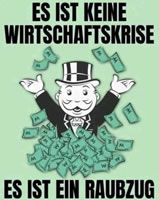

Basic information:
- Because VW is for everyone: Conversion & Socialization for the Socio-Ecological Transformation. “ We” are Volkswagen employees and people from the climate movement who are concerned about the future. We are convinced that the company’s strategy, which focuses on electric cars and autonomous driving, is a dead end. Production must be diversified, otherwise it will all be over in a few years. Electric cars and autonomous driving consume an excessive amount of resources. We need a sustainable concept, and we need VW’s production capacities for public local and long-distance transport. The planned job cuts are unacceptable if we want to create mobility for everyone. We want to have a say in what is produced, how, and where …” Campaign page “ VW for Everyone ”
- VW for All at Verkehrswendestadt (City of Transport Transformation) : “ VW is already 20% owned by the state of Lower Saxony. However, 53% also belongs to the Porsche-Piech family—more precisely, Porsche Automobil Holding SE—and 17% to the Emirate of Qatar. Profits are privatized and losses are socialized. This must stop! VW not only stands for VerkehrsWende (Transport Transformation) instead of VolksWagen (People’s Car), but also for Versozialung Wagen (Socialization of Cars) (…) The motto of the future, “VW for all,” stands for a public-benefit-oriented, collectively managed company in the Transport Transformation, where those affected decide what is produced. #VersozialungWagen …” Information about the campaign at Verkehrswendestadt
- For a social and ecological transformation! Automotive workers and the climate movement : ” VW worker and union representative Thorsten Donnermeier is concerned about the climate and the transformation of production .” Video from CHEFDUZEN TV, June 25, 2026, on YouTube. #video
- Conversion Pervers: WORKERS AGAINST WAR! ” VW workers for the construction of useful products like public transport and against arms production .” Video from CHEFDUZEN TV from May 24, 2026 on YouTube #video
See above and for background information in LabourNet:
- Our dossier on VW: “ Results Improvement Program ” It is expected to cost up to 7000 jobs – does this include temporary workers?
- From September 2023: Colleagues and climate activists join forces and demand change at VW: Petition “Stop job cuts” – diverse forms of mobility instead of job cuts!
- Dossier: [IG Metall and its automotive partners] Electrification of the powertrain, transport revolution and employment
- Dossier: [Explanation] “The automotive industry before and after ‘Corona’: Conversion instead of yesterday’s recipes!” and the transformation debate
- Dossier: Debate on the stance of (industrial) unions on climate justice and transformation
- Dossier: “Stop Trinity” – No new car factory – Transport revolution: Protest (camp) against VW’s electric car factory in Wolfsburg and for a transport revolution city
Comments
No comments yet.